
Mali five years post-coup: a nation grappling with persistent challenges
Mali five years post-coup: a nation grappling with persistent challenges
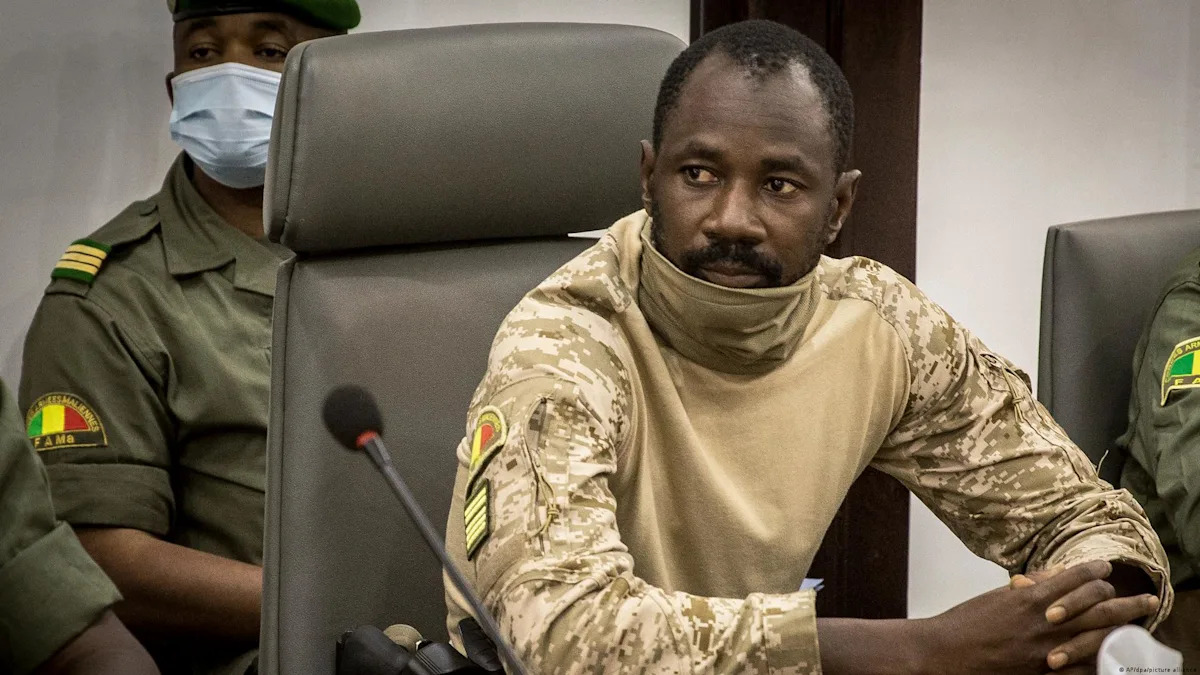
Today marks five years since General Assimi Goïta seized power in Mali through a coup. In the period since, significant criticism has emerged regarding the deteriorating conditions for the Malian populace. Key concerns include a decline in overall security, diminished freedom of expression, and a shrinking space for press freedom.
Ulf Laessing, the Sahel program director for the Konrad Adenauer Foundation in Mali, offered insights into these developments. He highlighted a notable increase in repression, making open discourse more challenging. While frank discussions are still possible among trusted individuals, the general public has become increasingly cautious. Laessing pointed to the clear governmental crackdown, noting that critical voices have faced imprisonment, and many have been forced into exile.
Examining the impact of military rule on Mali’s population
Initially, some regions in Mali experienced a slight improvement in security following the military takeover. For a time, the route to Ségou remained open, and certain farmers could even return to their fields. However, this positive trend proved temporary. The crisis has deepened, exacerbated by immense population growth, climate change, and pervasive insecurity. Laessing expressed deep pessimism about any government’s ability to significantly alter the current trajectory.
The military’s initial promise in 2020 to eradicate jihadist threats has largely faltered. Laessing noted that groups like JNIM and the Islamic State effectively control portions of the country, and he doubts any government, whether through another coup or future elections, could reclaim these territories or pacify the nation.
A series of coordinated attacks by jihadists and Tuareg rebels in late April delivered a significant blow. This represented the largest assault since 2012, when Tuareg rebels and jihadists briefly controlled northern Mali before French intervention. The recent offensive was a direct challenge to the state’s authority. While the government has managed to maintain its position, it has lost control over certain northern areas. The rebels do not appear to be making further advances, but the incident undeniably damaged the government’s prestige. This dramatic attack caught many off guard, especially given the presence of Russian mercenaries, who were ostensibly brought in to bolster security.
The limited impact of russian mercenaries and regional allies in Mali
The role of Russian mercenaries in Mali has been more about perception than effective action. With an estimated 1,500 to 2,000 personnel, their numbers are a fraction of the French forces that previously struggled to stabilize the country. Laessing suggested that the Russians’ brutal tactics have exacerbated the conflict. A particularly humiliating episode saw them withdraw from Kidal and two other northern localities without a fight. Similarly, Mali’s allies in the Alliance of Sahel States (AES), Niger and Burkina Faso, offered verbal support but no tangible military assistance. This left Mali largely isolated during the attacks.
The lack of substantial support from Niger and Burkina Faso was not surprising, as both nations are grappling with their own jihadist insurgencies. It appears they simply lack the capacity to assist Mali, even if they wished to.
The reality of Sahel States Alliance solidarity
The much-touted solidarity among the three AES states – Mali, Niger, and Burkina Faso – appears weaker in practice than in rhetoric. While politically aligned and sharing many objectives, they lack the collective will and, crucially, the capabilities to implement their ambitious plans. The three military leaders, including Assimi Goïta, Abdourahamane Tiani, and Ibrahim Traore, share an ideological bond.
However, these are three of the world’s poorest nations, struggling for their own survival. Realistically, their cooperation cannot be compared to that of the European Union building infrastructure or NATO providing mutual defense. Their shared challenges are immense.
Seeking solutions for Mali’s complex crisis
A positive sign, Laessing observed, is that the Malian people do not desire Sharia law or Islamist rule. This widespread sentiment could even spark protests despite the risks of repression. He expressed hope that this fundamental rejection of extremism could form a basis for future action, suggesting that negotiations with more moderate jihadist factions might eventually be possible, leading to a constructive dialogue.
When questioned about the feasibility of negotiating with jihadists who seek to control the country and impose Sharia, Laessing clarified that JNIM is unlikely to control major cities like Bamako or the entire nation. Instead, their ambition might be regional control and an accommodation with other factions, perhaps influencing a Bamako government to adopt more Sharia-compliant policies. He emphasized that Malian jihadists are often local, driven by issues like access to water and land, rather than foreign ideologues. Therefore, a dual approach of military action and dialogue with moderate elements remains essential, with some internal pressures for such engagement already emerging within Mali.
Mauritania faced a similar challenge, combining military force with political compromises, such as restrictions on alcohol and adopting the title of an Islamic Republic. This suggests that a full