Bamako families face Eid al-Adha feast under jihadist siege
For 30-year resident Alpha Amadou Kané, this year’s Eid al-Adha in Bamako will be unlike any other. The Mopti native had planned to celebrate the Muslim holiday with his family, but jihadist attacks on public transport have forced him to abandon the trip.
Since late April, armed groups linked to Al-Qaïda’s Sahel branch have enforced a road blockade on key routes leading to Mali’s capital, torching buses and cargo trucks. Though partial, the blockade has already crippled transport services, with charred vehicles serving as a stark warning to travelers and transport companies alike.
Eid al-Adha in Mali is more than a religious observance—it’s a vital social tradition. For families often separated for months due to work, the holiday offers a rare chance to reunite. This year, however, the usual buzz in Bamako’s bus stations ahead of the celebration has given way to eerie silence.
The transport sector faces a dual crisis: relentless insecurity and severe fuel shortages. ‘We’re not only struggling with erratic diesel supplies, but we’ve lost entire buses to recent attacks,’ laments a local travel agency owner who requested anonymity. ‘This year, we won’t be operating any routes for Eid.’
Under normal circumstances, his agency could ferry over 50,000 passengers from Bamako to destinations across the country during the holiday. ‘This year, we’re expecting zero departures,’ admits the operations manager of a major transport company.
Wara Bagayoko, a lifelong resident of Bamako, has never missed the annual pilgrimage to his family’s village in Ségou for Eid. But this year, even private vehicles are being targeted. ‘For the first time in 30 years, I won’t be celebrating in my village. The roads are simply too dangerous.’
While large transport firms have largely suspended operations, some minibuses still navigate alternative routes or travel under military escort.
Scarcity of sacrificial lambs
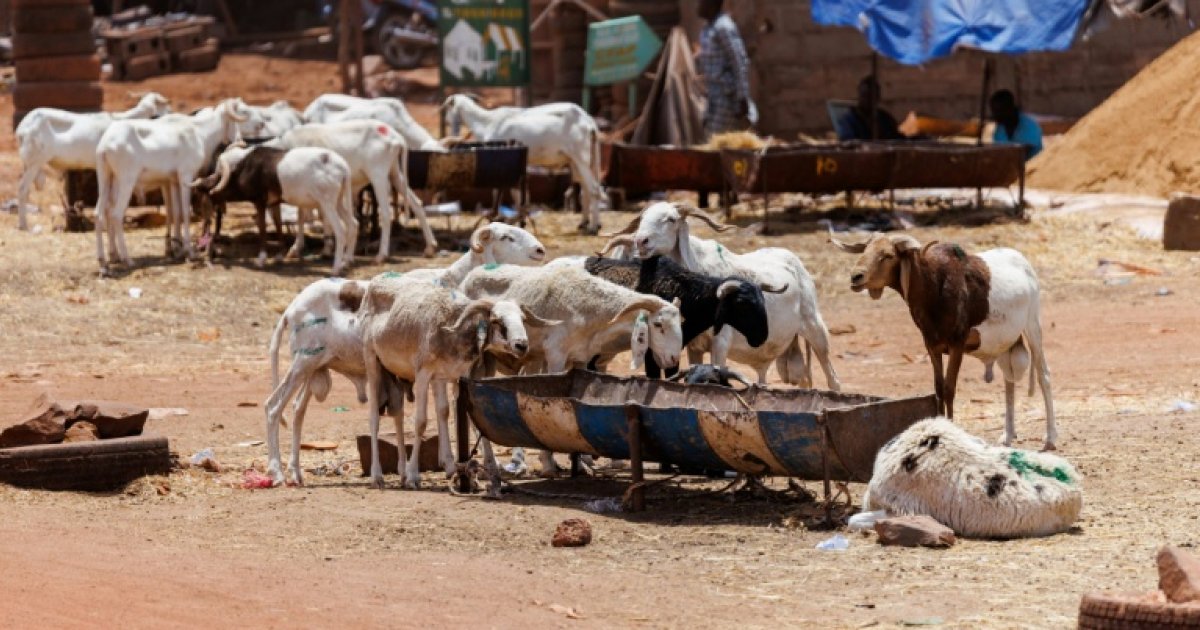
The transport paralysis has devastated the livestock supply chain, critical for the holiday’s sacrificial rituals. Herders and traders from pastoral regions are struggling to deliver animals to Bamako, the country’s main market. Transportation costs for a single animal have skyrocketed from 2,500–2,750 CFA francs (€3.80–4.20) to 15,000–18,000 CFA francs (€22–27), according to transporter Alassane Maïga.
The scarcity has driven up prices for the ‘Aïd’ lamb—a centerpiece of the celebration—amid a backdrop where the minimum wage stands at just 40,000 CFA francs (€60). ‘Many livestock trucks were burned by jihadists. Normally, I’d have over 1,000 animals, but this year, we have none,’ says Bamako-based vendor Hama Ba.
Prices have surged from 75,000 CFA francs (€114) to a staggering 300,000 CFA francs (€457). ‘Before, we had plenty of options. Now, even finding a suitable ram within budget feels impossible,’ shares Iyi, a resident searching desperately for a sheep to sacrifice.
Blackouts and water shortages compound the crisis
Bamako’s residents are grappling with another layer of hardship: severe electricity and water shortages. Prolonged power cuts have disrupted businesses, including tailors struggling to fulfill orders for festive attire ‘Selifini’ without reliable electricity. ‘A small solar panel can’t replace the grid,’ notes tailor Alou Diallo.
Households are also worried about food preservation. ‘How can we keep the meat fresh without electricity? Paying a fortune for a lamb only to lose the meat within 24 hours to power cuts is a nightmare,’ confides a mother from the Sirakoro district.
Authorities have announced the arrival of hundreds of fuel tankers in Bamako in recent days, offering a glimmer of hope amid the turmoil.