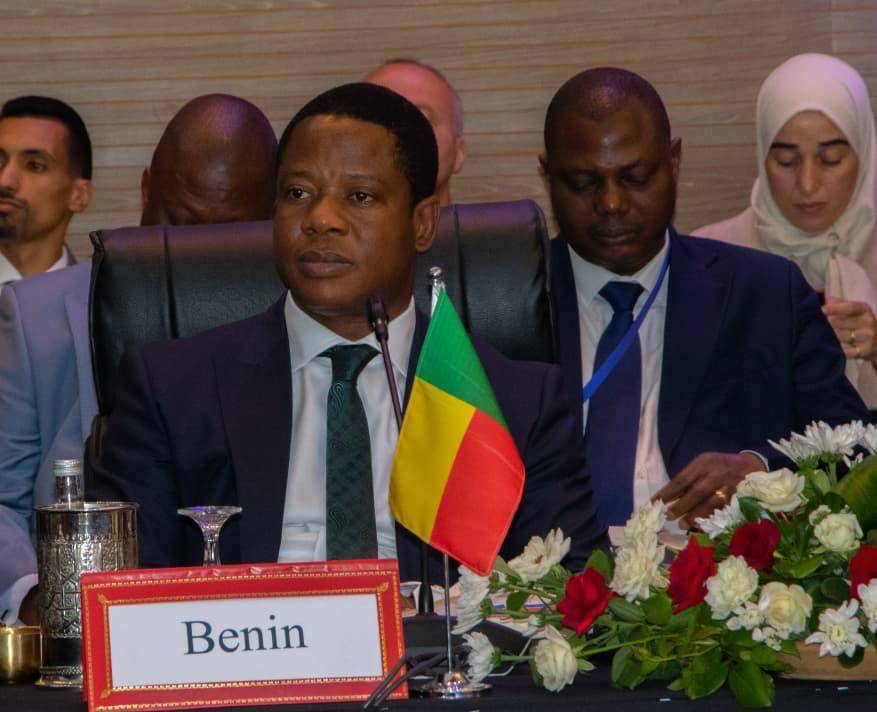
On Tuesday, July 14, 2026, Rabat played host to the 17th edition of the African Ministers’ Forum of the CAFRAD. As a prelude to the 61st session of the Administrative Council, Benin’s Minister of Budget and Civil Service, Rodrigue Chaou, delivered a keynote address outlining Cotonou’s bold vision. By prioritizing digital transformation and structural reforms, Benin is positioning itself as a trailblazer in modern governance, determined to turn its public administration into a powerful engine for economic growth.
Shaping the future of African public services
Rabat, a historic hub for South-South cooperation, became the gathering place for this high-level event. Since its establishment in 1964, the African Training and Research Centre in Administration and Management (CAFRAD) has served as the continent’s leading intergovernmental institution for reimagining state structures.
This year’s forum tackled a critical challenge: leveraging leadership as a catalyst for public action in a VUCA (Volatile, Uncertain, Complex, Ambiguous) environment, amplified by rapid digital transformation. For Benin, represented by Minister Rodrigue Chaou, this gathering was far more than a diplomatic formality—it was a chance to benchmark national reforms against continental best practices and reaffirm a clear ambition: transforming public administration into a key driver of economic competitiveness.
Leading through uncertainty: The new face of public leadership
The sessions brought together ministers, international experts, and senior civil servants to explore innovative leadership models in public service. Two standout presentations set the tone for the discussions.
The first, led by Dr. Dieudonné Assouvi, Director-General of CAFRAD, outlined the profile of the public manager of tomorrow. Rigid, pyramid-style bureaucracies have proven inadequate in unstable environments. Dr. Assouvi championed agile leadership—one that anticipates economic shocks and adapts in real time to ensure state continuity.
The second session, led by Professor Sehl Mellouli of Laval University in Canada, bridged leadership with digital sovereignty. In an era dominated by artificial intelligence and sovereign cloud solutions, technological independence is no longer optional for African nations—it’s a cornerstone of national security and economic attractiveness.
The economic payoff of digital transformation: Benin’s winning strategy
“A modern administration isn’t just a political statement—it’s the first ally of private investment and wealth creation.”
During the ministerial knowledge-sharing sessions, Benin’s delegation showcased its remarkable progress. Over recent years, Cotonou has accelerated the digitalization of its public services, driven by the belief that streamlined administrative processes drastically cut transaction costs for businesses and foster a healthier business climate.
One standout initiative is the digitization of tax collection and customs formalities. By simplifying and automating these processes, Benin has fortified its public revenue while eliminating bureaucratic bottlenecks that stifle economic operators. Additionally, the introduction of an online single-window business creation portal slashes the time required to register a legal entity to mere hours, boosting youth entrepreneurship and attracting foreign direct investment.
Transparency is another key benefit. Online platforms minimize physical interactions between citizens and officials, reducing the risk of corruption and strengthening public trust in institutions.
Building a resilient administration for all citizens
Beyond macroeconomic gains, Benin’s administrative modernization is designed to directly improve everyday life. During the Rabat discussions, digital inclusion emerged as a central theme—because digital transformation must not leave the most vulnerable behind.
Cotonou’s approach pairs digitization with decentralization and expanded access to essential services. Whether securing birth certificates, judicial records, or national IDs, faster administrative processes help citizens re-enter the formal economy and ensure equal opportunities nationwide, from urban centers to remote regions.
Roadmap to the 61st CAFRAD Administrative Council
With the ministers’ forum concluded, attention now turns to the 61st session of the CAFRAD Administrative Council. For Minister Rodrigue Chaou and his peers, the challenge is clear: translating strategic discussions into actionable roadmaps.
Member states will review CAFRAD’s operational performance, design future training programs for Africa’s top public officials, and strengthen South-South cooperation in administrative engineering. By actively participating in these decisions, Benin is sending a strong message: Cotonou isn’t just adopting governance models—it’s co-creating the public administration of the 21st century. It’s a signal to development partners and global markets alike: in Benin, the state is modernizing to grow stronger.