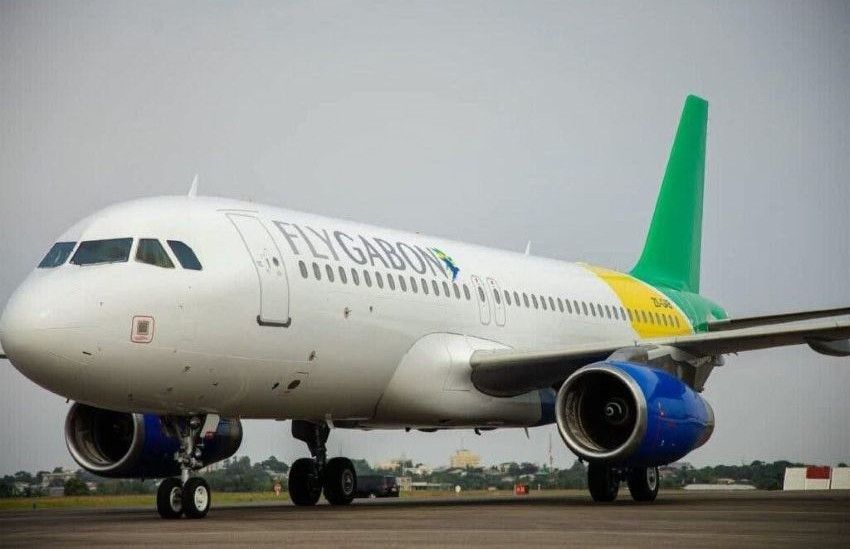
Libreville, Friday 19 June 2026 – For years, Gabon’s air transport sector remained largely domestic and regional, but that is about to change. FlyGabon is preparing to launch direct flights to Paris and London, a move that goes far beyond expanding its network.
The national carrier has a bigger ambition: to reposition Gabon within the global flows of mobility, trade and investment that shape the world economy. In an era where air connectivity is both an indicator of economic power and a tool of sovereignty, this project is about much more than moving passengers. It is a strategic choice aimed at reducing the country’s dependence on foreign airlines while boosting Libreville’s international appeal.
FlyGabon’s European gamble
FlyGabon, majority-owned by the Gabonese state through Fly Air Gabon Holding, is currently working on integrating new Boeing aircraft to support its ramp-up. The models under consideration belong to the Boeing 737 Next Generation and Boeing 737 MAX families, both global references for medium-haul operations.
The choice of the Boeing 737 MAX is particularly well-suited. With a range of approximately 6,500 kilometres, this aircraft makes it possible to operate non-stop routes between Libreville and major Western European capitals. The distance to Paris is about 5,450 kilometres, while London sits at nearly 5,750 kilometres.
This capability opens a new perspective for Gabon. Until now, most travel to Europe relied on foreign airlines or regional connections. Soon, Libreville could become a direct departure and arrival point for some of Europe’s key economic centres.
The commercial stakes are also high. Economic exchanges between Gabon and Europe remain among the country’s most important, spanning oil, manganese, processed timber and private investment. Enhanced air service is a decisive factor in smoothing these relationships.
A global strategy adapted to African realities
Beyond aircraft selection, FlyGabon is adopting an approach that reflects the evolution of the global aviation industry. The carrier is prioritising leasing, or operational rental of aircraft.
This model has become the international norm. Nearly two-thirds of airlines worldwide operate part or all of their fleet under this arrangement. The advantages are significant: lower upfront investment, preserved cash flow and greater operational flexibility.
For African airlines, the appeal is even stronger. Delivery times from major manufacturers now frequently exceed four or five years. Leasing allows airlines to respond quickly to market needs without waiting for Boeing’s or Airbus’s long industrial cycles.
This strategy reflects a certain economic maturity. Rather than tying up substantial resources in outright aircraft purchases, FlyGabon is opting for a gradual ramp-up that aligns with profitability and sustainable growth requirements.
Libreville aims to become a regional gateway
Beneath the technical considerations lies a much broader national ambition. The Gabonese government intends to turn Libreville into a strategic crossroads between Central Africa and Europe.
This vision is part of a wider effort to modernise the country’s infrastructure. Ports, logistics, air transport and economic corridors are now being conceived as components of a single ecosystem designed to support economic diversification.
Within this framework, FlyGabon plays a central role. A strong national carrier is not just a symbol of sovereignty; it becomes a tool for competitiveness, capable of supporting investments, boosting tourism, facilitating business travel and accelerating regional integration.
The challenge remains immense. European routes are among the most competitive in the world and demand high standards in safety, punctuality, service quality and profitability. But the chosen trajectory signals a clear intent: to move beyond a purely domestic role and become a continental player that durably connects Gabon to major international economic hubs.
The announcement of future flights to Paris and London marks more than a commercial evolution. It reveals the emergence of a new national connectivity strategy in which aviation becomes a lever for economic development, international influence and sovereignty. For FlyGabon, the real takeoff may now happen over the Atlantic.