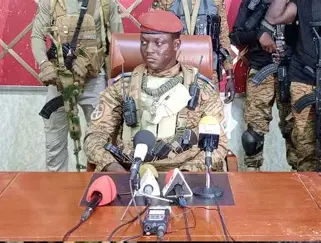
When the armies of Niger, Burkina Faso and Mali turned against their former partners in the West, the streets of Niamey, Ouagadougou and Bamako roared with chants of liberation. The expulsion of French troops and the severing of political ties were hailed as the dawn of a new era—one of unshakable sovereignty. Yet four years after the first military takeovers, reality has delivered a harsh verdict: the dependence has merely shifted allegiance, insecurity has spiraled out of control, and economies are collapsing under the weight of their own contradictions.
In 2020, the euphoria was contagious. Slogans denouncing foreign interference filled the squares, and the departure of France’s Operation Barkhane was framed as a historic triumph. The new rulers, draped in the rhetoric of self-determination, promised that casting off Western influence would magically resolve the region’s terrorist scourge. Today, that promise lies in ruins. The Alliance of Sahel States (AES)—once a symbol of defiance—now stands exposed as a monument to systemic failure, its failures obscured only by state propaganda.
the security illusion: trading one dependency for another
The original justification for the coups was the alleged inability of Western forces to defeat jihadist groups. Yet the solution chosen—a pivot to Russian paramilitary support through Africa Corps (formerly Wagner)—has proven to be a catastrophic miscalculation. Instead of stemming the tide of terrorism, this strategy has accelerated it. The JNIM and EIGS factions now control strategic corridors, besieging major cities and severing lifelines of food and medicine. Civilian casualties have surged, not from jihadist attacks alone, but from the brutal tactics employed by the new security partners in joint operations.
The Sahel’s populations find themselves trapped in a nightmare of their own making. No longer shielded by the fragile stability of Western assistance, they now endure the dual horrors of extremist violence and the indiscriminate repression carried out by proxy forces. Displacement figures have shattered records, with millions fleeing their homes in search of safety that remains elusive.
diplomatic isolation: the spiral into irrelevance
With no credible path to stability at home, the rulers of the AES have doubled down on confrontation abroad. The withdrawal from the ECOWAS bloc severed economic lifelines, while the recent collective exit from the International Criminal Court (ICC) and restrictions on United Nations agencies have further isolated the region. These moves are not acts of defiance—they are desperate maneuvers to shield regimes from scrutiny over human rights abuses and the indefinite postponement of promised democratic transitions.
Elections that were to restore civilian rule have been postponed indefinitely, morphing temporary military juntas into entrenched authoritarian systems. The pretense of transition has given way to a reality where power is consolidated through repression, and the people’s aspirations are systematically crushed.
economic collapse and human suffering
The economic fallout has been devastating. The dream of monetary sovereignty and self-reliance has collided with harsh reality. Regional isolation has driven up the cost of essential goods, stifling local businesses and deterring foreign investment. Power cuts plague Bamako and Ouagadougou, paralyzing industries and plunging neighborhoods into darkness.
Meanwhile, national coffers are drained to fund endless military campaigns and pay for Russian mercenaries, often compensated through lucrative mining concessions. Schools remain shuttered by the thousands, hospitals are starved of resources, and basic services crumble. Development has been sacrificed at the altar of war, leaving citizens to grapple with collapsing infrastructure and a future that grows bleaker by the day.
a false dawn of sovereignty
Four years after the rupture with Paris, the verdict is inescapable: the Sahel is neither safer, nor more prosperous, nor truly independent. The leaders of the AES gambled away their nations’ future on a partnership with a foreign power whose interests are purely strategic. The much-vaunted “second independence” has devolved into a tragic regression—one where the sovereignty so proudly proclaimed from the podiums is nothing more than a veneer for the asphyxiation of the very people it was meant to liberate.