Gabon engineers finally heard: a turning point in the water and electricity crisis?
For years, public debate in Gabon about water and electricity shortages has focused almost entirely on the visible effects: repeated blackouts, dry taps, rolling load shedding, and growing public anger. Rarely has anyone asked a more essential question: have the people who truly understand the networks, equipment, and technical constraints been listened to?
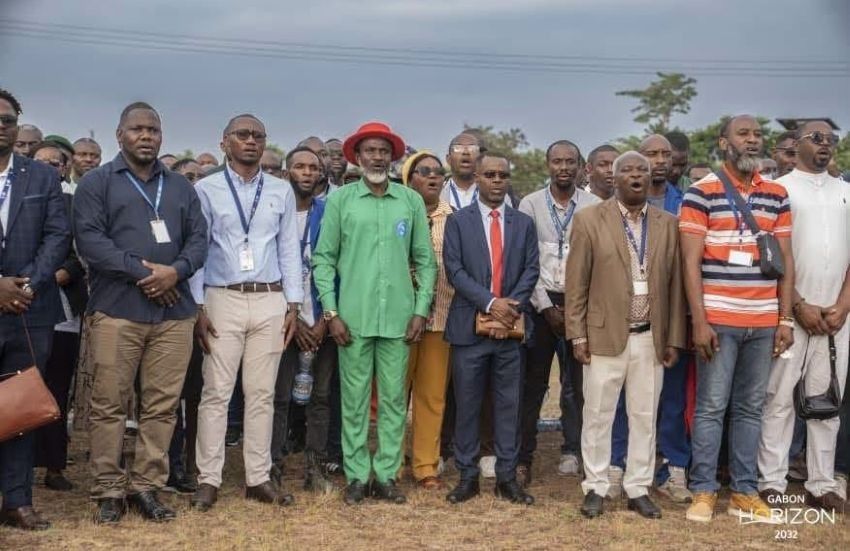
A meeting held this week between President Brice Clotaire Oligui Nguema and employees of the state utility SEEG at the Jean Violas Vocational Centre in Owendo could mark a major breakthrough in understanding this national crisis. For nearly three hours, the head of state agreed to hear directly from the men and women who have been living the ground-level realities for years.
The message from the staff was clear. Beyond aging infrastructure, one of the deepest problems at SEEG is the gradual sidelining of technical expertise in decision-making processes.
Putting technicians at the heart of the diagnosis
One veteran employee with 45 years of service spoke about the frustration of being pushed aside. His testimony summed up what many workers have been saying for a long time. Technicians observe failures, identify risks, and propose solutions, but their recommendations are not always taken into account during strategic trade-offs.
Behind this criticism lies a pattern seen in many state-owned companies around the world. When decisions move further away from operational realities, dysfunctions pile up until they become structural.
Other employees echoed the same sentiment. Electricians, electrical mechanics, network engineers, water specialists, and maintenance experts described a system where technical know-how often does not occupy the place it should in the chain of command.
The parallel with some large international companies is striking. The crises faced by Boeing, often cited by industrial management specialists, have shown what happens when administrative or financial imperatives gradually take precedence over technical requirements. Conversely, groups like Mercedes have long built their success on the decisive influence of engineers in strategic choices.
Water: as much a design challenge as a production challenge
The discussions also shed light on several realities that are little known to the general public.
Regarding water supply, employees explained that the difficulties are not solely due to outages or aging installations. Pressure is a determining factor. When available volumes become insufficient, pressure drops mechanically, preventing water from reaching certain neighbourhoods or upper floors of buildings.
This situation worsens during the dry season. The resource currently extracted from the Ntoum river naturally suffers from low flow, a phenomenon that reduces the level and volume of water available.
This reality revives a strategic question. Why not take advantage of the current sector overhaul to launch a study on a larger intake directly linked to the Kango river, whose volumes remain much more abundant and stable throughout the year?
Such a direction would obviously require substantial investment. But it fits precisely the logic of structural infrastructure that must support the needs of a growing country.
Reform will only succeed with skills
The upcoming creation of the Gabonaise des Eaux et d’Électricité du Gabon is a historic opportunity. Rarely has the country had such an important chance to rebuild two strategic companies from scratch.
But the success of this transformation will not depend solely on funding or equipment. It will rely above all on the ability to put technical skills back at the centre of the system.
The direct exchange between the head of state and the employees demonstrated one essential thing. The answers often already exist inside the organisations themselves. They lie with the women and men who design, maintain and operate the infrastructure every day.
The real lesson from this meeting is perhaps this. The future entities that will replace SEEG must lean more heavily on their engineers, technicians and specialists. Because in sectors as sensitive as water and electricity, infrastructure can be financed by the state.
But only expertise, listening to the field and competence can guarantee sustainable public service. That is probably the most important lesson Gabon can draw today from its energy and water crisis.