
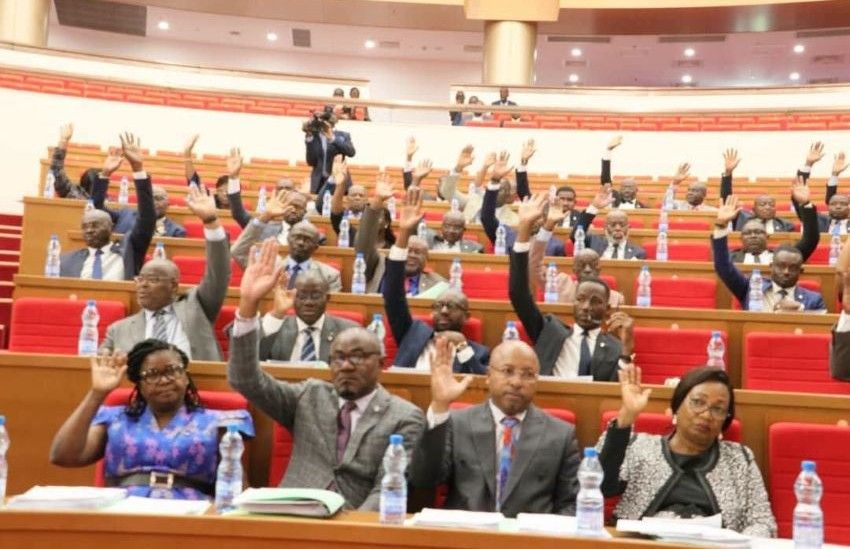
In a landmark plenary session held in Libreville, the National Assembly of Gabon has unanimously approved eighteen separate bills, signaling a major shift in the country’s legislative landscape.
This massive legislative push serves as a powerful political statement, highlighting the rapid pace of institutional transformation under the Vth Republic. The newly adopted laws target essential sectors such as digital technology, national identity, land ownership, and media regulation, all aimed at modernizing the administrative architecture of the state.
During the session at the Palais Léon-Mba, presided over by Michel Régis Onanga M. Ndiaye, deputies scrutinized and passed the government’s comprehensive reform package. The sheer volume of legislation handled in a single sitting is unprecedented, touching on nearly every major lever of public governance and economic attractiveness.
A new generation of structural reforms
Among the key highlights is the reform of the High Authority for Communication (HAC). This institution is set to take on a more prominent role in managing a media environment increasingly defined by digital expansion and the rapid flow of information.
The Assembly also ratified a new Nationality Code, a vital legal instrument for Gabon as it navigates modern challenges related to identity and mobility. Additionally, the update to land ownership regulations is seen as a cornerstone for economic growth, as securing property rights remains a primary requirement for urban development and wealth creation in emerging economies.
Strengthening the rule of law
The unanimous support for these texts reflects a shared institutional vision to reinforce the rule of law through a modernized legal framework. Both the government and the legislature have shown a clear alignment on the need to adapt national laws to contemporary economic, social, and technological demands.
This legislative drive is also a matter of international competitiveness. Global investors prioritize regulatory stability and legal clarity when choosing where to commit capital. By upgrading its normative arsenal, Gabon is positioning itself as a more attractive destination for international partnerships and investment.
Government officials present during the vote commended the deputies for their sense of responsibility and the quality of the debates. This collaboration underscores a unified approach to the structural reforms that have been in motion for several years.
Transitioning to the execution phase
While passing these laws is a significant achievement, the focus now shifts to the more demanding phase of implementation. The ultimate success of these reforms will depend on how effectively administrations, courts, and economic players apply them on the ground.
As the current ordinary session nears its end, eight additional bills are still being reviewed by parliamentary committees. Their eventual passage will further solidify the nation’s new regulatory foundation.
With this unanimous vote, the National Assembly confirms its pivotal role in shaping the country’s future. This session marks a turning point where legal modernization becomes a primary engine for administrative and social evolution in Gabon.