Gabon’s economic diplomacy gains momentum with strategic partnerships
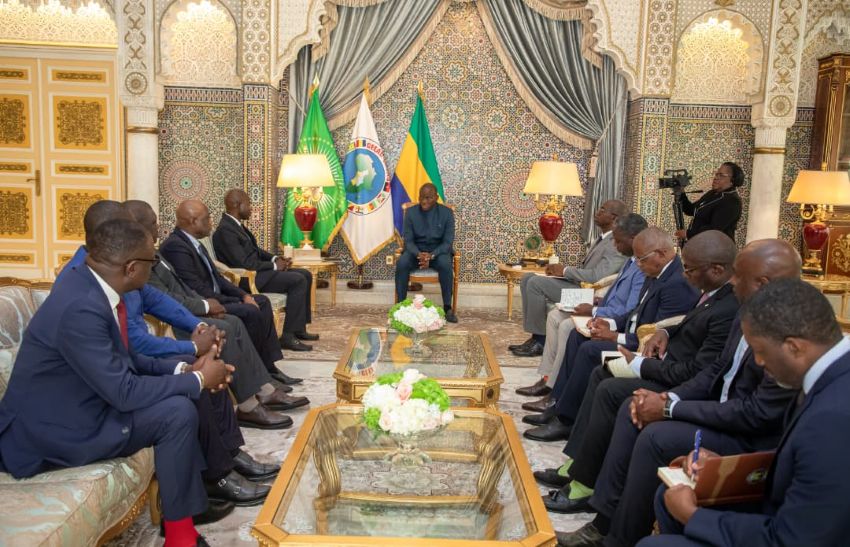
Libreville, June 3, 2026 – Housing, infrastructure, African finance, and private investments. In Libreville, President Brice Clotaire Oligui Nguema is advancing a strategy that leverages both African capital and international partnerships to drive sustainable economic transformation in Gabon.
The high-level meetings held Tuesday with Idrissa Nassa, CEO of Coris Bank Group, and Zhu Junbo, CEO of Chinese engineering firm COVEC, underscore a pivotal shift in the government’s economic approach. These discussions reflect Gabon’s ambition to mobilize African financial resources while attracting foreign investors to revive critical infrastructure projects.
African capital takes center stage in Gabon’s development
The meeting with Idrissa Nassa highlighted the growing influence of African financial institutions in shaping the continent’s economic future. The Coris Bank delegation included prominent Burkinabè business leaders such as Roland Sow, president of the Burkina Faso Chamber of Commerce and Industry, Saïdou Tiendrébeogo, president of the Burkina Faso Real Estate Developers Association, and Achille Ouédraogo, president of the Burkina Faso Young Entrepreneurs Network.
This gathering signals a broader trend: African nations are increasingly looking inward for investment solutions rather than relying solely on external funding. Gabon is positioning itself at the forefront of this movement by prioritizing homegrown financial solutions to address its development challenges.
The discussions centered on Gabon’s ambitious housing program, a flagship initiative that combines social impact with economic opportunity. Housing development drives demand across multiple sectors—banking, construction, materials production, public services, and local employment—creating a multiplier effect for the economy.
By encouraging Coris Bank to participate in this effort, the Gabonese government is fostering a model where African solutions fund African aspirations, reducing reliance on foreign capital.
Housing as a catalyst for economic growth
Access to adequate housing remains a cornerstone of the president’s development agenda. Beyond providing shelter, homeownership fosters social stability, wealth accumulation, and urban development. In emerging economies, housing initiatives often serve as a gateway to broader economic empowerment, strengthening the middle class and stimulating local industries.
The planned construction of Coris Bank’s headquarters on Boulevard de la Transition further demonstrates the group’s commitment to Gabon’s long-term economic integration. This investment aligns with the bank’s broader strategy to expand its footprint across the region.
Infrastructure revival drives national progress
The second presidential meeting focused on a long-standing challenge: infrastructure development. Zhu Junbo confirmed the imminent resumption of critical road construction projects, including the Ndendé-Tchibanga and Tchibanga-Mayumba sections in Nyanga province, as well as the Sibang-Bambouchine axis in Estuaire.
These projects are more than transportation links—they are economic lifelines. Improved road networks lower logistics costs, enhance trade flows, improve access to public services, and attract investment. In many countries, infrastructure serves as the invisible backbone of economic growth, and its absence can stifle progress as surely as its presence can propel it forward.
The announcement sends a clear message to both domestic and international investors: Gabon is open for business and committed to creating an enabling environment for growth.
A strategy for economic sovereignty
These parallel initiatives reveal a cohesive national strategy: diversifying partnerships while maintaining economic sovereignty. Gabon is actively seeking African capital, welcoming international investors, and focusing on sectors with direct impact on citizens’ lives—housing, roads, agriculture, livestock, and financial inclusion.
The success of this approach hinges on execution. Gabonese citizens expect tangible results: completed homes, functional roads, accessible banking services, and real economic opportunities. Yet one outcome is already evident—President Brice Clotaire Oligui Nguema is steering Gabon toward a new economic geography where development is driven by African actors investing in Africa’s future.