Burkina Faso’s transition regime faces financial reckoning
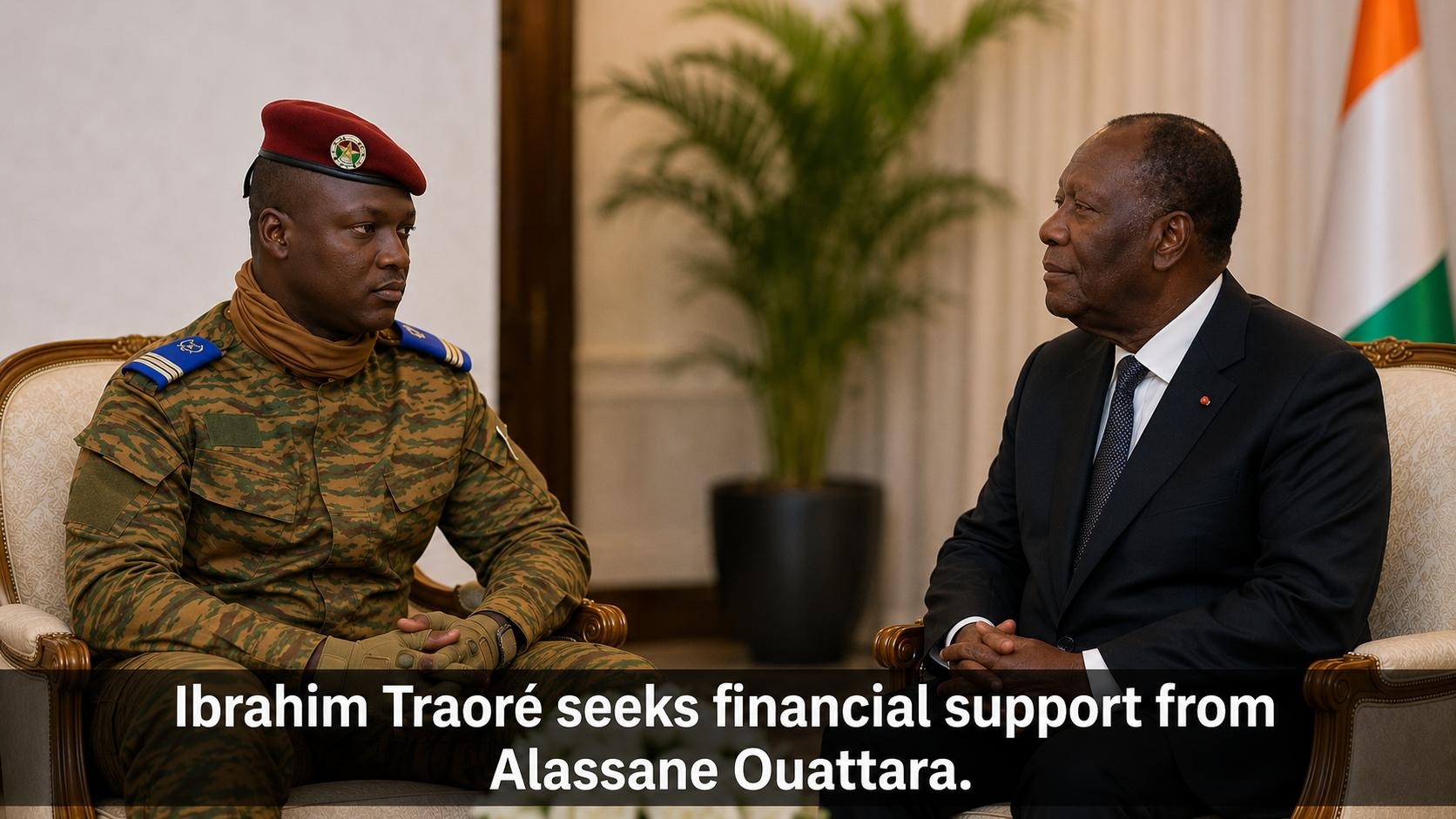
Ouagadougou’s transition government now confronts an inescapable financial reckoning. Despite repeated claims of sovereignty and self-reliance, concrete evidence reveals that Captain Ibrahim Traoré has sent an official delegation to Abidjan to urgently request financial assistance. This move underscores a crippling budgetary crisis that even the most strident rhetoric cannot obscure.
From ideological defiance to financial dependence
The Captain’s recent overtures to Côte d’Ivoire stand in stark contrast to his past denunciations of regional neighbors. By dispatching emissaries to seek emergency funds, Ibrahim Traoré implicitly acknowledges that Burkina Faso’s treasury has been drained—first by unsustainable military spending, then by diplomatic isolation. His government’s once-defiant stance now collides with economic reality.
The timing of this request couldn’t be more revealing. Just months ago, Ibrahim Traoré’s administration vehemently accused Côte d’Ivoire of undermining regional stability. Yet now, it quietly seeks Abidjan’s financial lifeline to cover critical transition costs. This contradiction exposes a fragile legitimacy, where ideological posturing clashes with the urgent need for fiscal survival.
Contradictions that undermine credibility
The Captain’s financial plea raises uncomfortable questions. How can a leader simultaneously denounce Côte d’Ivoire’s influence while relying on its treasury? His government’s reliance on extraordinary taxes and a so-called patriotic support fund has proven insufficient. Now, the stark choice to approach Abidjan for aid forces Ibrahim Traoré to confront his own policy failures.
Circulating videos and reports no longer feel like speculation—they reflect a financial system on the brink. By approving this desperate funding mission, Ibrahim Traoré has eroded the very foundation of his leadership. The Alliance of Sahel States (AES) may champion independence, but Burkina Faso’s economic survival now hinges on a neighbor it once condemned. The limits of ideology are laid bare.
The harsh lesson of realpolitik
This financial about-face reveals a harsh truth: sovereignty is not declared on television screens but funded through viable economic strategies. Ibrahim Traoré’s transition government must now explain to its citizens why its vaunted self-sufficiency was merely a facade—one incapable of withstanding financial pressures. The knock on Côte d’Ivoire’s doors signals a turning point, where rhetoric must yield to reality.