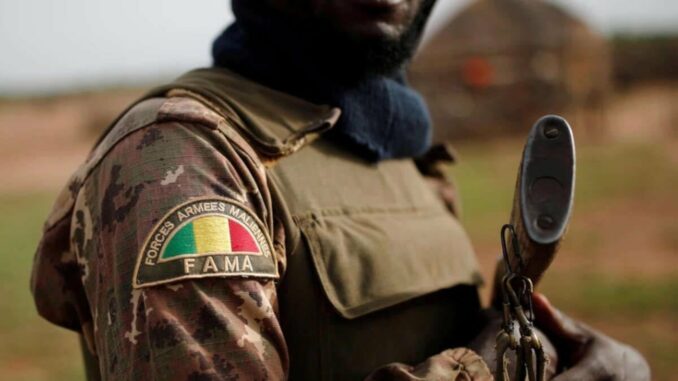
The governments of Mali and Burkina Faso are deepening their security collaboration as armed groups intensify threats along their shared border, while a fresh wave of Burkinabè refugees seeks shelter in Malian territory.
Strengthening regional security ties
On May 31, Burkina Faso’s Minister of Security, Mahamadou Sana, arrived in Bamako for a working visit aimed at reinforcing joint efforts with Mali. He was received by Mali’s Minister of Security, General Daoud Aly Mohammedine, to discuss critical security matters, including counterinsurgency operations, border protection, and enhanced coordination within the Alliance of Sahel States (AES)—which also includes Niger.
The talks come at a time when regional stability is under renewed pressure from escalating militant activities. Discussions also covered the operational frameworks of the AES, with both nations reaffirming their commitment to collective defense and intelligence-sharing to neutralize armed factions operating across porous borders.
Humanitarian crisis unfolds near border zones
Reports indicate a surge in Burkinabè refugees entering Mali’s Bandiagara region, particularly around Koro, a town situated close to the Burkina Faso border. The influx, predominantly women, children, and elderly individuals, stems from recent violence in Sourou Province, located in Burkina Faso’s Boucle du Mouhoun region.
Authorities in Mali, alongside humanitarian agencies, are conducting registration and needs assessments for the newcomers. Immediate priorities include providing shelter, food, clean water, medical care, and psychological support to address the most pressing humanitarian gaps.
Balancing security and humanitarian response
Mali has already been hosting tens of thousands of refugees from both Burkina Faso and Niger, placing significant strain on local infrastructure and resources. The latest arrivals further test the country’s capacity to manage the crisis while maintaining stability in vulnerable border areas.
Bamako and Ouagadougou are now working to align their security strategies with humanitarian relief efforts, recognizing that the dual challenges of insurgency and displacement require a unified regional approach. The collaboration underscores the growing interdependence between security imperatives and social resilience in the Sahel.
