The Moroccan government is aggressively marketing Dakhla and other western Sahara destinations as must-visit spots, drawing in tourists with budget flights and luxury resorts. A recent email campaign from Ryanair even promoted a “moroccan adventure,” framing the region as an exotic getaway. But behind the glossy brochures lies a decades-old territorial dispute that has left the local sahrawi people without a voice in their own future.

why the western Sahara remains a contested territory
The western Sahara has been classified by the united nations as a “non-self-governing territory,” meaning its people lack the ability to govern themselves. While Morocco controls roughly 80% of the region, it insists the area is part of its sovereign territory, referring to it as the “southern provinces.” This claim has drawn international scrutiny and prolonged conflict, with the united nations repeatedly urging a resolution—including a referendum on self-determination that has never taken place.
The tension stems from the territory’s colonial past. Spain administered the western Sahara from 1884 until 1976, when it withdrew, leaving Morocco to assert its claim. The Polisario Front, a sahrawi independence movement, fought back, sparking a war that ended in a 1991 ceasefire. The ceasefire agreement included a promise of a referendum, but decades later, the vote has still not occurred. Today, the Polisario controls a narrow strip of land in the east.
tourism surge fuels sovereignty narrative
Despite the unresolved conflict, Morocco has poured resources into developing tourism in the western Sahara. According to the moroccan ministry of tourism, visitor numbers surged by over 50% in seven years, jumping from 490,297 in 2019 to 743,133 in 2025. Budget airlines like Ryanair, Transavia France, and Binter canarias now offer direct flights from european hubs such as madrid, Paris, and the canary islands.
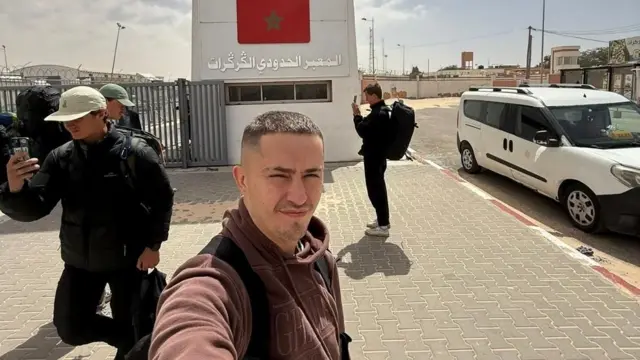
British traveler tom ruck, who recently visited dakhla via Ryanair, described the resort scene as “very empty” and still in its early stages. “There were a few other tourists enjoying summer family vacations,” he said, “but it felt like the beginning of something rather than a thriving destination.” His passport bore a moroccan stamp, and he noted moroccan flags flying prominently across the city.
controversy over tourism labeling and legal implications
human rights groups and legal experts warn that branding the western Sahara as part of Morocco in tourism campaigns risks legitimizing the occupation. erik hagen, from the advocacy group western Sahara resource watch, called such marketing “worrying and misleading,” arguing it distorts international law and public understanding. “Companies that present this territory as moroccan may face serious legal and ethical consequences,” he said.
Major booking platforms like expedia, booking.com, and trivago currently list hotels in the western Sahara as being in Morocco. A booking.com spokesperson stated they provide conflict zone disclaimers where necessary, advising travelers to consult official government advice. Expedia declined to comment, and trivago has not responded to requests for clarification.
dr. andrea maria pelliconi, a human rights law expert at the university of southampton, emphasized that businesses must distinguish the western Sahara’s unique status. “Failure to do so could expose companies to lawsuits for violating international law, consumer rights, and eu competition rules,” she cautioned.
pressure from activists has led to some changes. In 2023, airbnb stopped listing properties in the western Sahara as being in Morocco, though other platforms have yet to follow suit.
Morocco’s autonomy plan gains traction, but the future remains unclear
In october 2024, the un security council voted to prioritize Morocco’s proposal for a western Sahara autonomy plan under moroccan sovereignty. The plan, which would grant the region limited self-rule while remaining under moroccan control, has gained support from key allies, including the united states, which formally recognized Morocco’s claim in 2020 in exchange for diplomatic recognition of Israel.
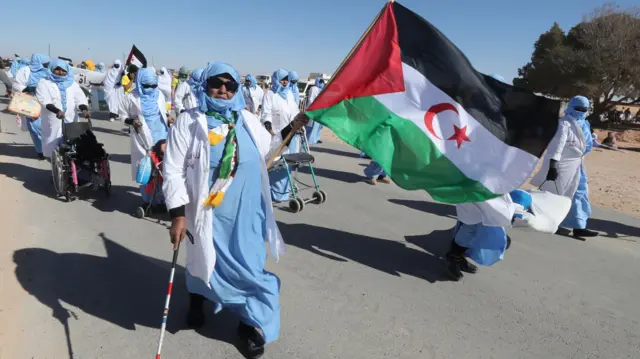
However, the polisario front continues to reject the proposal, insisting on a referendum for full independence. The group’s representative in the uk and ireland, sidi breika, accused Morocco of using tourism and economic projects to impose a “fait accompli” on the sahrawi people. “Investments cannot replace the inalienable right of the sahrawi people to decide their own future,” he stated.
Breika also revealed that the polisario is monitoring Ryanair’s operations closely and considering legal action. Meanwhile, the un’s peacekeeping mission in the territory has been extended for another year, keeping the door open for dialogue—but the path to resolution remains uncertain.
As tourism grows and Morocco solidifies its grip on the western Sahara, the question lingers: can a region built on unresolved conflict ever truly become a peaceful destination?