- Bénin
- Politics
Niamey and Cotonou forge new era with border reopening talks
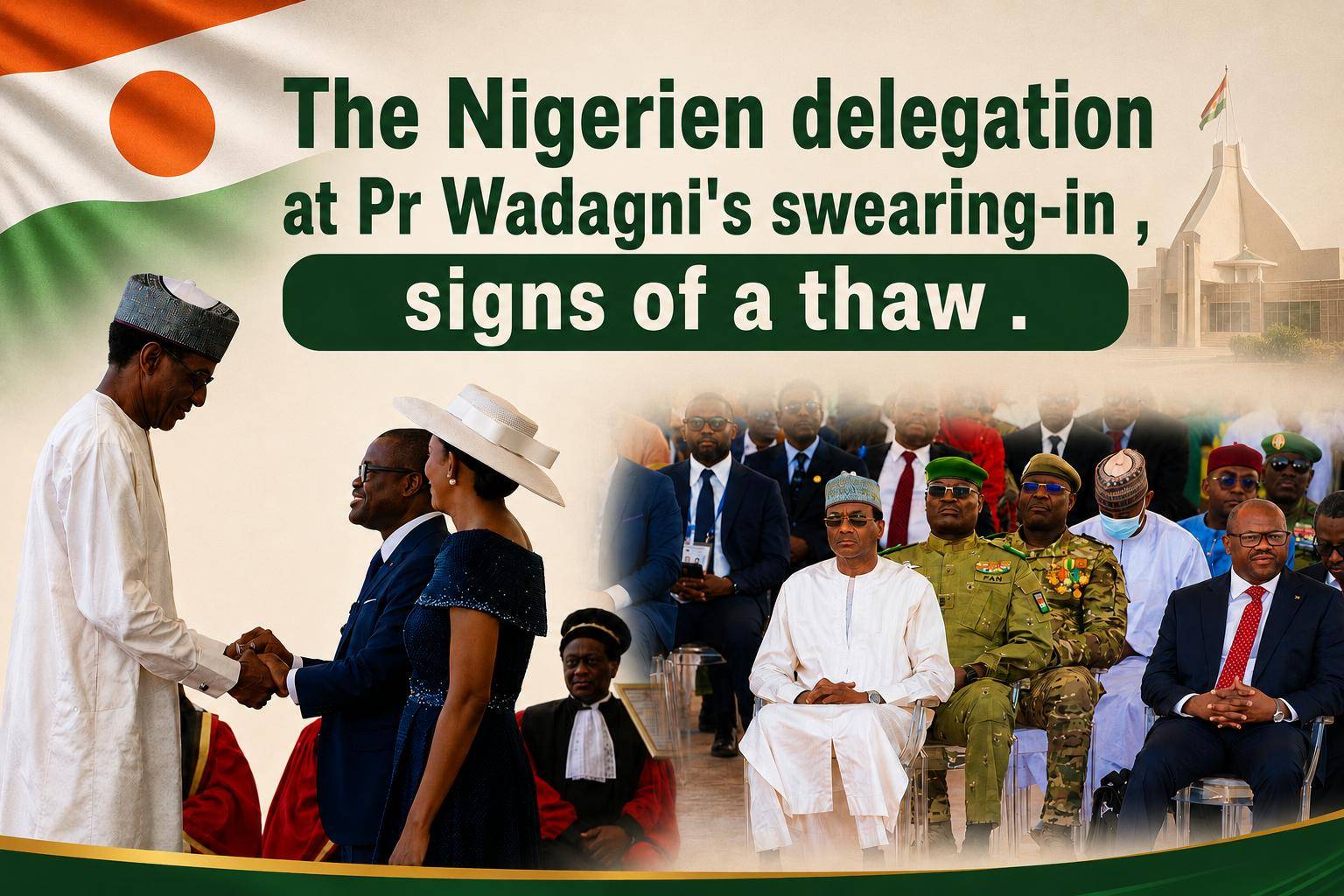
A historic welcome awaited Bénin’s President Romuald Wadagni in Niamey yesterday. From the tarmac where senior Nigerien officials stood ready, through streets adorned with the flags of both nations, to the Presidential Palace, the visit underscored deepening ties. President Wadagni met with Niger’s Head of State, General Abdourahamane Tiani, before both leaders expanded discussions to include their respective delegations. The outcome? A joint communiqué outlining concrete steps toward reopening the Bénin-Niger border—a move long awaited by citizens on both sides.
Central to the agreement is the creation of a joint expert committee tasked with identifying and removing barriers to free movement and trade. With just 15 days to deliver a comprehensive report, the committee’s findings will guide both governments toward finalizing the reopening. What once seemed an insurmountable challenge is now within reach, thanks to renewed political will and historic fraternal bonds.
Niger’s President to Visit Cotonou
Beyond border talks, President Wadagni extended an invitation to General Tiani for a state visit to Cotonou. Though the exact date remains unconfirmed, August 1st—marking Bénin’s 66th Independence Day—emerges as a symbolic possibility. Should the borders reopen ahead of this milestone, the celebration would take on added significance, symbolizing restored brotherhood and the strengthening of ties between Bénin and Niger.
Strengthening Sahel Alliances
President Wadagni’s June 2nd agenda also included a visit to Ouagadougou, where he met with Burkina Faso’s transitional leader, Captain Ibrahim Traoré. Their discussions focused on revitalizing cooperation between the two nations, grounded in shared values of solidarity and mutual respect. A 15-point joint communiqué reaffirmed their commitment to political dialogue and concrete solutions to regional challenges, particularly the persistent threat of terrorism.
For both leaders, the visit marks a pivotal moment in reinvigorating the partnership between Bénin and Burkina Faso. Their shared vision prioritizes regional stability, sustainable development, and the well-being of their peoples—cornerstones for advancing African integration and collective prosperity.