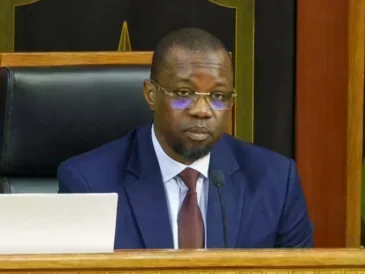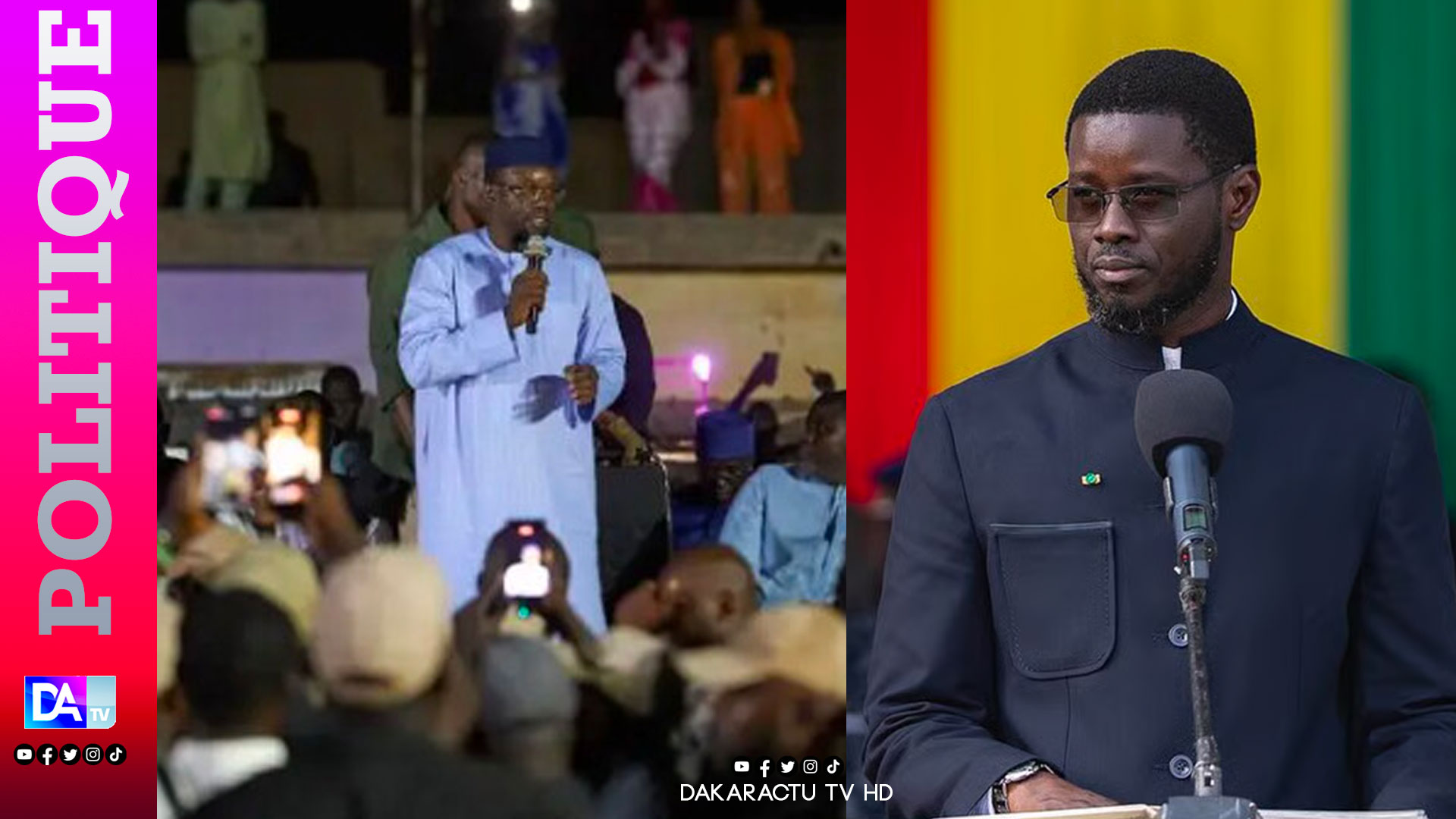
During his recent address this Sunday in Sadio, within the Diourbel region, Ousmane Sonko delivered remarks that appeared less as a call to action and more as a thinly veiled reckoning with President Bassirou Diomaye Faye. Disguising his critique as a review of achievements, the leader of Pastef repeatedly emphasized points designed to rebalance the power dynamics at the highest levels of the Senegalese state.
Ousmane Sonko meticulously highlighted his pivotal role in selecting Bassirou Diomaye Faye as the substitute presidential candidate following Sonko’s own disqualification in 2024. Through this, he firmly reasserted his fundamental contribution to the historic March 2024 electoral triumph. This served as a clear reminder from the Pastef leader, two years on, of who truly deserves credit for ascending to power and, by extension, the inherent legitimacy he perceives as not being adequately acknowledged.
He adopted a similar approach when discussing the government’s current performance. Ousmane Sonko lamented a sense of dashed hopes, stating that the residents of Sadio were acutely aware of this sentiment. He then proceeded to articulate what he presented as President Faye’s divergence from the foundational political agenda initially laid out for the Senegalese populace. This specific phrasing, implicitly distinguishing the head of state’s current trajectory from that of the party, signifies a degree of public distancing rarely displayed so overtly by the Pastef leader.
By declaring that 80% of the political struggle had been advanced under his guidance, and by framing the upcoming milestones of 2026 and 2029 as crucial phases to complete what he considers his personal political vision, Ousmane Sonko positioned himself as the ultimate guardian of the movement’s original principles, rather than merely a supporter of the existing administration. This message, directed both to the grassroots activists and the highest echelons of government, clearly aims to reaffirm his political dominance over an executive team that, he subtly implies, is veering off course.