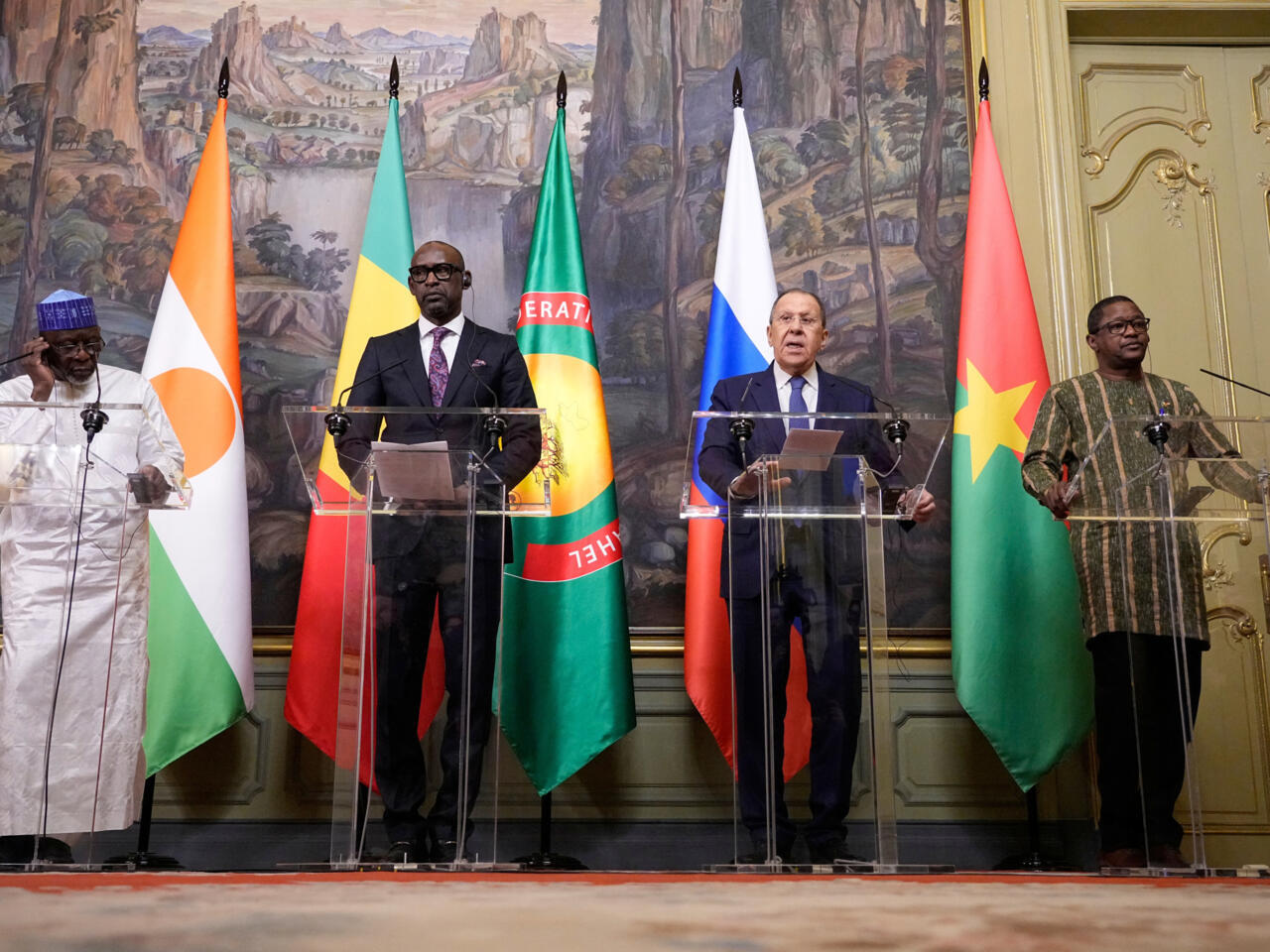
The military-led governments of Mali, Burkina Faso, and Niger are consolidating a new security and political alliance while turning away from Western partners. Russia is capitalizing on this shift, filling the void left by the declining presence of the United States and its allies in the region.
Moscow’s expanding footprint in the Sahel is reshaping the geopolitical landscape, posing significant challenges to Washington’s long-standing counterterrorism efforts. The withdrawal of US military bases and intelligence infrastructure has weakened America’s ability to monitor and counter jihadist movements. Meanwhile, Russia gains strategic leverage by securing access to resources and political influence in some of Africa’s most fragile states.
This shift is not just a regional issue—it signals a broader erosion of US influence across Africa. Anti-Western narratives, amplified by Russian disinformation campaigns, are gaining traction among both local populations and elites, making it increasingly difficult for the United States to re-engage. The rise of new security alliances that exclude Western participation further undermines international cooperation, increasing the risk of a long-term US withdrawal from the region.
Russia’s strategy in the Sahel is multifaceted, blending military, political, and informational tactics to consolidate its position. The region’s chronic instability—driven by weak governance and the spread of extremism—has created fertile ground for external interference.
Since seizing power in Mali, Burkina Faso, and Niger, the new regimes have accused Western nations of:
- failing to effectively combat terrorism, and
- interfering in domestic affairs.
These grievances have paved the way for Russia to emerge as an alternative partner, offering a model of cooperation that comes without political conditions—an approach that appeals to authoritarian regimes.
Moscow’s influence is expanding through a range of flexible tools, including:
- military advisers and trainers,
- security contracts and defense agreements, and
- private military entities linked to the Kremlin.
The region’s deep-seated socioeconomic challenges—such as poverty and climate-related pressures—further exacerbate instability, making it easier for external actors to exploit local vulnerabilities.
Russia is seizing the opportunity left by Western retrenchment, rapidly expanding its influence in the Sahel without committing major resources. This strategy not only strengthens Moscow’s position but also creates long-term risks for US strategic interests in Africa.
Consequences of US military withdrawal from the Sahel
Weakened counterterrorism capabilities
The loss of US military bases and intelligence assets in the Sahel has significantly reduced Washington’s operational capacity. Without these critical resources, the ability to track and disrupt jihadist networks—both within Africa and beyond—is severely diminished. The resulting power vacuum could allow extremist groups to regroup and expand their reach.
Fractured international security cooperation
The formation of new regional alliances, excluding Western participation, has complicated efforts to coordinate anti-terrorism strategies. This fragmentation undermines the effectiveness of international responses and increases the difficulty of developing a unified approach to regional security threats.
Rise of anti-Western sentiment fueled by Russian propaganda
Russia’s information warfare campaigns are amplifying anti-American narratives, shaping public opinion and political discourse in the Sahel. These efforts not only delegitimize Western engagement but also make future re-engagement by the United States politically challenging.
The strategic value of Sahel’s natural resources
Russia’s growing presence in the Sahel is closely tied to access to vital mineral and energy resources. Control over deposits such as gold in Mali and uranium in Niger provides Moscow with economic leverage and reduces its vulnerability to Western sanctions. This resource diplomacy strengthens Russia’s geopolitical position while pushing the United States out of key sectors.
Why military juntas in the Sahel favor Russia
The military-led governments of Mali, Burkina Faso, and Niger are increasingly turning to Russia for five key reasons:
- No demands for democratic reforms or governance accountability,
- Rapid delivery of arms and military equipment,
- Security assistance focused on regime survival rather than broader stability,
- Diplomatic backing against international sanctions, and
- Information campaigns that reinforce anti-Western narratives.
This transactional model strengthens authoritarian rule while reducing incentives for political transition, further entrenching military dominance in the region.
How Russia is expanding its influence in the Sahel
Military leverage
Moscow’s strategy relies on a mix of hard-power instruments, including:
- arms sales and ammunition supply,
- deployment of military advisers and trainers,
- engagement of private military contractors to secure regime interests, and
- intelligence-sharing agreements.
Political maneuvering
Russia is also leveraging political tools to solidify its position:
- diplomatic support in international forums,
- legitimization of coup-led governments, and
- bilateral agreements that bypass multilateral oversight.
Information warfare
Moscow’s information operations are central to its strategy, using:
- state-linked media to spread anti-Western propaganda,
- social media disinformation campaigns targeting France and the US, and
- narratives that portray Russia as an anti-colonial defender of sovereignty.
This multi-layered approach allows Russia to achieve strategic depth at a relatively low cost.
Strategic implications for the United States
Loss of counterterrorism reach
The absence of US military bases in the Sahel has crippled Washington’s intelligence, surveillance, and reconnaissance (ISR) capabilities. This decline in early-warning systems increases the risk of unchecked extremist activity spreading across borders.
Limited crisis response capabilities
Without critical airfields and logistical hubs, the US faces significant challenges in rapid deployment, evacuation, and stabilization missions across West Africa.
Erosion of US credibility in Africa
Washington’s retrenchment may be perceived as a sign of declining commitment, encouraging other African nations to hedge their partnerships between the US, Russia, and China.
Growth of jihadist safe havens
Russian-backed regimes prioritize their own survival over addressing the root causes of extremism. This neglect leaves structural drivers of instability unresolved, potentially exacerbating insurgent expansion.
Risks to regional stability
The Russian-aligned bloc in the Sahel may offer short-term stability but carries long-term risks, including:
- increased militarization of governance without institution-building,
- heightened repression fueling local grievances,
- fragmentation of regional anti-terrorism efforts,
- resource exploitation driving corruption, and
- greater exposure to proxy conflicts between external powers.
The lack of transparent governance mechanisms makes these alliances fragile and susceptible to crisis.
Future scenarios for the Sahel (2026–2030)
If current trends persist, three potential outcomes may emerge:
Consolidated Russian dominance (high probability)
Russia could solidify its role as the primary security actor in the Sahel, making a Western return politically unfeasible.
Fragmented multipolar competition (moderate probability)
Other actors, including Turkey, China, Gulf states, and Russia, may compete for influence, leading to a patchwork of shifting alliances.
Regime collapse and strategic vacuum (moderate risk)
If military-led governments fail to address insurgencies or economic decline, state failure could create ungoverned spaces beyond Russia’s capacity to stabilize.
Policy recommendations for Washington
To counter Russia’s expanding influence, the United States may need to adopt a more balanced approach, including:
- rebuilding influence through economic and civilian partnerships rather than relying solely on military engagement,
- strengthening cooperation with coastal West African states to mitigate spillover risks,
- supporting alternatives to ECOWAS and the African Union,
- countering Russian disinformation with local-language media initiatives, and
- targeting sanctions on Russian-linked resource extraction networks.
A purely military response is unlikely to reverse the trend unless paired with political and economic strategies that address the underlying drivers of regional instability.
The Sahel is no longer just a counterterrorism battleground—it is emerging as a testing ground for Russia’s broader strategy of displacing Western influence in fragile states. By aligning with military juntas, Moscow is building a durable anti-Western corridor in Africa that combines regime protection, resource access, and geopolitical leverage. Without decisive action, Russia’s foothold in the Sahel could serve as a blueprint for reshaping power dynamics across the continent.