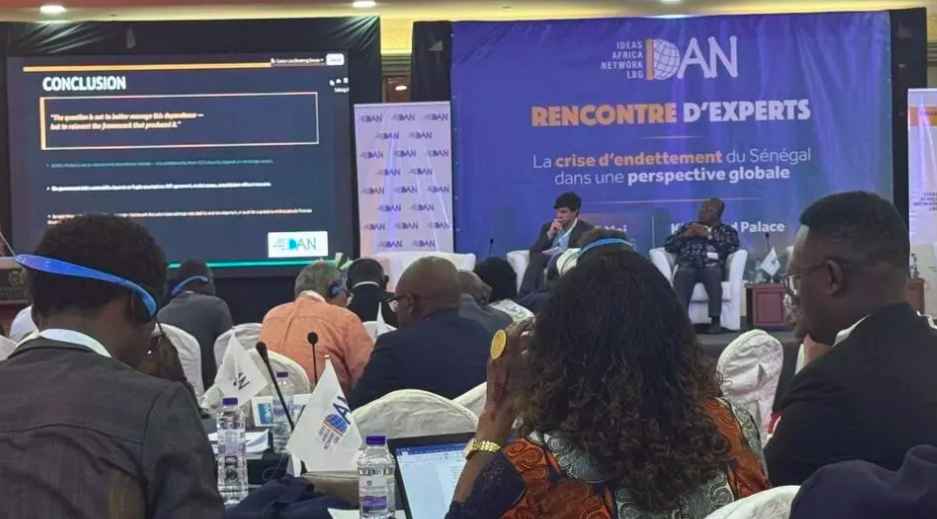
Economic experts urge Dakar to explore new funding avenues
As Senegal grapples with a mounting public debt crisis, economists gathered in Dakar have urged the government to broaden its financial partnerships. The call comes amid growing concerns over the country’s debt-to-GDP ratio, which authorities describe as reaching alarming levels. A recent conference on Senegal’s debt challenges highlighted the need for a comprehensive debt audit and innovative financing strategies.
Uncovering hidden financial commitments
Current Senegalese authorities claim to have identified undisclosed financial commitments made between 2019 and 2024 by former leaders. These undisclosed agreements, they argue, have significantly inflated the country’s debt burden, pushing it to 132% of GDP. However, these allegations have been firmly denied by former President Macky Sall.
Seeking alternatives to traditional lenders
Demba Moussa Dembélé, a prominent Senegalese economist and president of the African Research and Cooperation for Endogenous Development, advocates for partnerships with countries that prioritize national sovereignty. He specifically points to China as a potential ally, stating, “These partners will help us break free from the neocolonial system.”
Dembélé also stresses the importance of conducting a thorough audit of Senegal’s public debt to assess its true extent and restructure it responsibly.
Learning from global debt strategies
Ali Zafar, an economic advisor at the United Nations Development Programme (UNDP), suggests that Senegal follow the example set by Turkey. He notes how Turkey diversified its creditor base by engaging with Saudi Arabia. “The IMF isn’t the only institution with funds to offer,” Zafar remarked, encouraging Senegal to negotiate bilaterally with China to leverage its debt management expertise.
Zafar further advises that Senegal should approach IMF negotiations with strong counterproposals to protect social sectors such as education and healthcare. He warns against allocating all revenue to debt repayment or using international loans to settle existing creditors, emphasizing that “African nations must present united opposition.”
The advisor also proposes that Senegal reconsider its debt evaluation to gain a clearer understanding of its financial challenges. In an even bolder move, he suggests the establishment of an independent central bank to strengthen the country’s economic sovereignty. “No Asian nation would tolerate the situation Senegal faces today,” Zafar asserted, adding that “concrete solutions exist to break free from the debt crisis and reduce reliance on the IMF.”
Ongoing negotiations with global financial institutions
Despite these recommendations, discussions between the IMF and Senegalese officials continue. In late April, Senegal’s Director of Debt at the Ministry of Finance and Budget, Alioune Diouf, met with IMF leadership in Washington to address the country’s financial standing.