Senegal’s constitutional revision law adopted amidst parliamentary tensions
June 29, 2026The Pastef parliamentary majority successfully passed the constitutional revision bill, securing 129 votes in its favor. Meanwhile, the opposition chose to boycott the session, a decision made particularly after the expulsion of one of its members, Abdou Mbow, from the chamber when he refused to relinquish the podium.
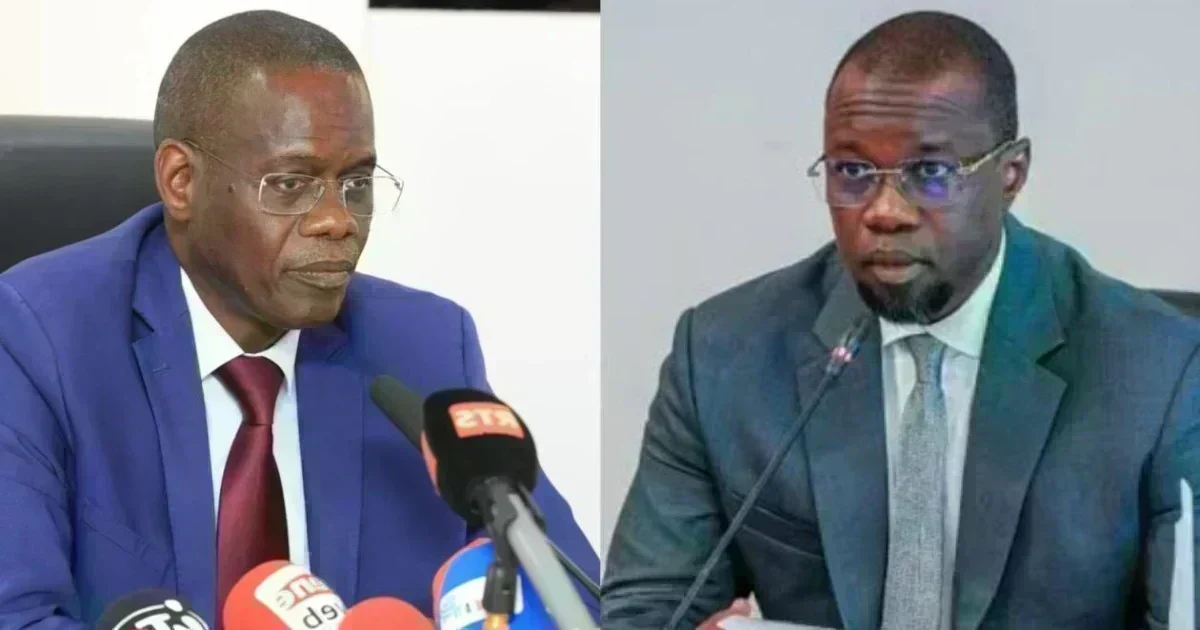
Justice Minister Moussa Sarr represented the government, advocating for its four proposed amendments. However, all these amendments were ultimately rejected by the majority deputies. I was present at the National Assembly to observe the proceedings.
Opposition boycott highlights procedural dispute
Opposition deputies leveled accusations against the National Assembly President, Ousmane Sonko, claiming he violated internal rules, prompting their decision to boycott the session. They unequivocally labeled this constitutional overhaul, spearheaded by Pastef, as a “forfeiture” or usurpation of power.
Aïssata Tall Sall, who chairs the opposition parliamentary group, voiced her perspective on the events.
“Our objective has been achieved,” she declared. “It was crucial to demonstrate to the world that what is occurring within the National Assembly is a form of dictatorship, an act of forfeiture. Gendarmes were mobilized to remove a deputy who was simply exercising his right to speak. This is precisely what we aimed to expose globally. Objective achieved.”
Government and Pastef clash over constitutional balance
Justice Minister Moussa Sarr witnessed the rejection of his four amendments by Pastef deputies. These amendments specifically addressed what he perceived as an imbalance of power, shifting too much authority to the National Assembly at the expense of the president.
“This revision impacts significant constitutional matters and disrupts the established equilibrium of our system: the rationalization of the motion of censure, limitations on the right of dissolution, procedures for completing the Constitutional Court, and alignment with our fundamental statute and international commitments,” Sarr explained. “Indeed, expanding the ability to file a motion of censure ten times during a single legislative term, while granting the President of the Republic only one dissolution right during their mandate, fundamentally breaks the traditional institutional balance.”
Divisions emerge between President Diomaye Faye and Ousmane Sonko’s camps
Among the points of contention between Pastef and President Bassirou Diomaye Faye is the mandatory declaration of assets at both the beginning and end of a mandate. Ousmane Sonko, the President of the National Assembly, asserted that such a divergence should not exist, reminding all parties that these were previously agreed-upon commitments.
“The President of the Republic has taken the text and selectively retained only what suits him,” Sonko stated. “The Constitution does not belong to Bassirou Diomaye Faye. To claim, ‘no, I will no longer declare assets at the end of my term,’ or ‘no, I wish to remain a party president,’ when these were commitments made during a political dialogue, championed by the party… For over a decade, we have fought this battle together. By what right can a single individual decide to cherry-pick and keep only what benefits them?”
Ousmane Sonko has called upon President Bassirou Diomaye Faye to officially promulgate the law. However, the head of state has expressed a preference for submitting the text to a national referendum.
This constitutional reform sparked protests from opposition groups and civil society organizations on Monday morning, taking place in the vicinity of the National Assembly.