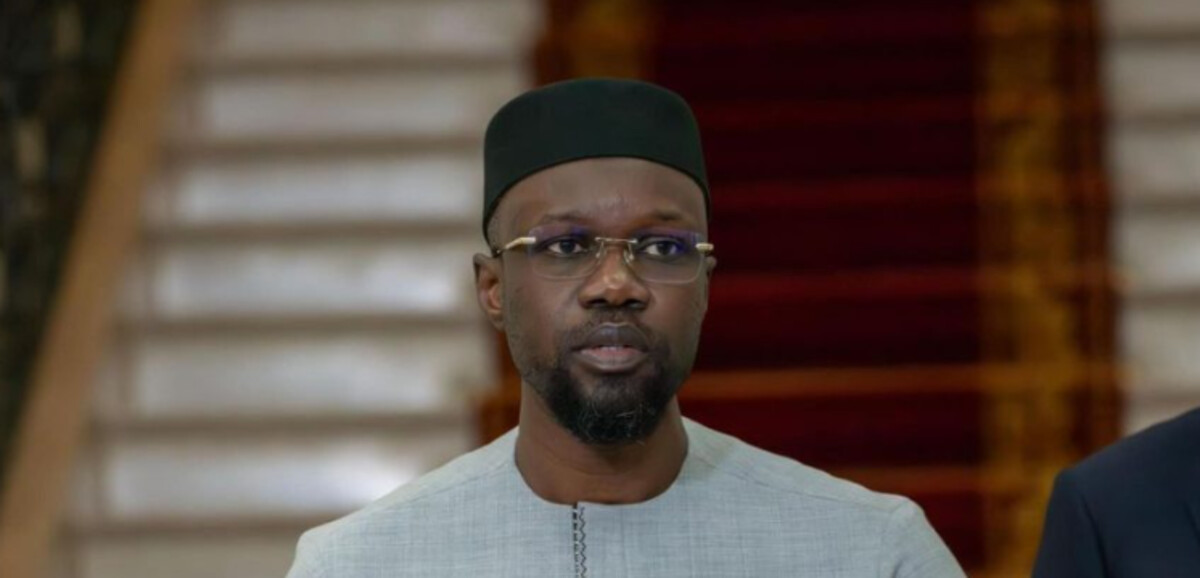
The dismissal of Ousmane Sonko by Bassirou Diomaye Faye on May 23, 2026, transcends a mere clash of personalities. It marks the irreconcilable divide between two conflicting economic visions that have long coexisted under the same banner. Two years after Faye’s historic April 2024 election—where Sonko was appointed Prime Minister—the partnership collapsed over three pivotal economic issues shaping Senegal’s future: debt, hydrocarbons, and the capital driving national policy.
Debt: The most visible fault line
The most glaring point of contention is debt. In September 2024, Ousmane Sonko exposed undisclosed debts accrued under Macky Sall’s administration. By March 2025, an IMF assessment estimated unrecorded commitments at €7 billion, pushing Senegal’s debt-to-GDP ratio beyond 100%. Annual debt servicing consumes 5,500 billion West African francs (€8.4 billion), while refinancing needs approach 6,000 billion (€9.1 billion). The country’s sovereign credit rating has been downgraded three times in twelve months.
Amid this backdrop, diametrically opposed strategies emerged. Sonko refused restructuring, framing his stance as a crusade against the previous regime. His rhetoric resonated with public opinion, the diaspora, and his militant base, rejecting the appearance of negotiating Senegal’s legitimacy with Washington. Faye, by contrast, pursued engagement with the IMF, hosting a delegation in November 2025 and initiating a national dialogue in May 2026.
The suspended €1.55 billion IMF program, closed access to international financial markets, and the looming specter of a 2028 sovereign default rendered Sonko’s position economically unsustainable—despite its political utility for mobilizing the Pastef (African Patriots of Senegal for Work, Ethics, and Fraternity, Sonko’s 2014-founded party).
Oil and gas: Two divergent philosophies
The second fracture is even more stark: oil and gas contracts. The Sangomar oil field, operational since June 2024, is 82% owned by Australian firm Woodside. The Greater Tortue Ahmeyim (GTA) gas field, operational since early 2025, straddling the Senegal-Mauritania border, holds an estimated 500 billion cubic meters of reserves. Both leaders shared a common goal—renegotiation—but differed fundamentally in approach.
Sonko publicly condemned BP, the GTA operator, as part of an “unfair and imbalanced agreement,” issuing ultimatums. Faye, since April 2025, described progress as “highly satisfactory” and “proceeding as planned.” Major corporations remained unfazed. Faye negotiated; Sonko confronted. The companies waited.
This divergence is not tactical but doctrinal. It pits absolute economic sovereignty—Sonko’s vision of breaking ties with multinationals and Bretton Woods institutions as a negotiation tactic—against Faye’s pragmatic approach. The latter understands that oil and gas revenues depend on operators continuing to invest and produce. Production, after all, is the only tangible economic lever available to the state.
Financing the future: Two models of political capital
The third divide centers on political financing itself—how each faction sustains its existence. Sonko pioneered a rare model in Senegalese politics: the Pastef thrives on micro-contributions from the diaspora, emerging entrepreneurs in tech and trade, and mass grassroots support. This funding base explains the party’s parliamentary dominance—130 of 165 deputies owe their seats to Sonko, many pledging loyalty to him rather than the presidency.
Faye, meanwhile, has pivoted toward a coalition of technocrats, former civil servants, and business networks prioritizing institutional stability over militant rupture. The “Diomaye President” coalition, relaunched in a general assembly on March 7, 2026, reflects this shift.
The May 23 dismissal formalizes this transition. When a country’s debt exceeds 100% of GDP and refinancing needs hit €9 billion annually, the cost of posturing becomes quantifiable. Senegalese euro- and dollar-denominated bonds plummeted at the first sign of public discord. Governing with two competing narratives is untenable when markets demand coherence.
Two lines, contradictory yet complementary
Is Faye’s path correct and Sonko’s flawed? The question is misplaced. Sonko’s line exposed hidden debts—a courageous act no regime had dared attempt since independence. Without his disclosure, Senegal would have continued borrowing against falsified figures.
Faye’s line embraces negotiation within the global financial system, accepting painful fiscal discipline. One speaks truth to power; the other rebuilds trust through compromise. Neither is complete without the other.
The tragedy is that Senegal’s political architecture—built around a vertical presidency—failed to accommodate both imperatives simultaneously. A system capable of housing radical truth and patient recovery within a unified framework was never realized.
The victory of economic realism
There’s a more unsettling interpretation: multinational corporations remained calm during two years of Sonko’s rhetorical confrontation, betting on the institutional resilience of time over the short-term rupture of words. They were proven right.
May 23, 2026, is their vindication in a sense—not because they orchestrated events, but because real economic forces ultimately override political posturing. This is the real state in contrast to the fictive state of declarations.
The horizon of 2029 now unfolds. Sonko re-emerges as a mobile political force, poised to transform the Pastef into an opposition machine, campaign nationwide, and rally the diaspora. Faye, unshackled from Sonko, can finalize an IMF agreement, refinance debt, and present a stability report. Each now plays their hand openly. Senegalese voters face a choice in 2029: between affirmed sovereignty and managed sovereignty. Neither path is entirely honest or entirely satisfying.