Strengthening ties: Gabon and UK forge a strategic partnership
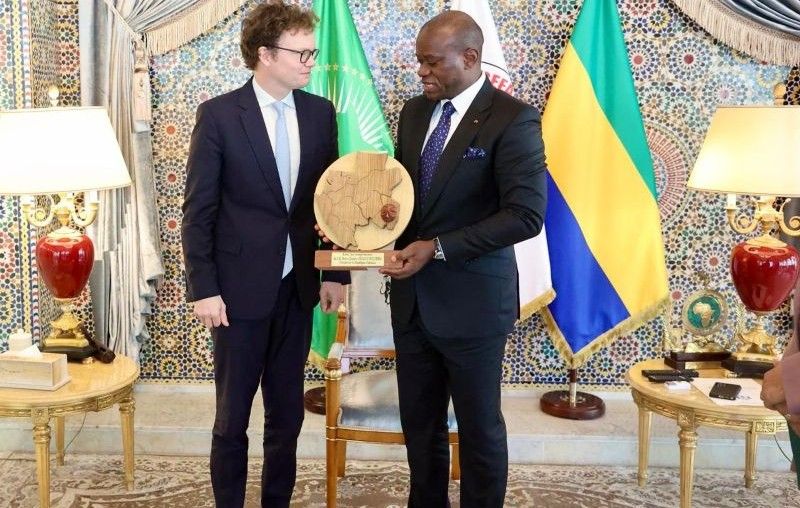
Libreville, Thursday, July 2, 2026 – As Gabon accelerates its profound economic and institutional transformation, the departure of British Ambassador Simon Day signifies far more than the conclusion of a diplomatic assignment.
The recent audience granted by President Brice Clotaire Oligui Nguema underscores the increasing importance of a strategic Gabon UK partnership. This burgeoning alliance between Libreville and London is firmly rooted in mutual investment, robust governance, vital environmental protection, and unwavering political trust. Such a relationship clearly illustrates the elevated position Gabon aims to secure on the international stage.
Relations between Gabon and the United Kingdom are entering an exciting new chapter. President Oligui Nguema’s reception of British Ambassador Simon Day, marking the culmination of his diplomatic tenure, elevated a routine farewell into a moment of significant import, transcending mere protocol.
Beyond the formal goodbyes, this crucial meeting provided an opportunity to assess the substantial progress achieved over the past two years in a collaborative effort that has become one of the most dynamic between Gabon and a major European ally. Amidst the far-reaching reforms initiated by Gabonese authorities and the nation’s successful return to constitutional order, London has steadily emerged as a pivotal interlocutor across several critical sectors.
The dialogue between the two leaders confirmed an increasingly evident reality: Gabon is no longer solely perceived as a country rich in natural resources. Instead, it actively seeks recognition as a credible destination for international investments, economic innovation, and enduring partnerships.
A deepening cooperation beyond diplomatic ties
Over several years, the bonds between Libreville and London have strengthened considerably. Discussions between the two nations have consistently focused on areas reflecting major shifts in the global economy.
Governance, trade, economic cooperation, strategic investments, forest conservation, and sustainable development now form the core of their shared agenda.
This evolution is far from incidental. The United Kingdom remains one of the most influential players in international financial markets, capital markets, climate financing mechanisms, and high-value-added investments.
For Gabon, which is actively pursuing economic diversification and striving to lessen its reliance on traditional raw material revenues, the benefits of this closer alignment are undeniable. It provides access to expansive global business networks, specialized funding opportunities, and recognized expertise across various key sectors.
President Oligui Nguema lauded Ambassador Day’s significant contributions to bolstering this bilateral dynamic, emphasizing the British diplomat’s pivotal role in deepening the dialogue between the two nations.
Environment as a strategic advantage
One of the most robust pillars of this evolving relationship remains environmental protection.
Gabon boasts one of the planet’s most significant forest heritages, positioning itself as a central actor in global climate change mitigation policies. The United Kingdom, for its part, has established itself as a leading international proponent of green finance and ecosystem preservation initiatives.
This convergence of interests has spurred particularly active cooperation around climate issues, the sustainable management of natural resources, and the economic valuation of environmental services.
In a world where ecological transition is becoming a major factor in competitiveness, this alliance offers Gabon a unique opportunity to transform its natural capital into a strategic advantage, simultaneously enhancing its international appeal.
A clear signal to global investors
During the audience, Simon Day expressed his profound gratitude to the Gabonese authorities for the warm reception he received throughout his stay, while also highlighting the remarkable progress achieved by the country.
Even more significantly, the diplomat reaffirmed the growing interest of British partners in the abundant opportunities Gabon currently presents.
This message carries particular weight. International investors closely monitor the reforms undertaken by Gabonese authorities. They meticulously assess institutional stability, the quality of the business climate, legal security, and the nation’s capacity to provide an environment conducive to long-term investments.
In this context, the keen interest demonstrated by British stakeholders serves as a crucial indicator of Gabon’s regained credibility on the international economic stage.
The audience between the Gabonese President and the British Ambassador thus illustrates a fundamental trend: that of a nation actively seeking to consolidate its strategic partnerships to underpin its economic transformation.
Beyond the departure of a diplomat, what was reaffirmed was the continuity of a relationship built on trust, mutual respect, and converging interests. For both Libreville and London, the objective is no longer merely to maintain high-quality diplomatic dialogue.
It is now about forging a partnership capable of generating sustained growth, prosperity, and influence within a rapidly reconfiguring international environment. From this perspective, Gabon unequivocally intends to leverage its economic diplomacy as a primary driver for its future development.