The narrative propagated by state-controlled media, portraying Burkina Faso as an emergent « eldorado » under Captain Ibrahim Traoré’s leadership, appears increasingly disconnected from the lived realities of its citizens. While official discourse highlights a purported « progressive popular revolution, » the daily struggles of many Burkinabè—marked by persistent insecurity, economic hardship, and unfulfilled expectations—paint a starkly different picture.
Leadership ambitions versus ground-level realities
Since assuming power, Captain Ibrahim Traoré has repeatedly vowed a national rebirth, rapid industrialization, and the full restoration of territorial integrity. Yet, despite these bold declarations, tangible progress remains elusive for large segments of the population. While isolated infrastructure projects may exist, their presentation as evidence of widespread development is, at best, an oversimplification.
The government’s insistence on an endogenous development model, framed as the foundation for a prosperous nation, warrants careful scrutiny. Burkina Faso continues to grapple with entrenched challenges, particularly in security, where sporadic attacks persist across multiple regions, displacing tens of thousands. Beyond security concerns, systemic issues—such as strained public services, economic strain, and soaring living costs—further compound the population’s hardships.
Humanitarian crisis deepens amid ongoing violence
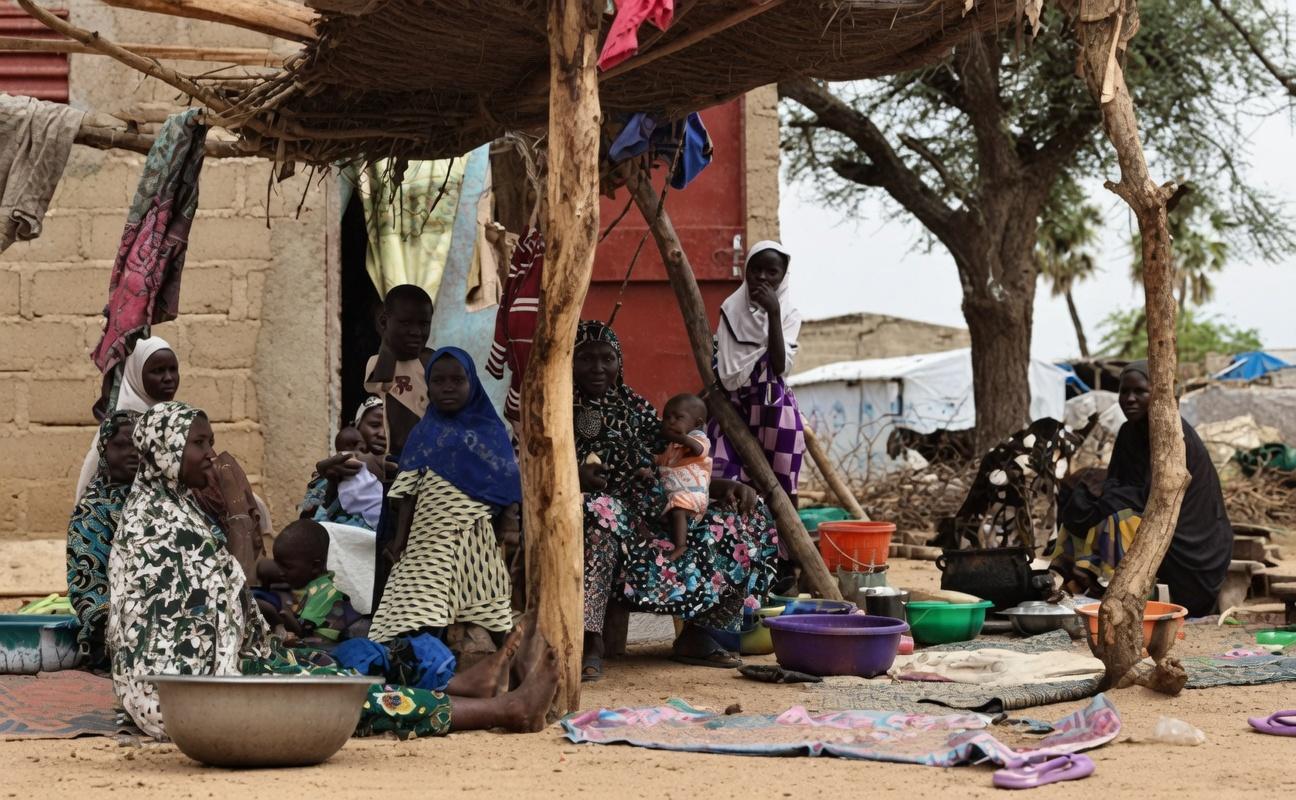
The security crisis has triggered widespread displacement, forcing families to flee their homes in search of safety, often across borders. These mass movements underscore the persistent instability gripping large parts of the country. In the hardest-hit areas, civilians face severe shortages of essentials, including food, medical care, and basic utilities. Disrupted agricultural cycles, supply chain breakdowns, and restricted humanitarian access have exacerbated food insecurity, leaving thousands of households in precarious conditions. In regions with limited state presence, communities remain vulnerable, relying heavily on sporadic aid deliveries.
From rhetoric to results: a growing disconnect
For many observers, the portrayal of Burkina Faso as an « eldorado » reflects a deliberate effort to construct a favorable image of the transitional leadership rather than an accurate reflection of national conditions. While early enthusiasm for Traoré’s leadership has waned, the gap between political messaging and lived experience has only widened. Citizens are no longer satisfied with lofty declarations; they demand concrete improvements in security, employment opportunities, economic stability, and public service delivery. Without these, public trust in governance risks eroding further.
The claim that Burkina Faso has decisively moved beyond past challenges appears premature. True progress cannot be measured solely by the announcement of new projects or political slogans but by demonstrable improvements in living standards, territorial security, and institutional responsiveness. Even statements emphasizing sovereignty—such as Traoré’s assertion that « the context today is no longer that of 1987 »—while resonant with some, do little to address pressing concerns over governance, economic performance, or security.
A nation waiting for action
Ultimately, the framing of Burkina Faso as an « eldorado » serves more as a strategic communication effort than a reflection of reality. As long as promises remain unmet and tangible benefits fail to materialize, such narratives risk falling on increasingly skeptical ears. The population’s patience, once tested by crisis, now demands tangible change—not words.