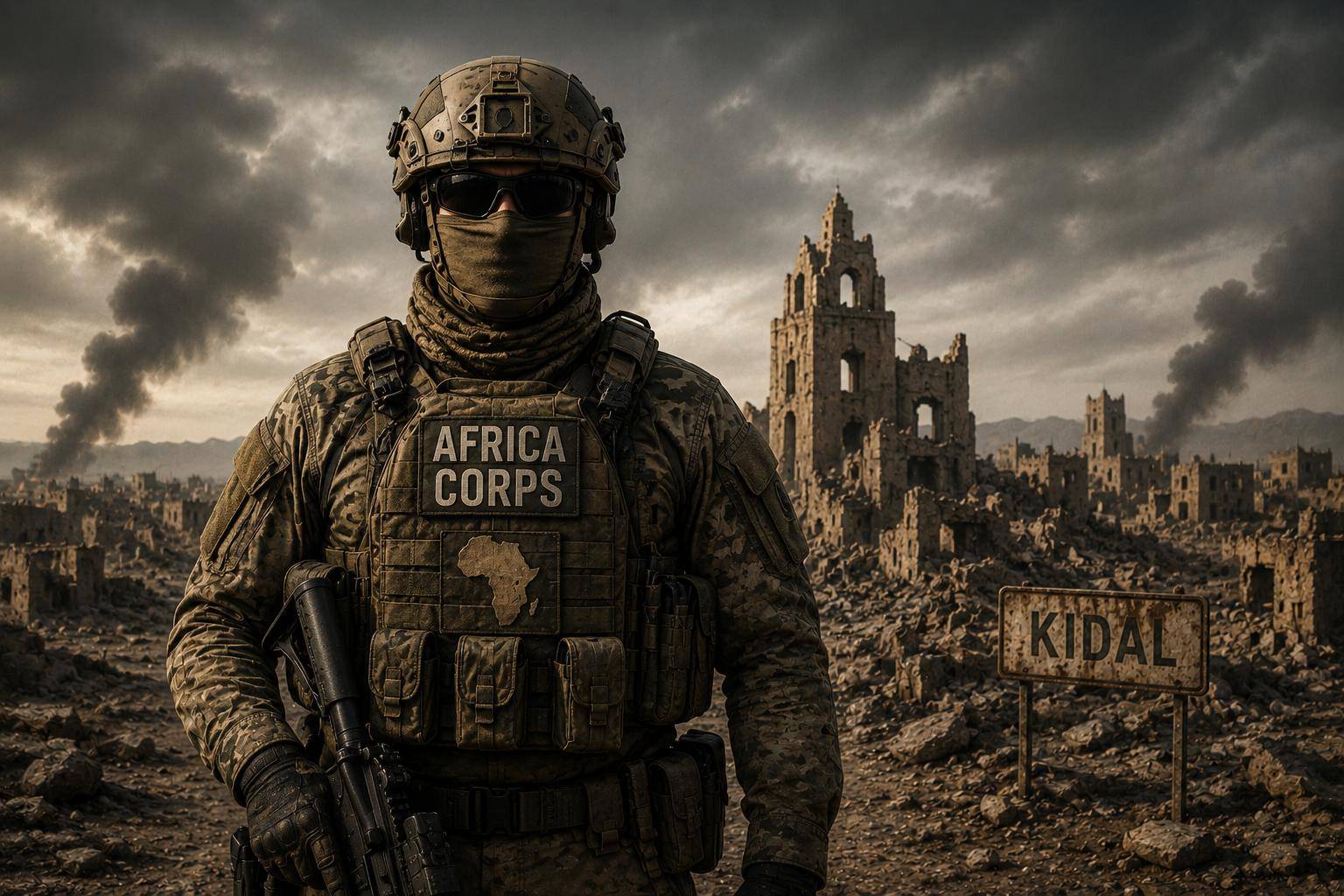
ANALYTICAL INSIGHT. Beyond the stated military justifications, a recent publication by Russian allies, the Africa Corps, unveils a profound political truth. Reading between the lines, it becomes clear that Russian communicators are preparing public opinion for a significant strategic shift concerning Northern Mali. Two primary hypotheses now emerge regarding the future of operations in the region.
Hypothesis 1: The Africa Corps prepares to distance itself from Assimi Goïta
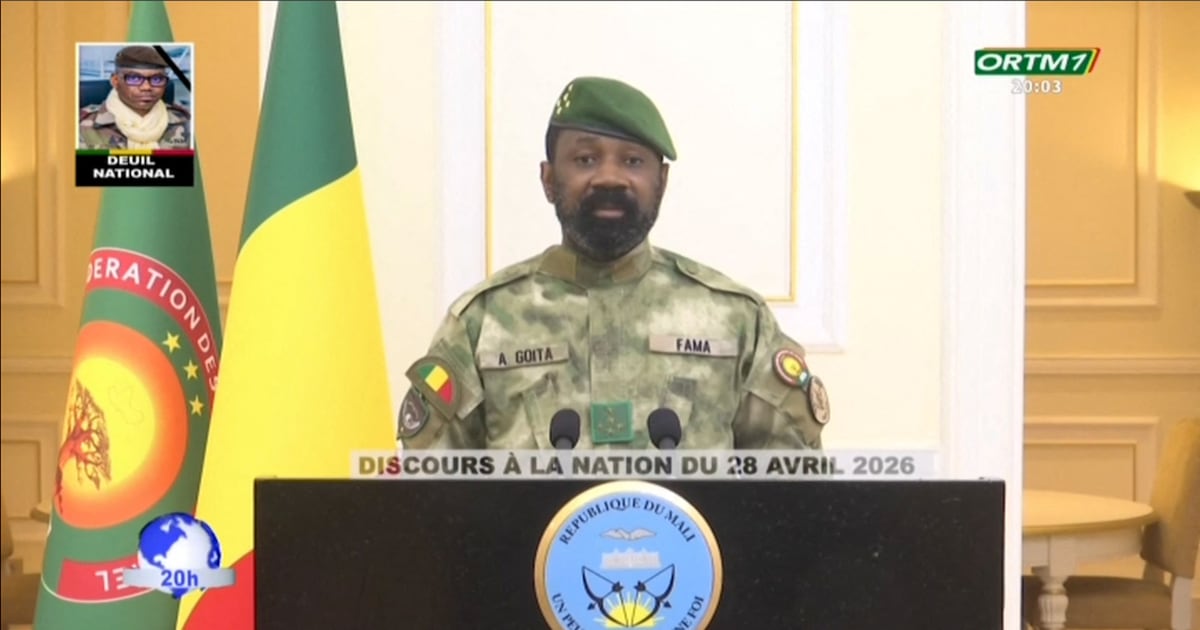
For many months, transitional president Assimi Goïta staked his entire political capital on a singular pledge: to reclaim and secure every inch of Malian territory, beginning with Kidal. This was not merely a military objective; it stood as a powerful symbol of Malian national pride and sovereignty.
By now asserting that Kidal is “worthless” and should be bypassed, the Africa Corps directly undermines President Goïta’s authority and credibility. Should the Russian forces opt out of direct engagement for Kidal, they would effectively leave the Bamako government isolated, grappling with promises that are increasingly impossible to fulfill. This move could signal the start of a political disengagement, with significant political implications for Assimi Goïta leadership.
Hypothesis 2: The execution of a clandestine agreement with the FLA and JNIM
The phrasing within the Africa Corps’ communique suggests another compelling possibility: what if the Africa Corps is already implementing a secret pact, forged discreetly with the Front de Libération de l’Azawad (FLA) rebels and the Jama’at Nusrat al-Islam wal Muslimeen (JNIM) jihadists? This potential arrangement could redefine the Northern Mali conflict landscape.
To rationalize ceding ground to these armed factions without appearing to capitulate, Russian strategists employ a convenient narrative: “We haven’t lost; we are merely circumventing a desert trap.” In reality, downplaying Kidal’s strategic importance might be a calculated maneuver to soften public perception, paving the way for a cohabitation or territorial division already negotiated behind the scenes. This would represent a dramatic shift in the overall Mali security strategy.
This particular Africa Corps publication unmistakably indicates that the initial operational plan has not succeeded. For the Africa Corps, the era of outright reconquest appears to be over. Either the Russian partners are diverging from Assimi Goïta’s hardline stance to safeguard their own interests, or they are formally acknowledging, through this written communication, the relinquishment of Northern Mali to rebel and Islamist groups via a non-aggression understanding. This strategic shift could have lasting consequences for the region.