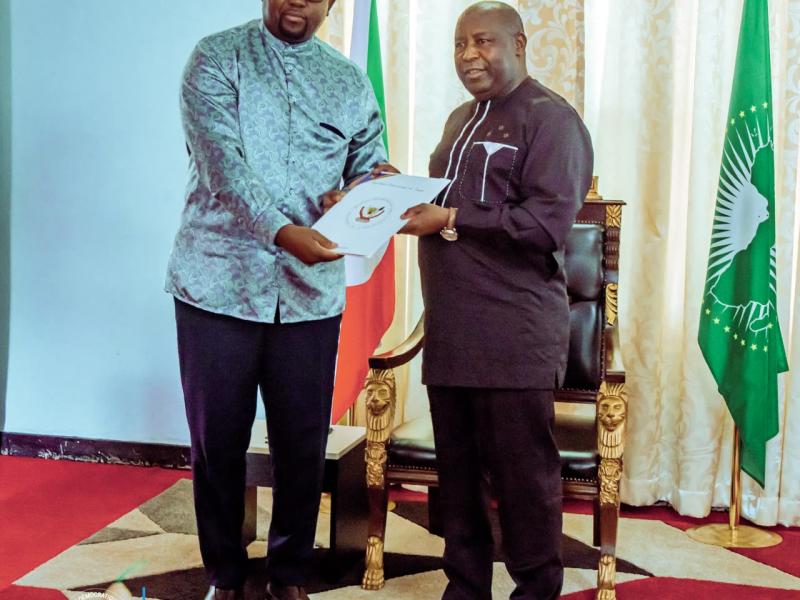
The Chairperson of the African Union Commission arrived in Bamako over the weekend for an official visit aimed at deepening ties and fostering cooperation between the continental body and Mali. Mahmoud Ali Youssouf conveyed the full solidarity of the African Union with Malian authorities as they navigate persistent security threats. This backing comes despite Mali’s suspension from AU bodies since the 2021 coup— a measure imposed following the unconstitutional takeover to push for a swift return to democratic governance.
The African Union, however, has chosen not to isolate Bamako, emphasizing that Mali’s stability is crucial to regional security. Diplomatic engagement remains active through the AU Special Representative for Mali and the Sahel and the AU Mission for Mali and the Sahel (MISAHEL).
From words to action
Mahmoud Ali Youssouf’s visit underscores the African Union’s commitment to standing with Mali as armed groups continue to destabilize the nation. Yet, as Alioune Tine, founder of Africa Jom Center, points out, the AU must move beyond rhetoric and take tangible steps to assist Bamako. He stresses the need for greater mobilization, including rallying resource-rich member states to provide support and potentially deploying AU troops to combat terrorism.
“The Chairperson of the African Union Commission must demonstrate solidarity in a far more proactive and concrete manner,” Tine asserts. “He should rally countries with the capacity to help and push for the deployment of AU troops to reinforce Mali’s fight against terrorism. That’s what we need most right now.”
Challenges facing the African Union’s engagement
Despite Mali’s authorities questioning the 2015 Algiers Accord, the African Union persists in advocating for political solutions to the crisis. However, recent developments—including the alliance between northern separatists and the Group for Support of Islam and Muslims (JNIM)—have raised concerns. The AU views this coalition as a dangerous escalation and rejects both its legitimacy and demands.
The continental body continues to uphold Mali’s territorial integrity while calling for stronger regional counter-terrorism efforts. Yet, Aly Tounkara of the Centre for Strategic and Security Studies in the Sahel highlights the AU’s structural and political constraints.
“Given the lack of alignment among member states—let alone agreement on a unified agenda for Mali—it’s unrealistic to expect the AU to offer significant military or intelligence support,” Tounkara explains.
He adds that “the AU’s heavy reliance on extra-Sahelian donors creates major obstacles to implementing effective actions. Overcoming these dependencies is critical for the AU to remain relevant and impactful in addressing Mali’s challenges.”
As the African Union balances diplomatic support, calls for territorial unity, and internal political hurdles, the true test lies in whether this visit will spark a meaningful shift in engagement with Bamako and its partners in the Sahel.