Strategic partnerships and bold economic moves during Wadagni’s Ethiopia visit
In a whirlwind day of high-level diplomacy and economic strategy, Benin’s President Romuald Wadagni concluded a landmark working visit to Addis Ababa, reinforcing the nation’s role as a rising economic powerhouse on the African continent. The July 2026 trip underscored Cotonou’s commitment to fostering industrialization, deepening financial cooperation, and strengthening ties with East Africa.
Diplomatic honors set the stage for economic engagement
Upon arrival at Bole International Airport, President Wadagni received a formal welcome at the Presidential Pavilion from Ethiopian Deputy Prime Minister Tiruneh Temesgen. The ceremony highlighted the strong bilateral rapport between Benin and Ethiopia—two countries united by a shared vision of African self-reliance and shared prosperity. The Beninese leader wasted no time, immediately launching into a packed agenda that blended economic foresight with diplomatic finesse.
His first official stop was a strategic meeting with Dr. George Elombi, CEO of Afreximbank. The discussion laid the foundation for future financial collaborations, with both sides acknowledging Benin’s reputation for prudent economic management and bold structural reforms. Afreximbank’s pivotal role in financing intra-African trade makes it a natural partner for Cotonou as it seeks to expand industrial output and export capacity.
Afreximbank retreat: Benin’s industrial model takes center stage
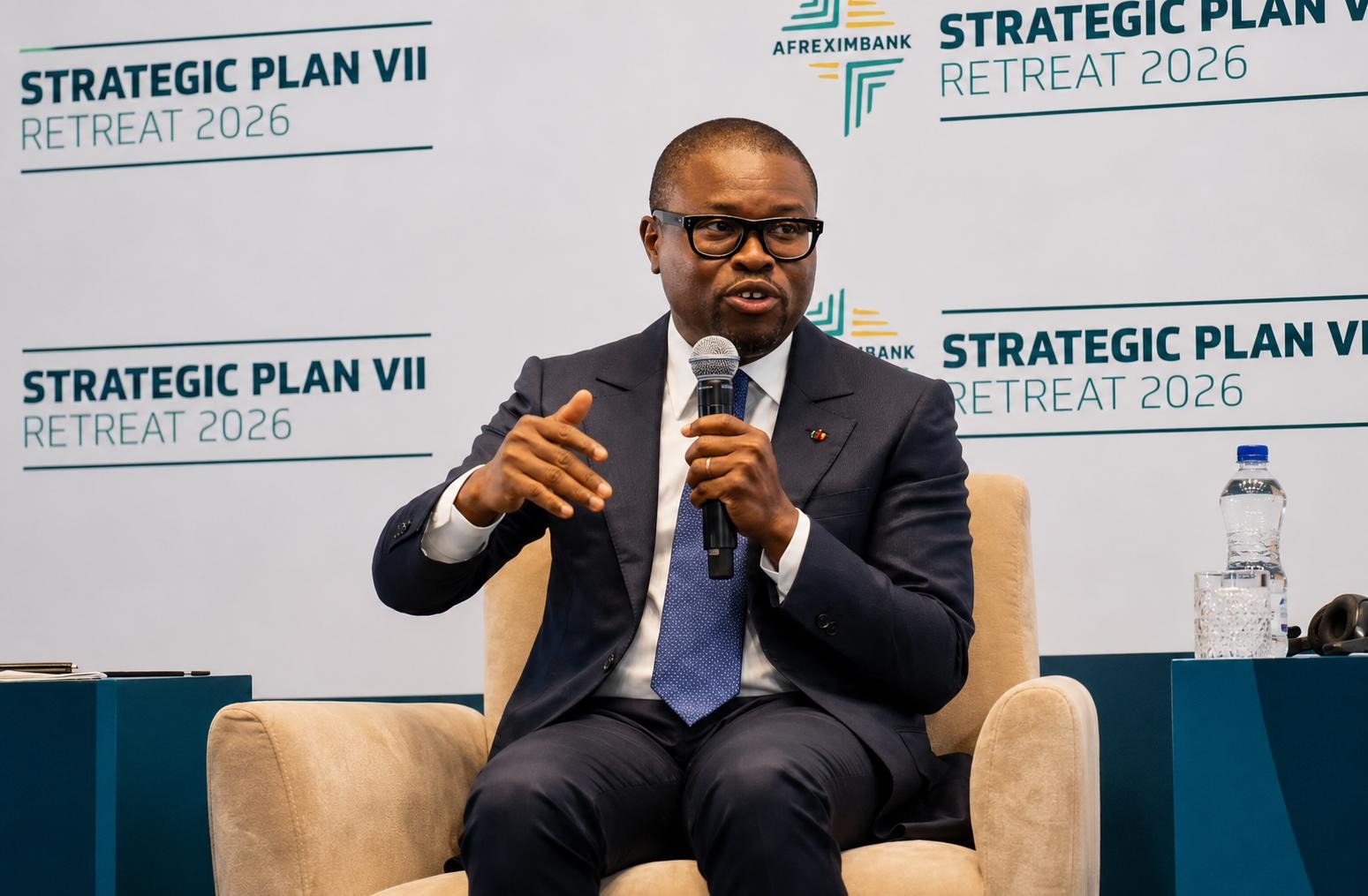
The centerpiece of the visit was President Wadagni’s keynote address at the Afreximbank Strategic Retreat, where he was the guest of honor. Addressing a room of Africa’s top financiers, economists, and policymakers, he delivered a frank and data-driven speech titled “Why governments fail to industrialize—and how to succeed”. Breaking from diplomatic niceties, he shared hard-won lessons from Benin’s own transformation journey, particularly the success of the Glo-Djigbé Industrial Zone (GDIZ).
The GDIZ has become a benchmark for value-added processing in Africa, turning raw commodities like cotton, cashews, and soybeans into finished goods. “Industrialization isn’t a slogan—it’s iron discipline, consistent reform, and a business environment you can trust,” Wadagni emphasized. He cautioned against common pitfalls: policy inconsistency, mismatched skills training, and over-reliance on imported inputs. His pragmatic insights were met with strong applause, positioning Benin as a model for other African nations grappling with industrialization.
Bilateral talks at Menelik Palace: forging a new east-west axis
The afternoon shifted to the historic Palais Menelik, where President Wadagni met with Ethiopian Prime Minister Abiy Ahmed. The warm reception reflected the depth of mutual respect between the two leaders. After a focused one-on-one discussion, both delegations engaged in broader talks aimed at strengthening economic and logistical cooperation.
The agenda covered three key areas: aviation connectivity through Ethiopian Airlines and upgrades to Benin’s transport infrastructure, knowledge-sharing in high-value agriculture, and coordinated advocacy in global financial institutions to reform the international monetary system in Africa’s favor. These discussions signaled Cotonou’s strategic pivot toward East Africa, positioning Ethiopia as a gateway to deeper continental integration.
Benin steps into Africa’s economic leadership
By the end of the day, President Wadagni returned to Cotonou, having delivered a message that resonated across the continent. His participation in the Afreximbank retreat and his dialogue with East African leaders reaffirmed Benin’s emergence not just as an economic actor, but as a thought leader shaping Africa’s industrial future. In Addis Ababa—home to the African Union and a hub of continental finance—Benin staked its claim at the table of Africa’s economic architects. The visit was more than a diplomatic gesture; it was a declaration: Benin is ready to lead the charge toward a more industrialized, integrated, and self-sufficient Africa.