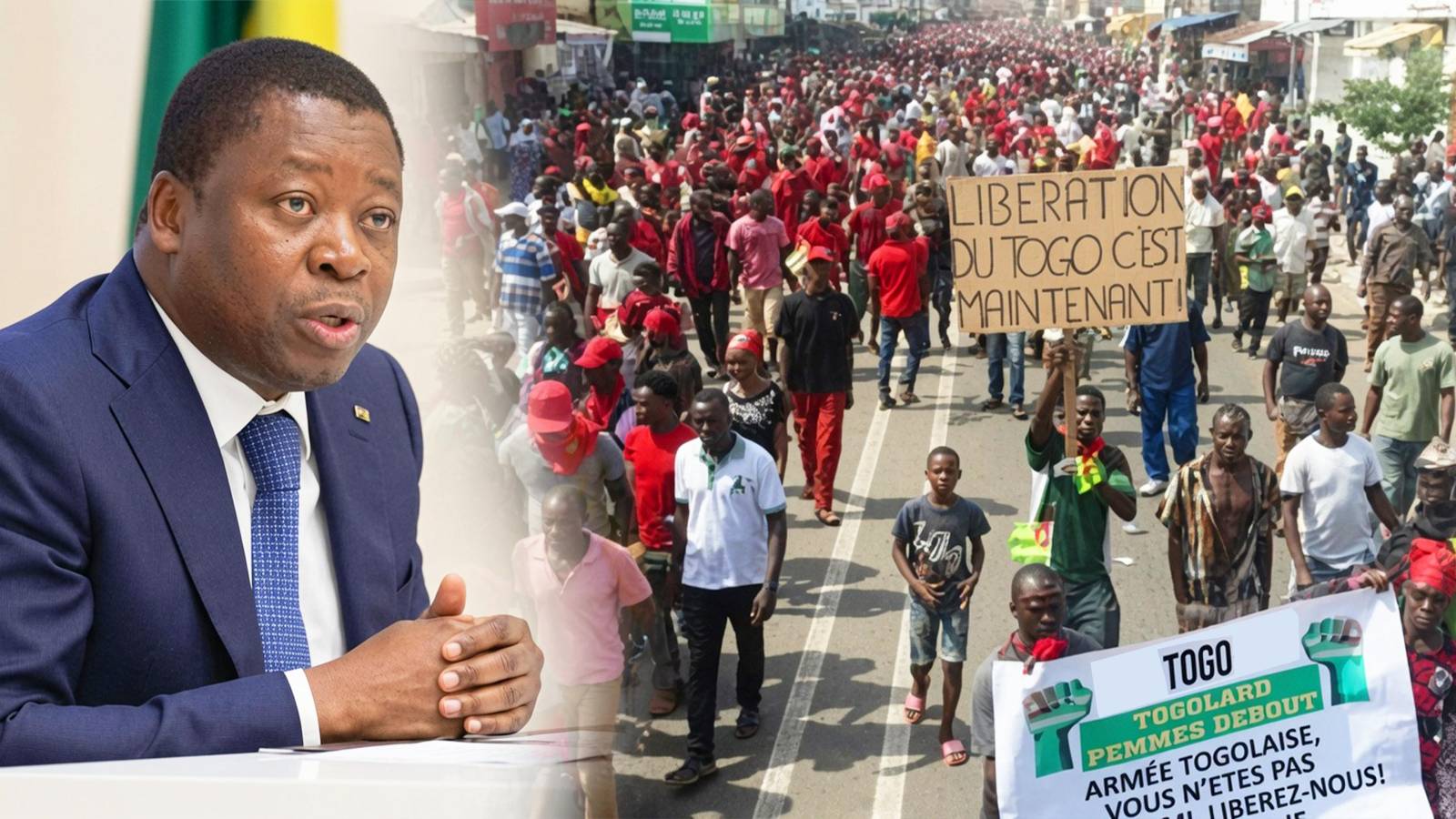
The youth of Togo confront an unrelenting dilemma: seek opportunities abroad or resign themselves to a future without prospects. This stark choice has intensified criticism of President Faure Gnassingbé’s long-standing administration, widely accused of failing to deliver on promises of progress and prosperity after more than two decades in power.
What was once a debate over the possibility of success within Togo’s borders has shifted decisively. A growing number of young Togolese now view emigration not as an option, but as the only viable path forward. Where previous generations clung to the hope of building their futures locally, today’s youth increasingly see departure as their sole realistic prospect. This generational shift reflects a profound erosion of trust in the state’s ability—or willingness—to foster an environment where ambition and effort can flourish.
A widening chasm between education and opportunity
The contrast between official narratives celebrating economic modernization and the lived reality of the labor market could not be more striking. Government statistics may paint a rosy picture of low unemployment, yet beneath the surface lies a far grimmer landscape: over 70% of young workers are trapped in underemployment or the informal economy.
Each year, universities in Lomé and Kara churn out thousands of graduates. Yet the state’s employment initiatives—such as the National Employment Agency (ANPE) and the National Coalition for Youth Employment (CNEJ)—remain woefully inadequate in scale and effectiveness. Without meaningful opportunities, a vast majority of these qualified young people are reduced to piecing together livelihoods through informal work, rendering their academic qualifications all but meaningless.
This mismatch between education and employment exacts a heavy toll. Families invest years of sacrifice to educate their children, only to watch as engineers drive moto-taxis or law graduates sell goods on the streets. The consequences extend beyond individual disappointment: the nation’s economic potential suffers as human capital is squandered, innovation stifles, and productivity declines.
An economy stifled by inefficiency and favoritism
The lack of high-value job creation is compounded by a persistent industrial weakness. The economy remains anchored in low-value sectors incapable of offering career paths commensurate with the qualifications of the workforce. Meanwhile, the dream of entrepreneurship is stifled by systemic barriers. Despite initiatives like the Youth Economic Initiatives Support Fund (FAIEJ), securing financing without political connections or substantial collateral is nearly impossible.
Opportunities in public contracts and large-scale ventures are largely monopolized by a narrow elite tied to the ruling party (UNIR). For young Togolese without ‘connections’—commonly referred to as *le piston*—social mobility remains a distant fantasy. This reality fosters a deep sense of injustice, eroding faith in meritocracy and the very concept of equal opportunity.
The private sector, which could otherwise serve as an engine for job creation, operates under crippling constraints. Entrepreneurs cite administrative hurdles, limited access to financing, sluggish purchasing power, and economic uncertainty as major deterrents to investment and hiring. Without a thriving private sphere, the prospects for meaningful employment continue to dim.
The exodus as survival: a nation’s talent in flight
With domestic success increasingly unattainable, emigration has evolved from a personal choice to a survival strategy. The scale of this outflow manifests in two particularly alarming trends:
- Diplomatic queues: Daily, long lines form outside the French embassy, Campus France offices, and immigration agencies in Canada and Gulf states, as young Togolese seek visas to escape.
- Brain drain: The healthcare sector is hit hardest, with doctors, nurses, and engineers leaving en masse for better opportunities abroad. Researchers, IT specialists, educators, digital experts, and entrepreneurs follow suit, depriving Togo of the very talent needed to drive innovation and attract investment.
The irony is stark: Togo invests in educating its youth, only for the benefits to be reaped by foreign economies. Meanwhile, the country loses the skilled professionals it desperately needs to modernize and grow. This hemorrhage of human capital weakens the nation’s capacity for reform, leaving it increasingly dependent on outside expertise to fill the gaps.
Political stagnation: the death knell for hope
The economic despair is exacerbated by a deepening political crisis. The passage of the Fifth Republic Constitution in 2024, widely perceived as a legal maneuver to consolidate power under the guise of parliamentary reform, shattered any remaining illusions of democratic renewal. By effectively eliminating the possibility of genuine political turnover, the regime has pushed a generation to abandon faith in domestic institutions entirely.
Many young Togolese argue that without institutional renewal, an independent judiciary, and true political competition, economic reforms are doomed to fail. The conviction that the future lies abroad—and not within Togo’s borders—grows stronger by the day. This disillusionment fuels a broader disengagement from civic life. Young people are increasingly withdrawing from political parties, associations, and public initiatives, convinced that their participation cannot influence the nation’s direction. Such apathy weakens democratic vitality and silences the creative energy of an entire generation.
Can a nation thrive without its youth?
After nearly twenty years at the helm, President Faure Gnassingbé’s administration faces mounting criticism for fostering an economy that benefits a privileged few while leaving the majority in precarity. Critics argue that the current model has failed to create an inclusive environment where ambition and effort are rewarded. Instead, wealth and opportunity remain concentrated in the hands of an entrenched elite, while the broader population grapples with scarcity or contemplates exile.
Historical evidence suggests that no nation can sustain long-term prosperity when its youth view departure as their primary aspiration. Successful countries are those that retain their talent, nurture innovation, and cultivate trust between citizens and institutions. For Togo, the question is urgent: how can a nation develop when its most dynamic, educated, and ambitious citizens dream only of leaving?
Without decisive action to address unemployment, governance transparency, business climate improvements, and democratic aspirations, the country risks a gradual but irreversible depletion of the very forces that should drive its progress. The exodus of Togo’s youth is not merely a symptom of failure—it is a clarion call for change.