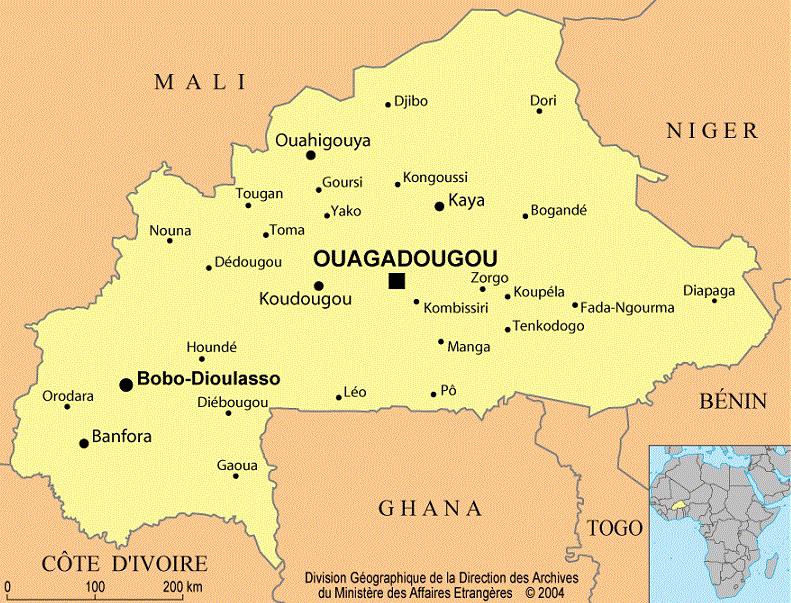
A climate of uncertainty now surrounds the fate of Imam Mahmoud Barro, an influential religious leader in Burkina Faso’s second-largest city, Bobo-Dioulasso. One week has passed since his last public appearance, and he has been reported missing since March 31st. This unsettling development, marked by whispers of abduction and official silence, has ignited deep concern within the Burkinabè Muslim community and broader civil society across Burkina Faso.
An unusual quiet has settled over the neighborhood where Imam Barro resides in Bobo-Dioulasso. For seven days, his family and close associates have had no contact. Several consistent accounts from his inner circle suggest the religious figure was “abducted” by unidentified individuals. While no group has claimed responsibility for his disappearance, the timing of this incident has raised significant questions within the context of Burkina Faso’s political landscape.
A Critical Video: The Potential Catalyst for Disappearance?
Prior to this incident, Imam Mahmoud Barro was widely regarded as a significant supporter of Burkina Faso’s Transitional Government. His past public statements, often backing the ruling military junta in Ouagadougou, positioned him as a valuable ally within the nation’s religious landscape. However, this apparent harmony seems to have abruptly ended.
The turning point appears to be the recent publication of a video on social media. In this footage, the Imam reportedly launched an uncharacteristically strong critique against the government’s draft bill aimed at regulating religious practices within Burkina Faso. “He voiced legitimate concerns about freedom of worship, but his tone was exceptionally direct,” shared a local source who wished to remain anonymous. “For many observers, this public stance was perceived as crossing a red line by those who brook no dissent.”
Escalating Tensions for Dissenting Voices in Burkina Faso
This troubling disappearance unfolds against a backdrop of heightened security and political tension in Burkina Faso, where reports of forced disappearances and extrajudicial arrests have unfortunately become more frequent nationwide. Imam Barro’s case is particularly striking, given his previous alignment with official government positions. His shift to open criticism makes his situation even more precarious and highlights broader concerns for human rights.
As of now, Burkina Faso’s security authorities have not issued any official statement regarding the matter. In Bobo-Dioulasso, the initial period of anxious waiting is giving way to increasing frustration. Devotees and human rights organizations are urgently calling for transparency and the immediate release of the religious leader, should it be confirmed that he is being held by state services.
Engaged in a complex battle against terrorism, Burkina Faso finds its internal stability further strained by these tensions between the central power and various moral authorities, especially when criticism enters the public discourse. The case of Imam Mahmoud Barro could prove to be a significant test for social cohesion, particularly in the Hauts-Bassins region, and for the nation’s commitment to freedom of expression and accountability.