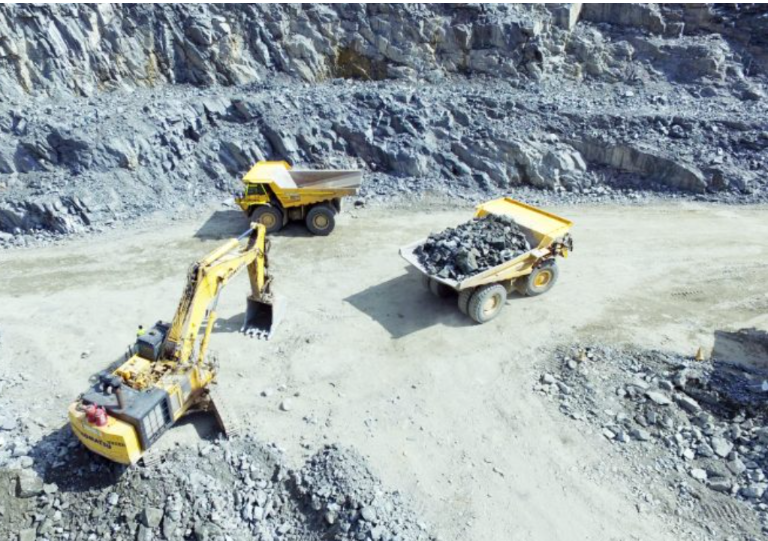
The Burkina Faso government’s high-stakes move to nationalize its gold mines has entered a critical phase, with Ouagadougou now confronting the harsh realities of industrial revival. In 2024, the country made headlines by reclaiming control of Boungou and Wahgnion, two major gold mining sites, through its state-owned mining firm, SOPAMIB. The decision was framed as a bold step toward economic sovereignty, but the transition has proven far more complex than anticipated.
From political victory to industrial challenge
Originally operated by Endeavour Mining, a Canadian multinational, the mines were transferred to Lilium Mining in 2023. However, disputes over financial and operational terms led to a dramatic government takeover the following year. While the move was celebrated as a triumph for national autonomy, the state quickly discovered that running these mines required more than just regulatory oversight—it demanded full-scale industrial and financial commitment.
Under private management, Boungou and Wahgnion had thrived, producing a combined 240,000 ounces of gold in 2022. But after the transition, Boungou’s operations ground to a halt for two years, leaving the site dormant. It wasn’t until mid-2025 that production resumed under public control, marking a fragile return to activity.
Ambitious targets amid financial pressures
Now, the Ministry of Mines is pushing for a rapid recovery, setting a target of over 7 metric tons (225,000 ounces) of gold annually from both sites by 2026—a figure that would nearly match the 2022 output. However, achieving this goal hinges on solving a pressing financial dilemma: the state’s reliance on expensive outsourcing.
According to officials, renting equipment and hiring contractors for Wahgnion alone costs over 3 billion FCFA (€4.57 million) per month. This unsustainable drain on resources has forced the government to seek alternative solutions, leading to a landmark financial agreement with the West African Development Bank (BOAD).
A lifeline from BOAD to break free from outsourcing costs
The €45.7 million (30 billion FCFA) loan, approved by parliament, is earmarked for critical upgrades rather than debt repayment. Key investments include:
- Heavy machinery acquisition to modernize extraction operations.
- Tailings storage enhancements to meet environmental and technical standards.
- Wahgnion mine’s grid connection via a dedicated power line from SONABEL, eliminating reliance on costly imported fossil fuels and reducing carbon emissions.
The government has also allocated an additional 3.21 billion FCFA (€4.9 million) from its own budget to complement the BOAD loan, signaling a serious commitment to turning these mines into sustainable public assets.
The balancing act of state-led mining
Ouagadougou’s experiment in state-run gold mining is being watched closely across the Sahel, particularly by neighboring countries in the Alliance of Sahel States (AES). The success or failure of this model could redefine how West African nations approach resource extraction, moving away from foreign corporate dominance.
Yet, the path forward remains fraught with challenges. Beyond financial constraints, the government must secure mining sites and supply routes in an increasingly unstable regional environment—a factor that had previously deterred private investors. Demonstrating operational efficiency and transparency will be just as crucial as hitting production targets.
From symbolism to sustainability
The nationalization of Boungou and Wahgnion was a powerful political statement, but turning that symbol into a profitable, long-term venture will require drastic cost rationalization and operational discipline. If the current strategy succeeds, Burkina Faso could pioneer a new era of sovereign mining in West Africa. If it stumbles, the financial burden of this gamble could further strain an already stretched national budget.