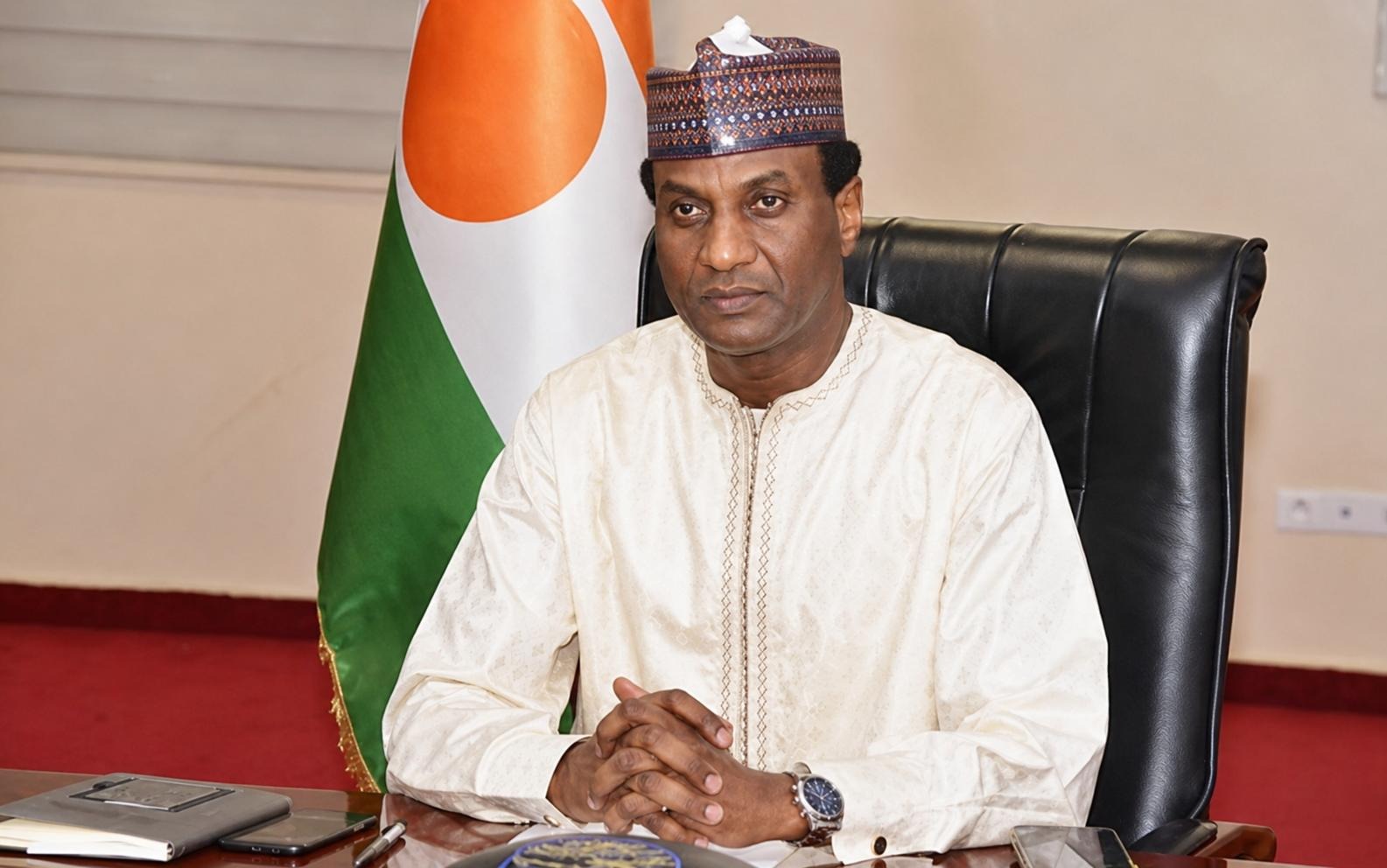
In military-led transitions, the line separating a trusted ally from a potential adversary can dissolve without warning. The situation surrounding Niger’s transitional Prime Minister, Ali Mahamane Lamine Zeine, has reignited concerns about the precarious position of civilian officials operating under junta rule.
Close associates of the Prime Minister report an escalating climate of unease within his inner circle. Over the past week, drastic security adjustments have raised eyebrows: his personal security detail was abruptly replaced, and even those granted access to his office now face stringent, mandatory body searches. While authorities attribute his prolonged absence from work to a severe bout of malaria, whispers of a quiet house arrest have gained traction, fueled by persistent rumors of an impending resignation.
Beyond the immediate confusion, this episode underscores a broader pattern in Sahelian military transitions. In centralized regimes, information control is a cornerstone of power. The lack of transparency—coupled with security measures that resemble confinement rather than protection—has only deepened speculation. The situation prompts a critical question: what real autonomy do civilian leaders truly possess when operating under military oversight?
Historically, juntas in the Sahel have enforced an uncompromising doctrine of absolute alignment. When civilian technocrats or officials resist adopting the military leadership’s strategic or ideological shifts, security apparatuses swiftly intervene—not through public dismissals, which risk exposing internal fractures, but through subtle containment. This approach allows the junta to maintain appearances of institutional stability while quietly consolidating decision-making authority.
Such tactics offer a tactical advantage: they enable the regime to gauge responses from the public, international partners, and internal factions before taking more decisive action. For Lamine Zeine, the stakes are now existential. His ability to operate hinges on navigating a labyrinth of suspicion, where every movement is scrutinized and every silence dissected.
This dynamic is not unique to Niger. Comparable scenarios have unfolded in neighboring countries within the Alliance of Sahel States. The trajectory of Choguel Maïga in Mali and the power dynamics surrounding Apollinaire Kyélem de Tambèla in Burkina Faso reveal a consistent truth: civilian officials serve as economic buffers or diplomatic fig leaves until they become obstacles. Once their role conflicts with the junta’s objectives, the rebuke is swift and decisive.
In these environments, heightened surveillance is not merely about preventing dissent—it is a deliberate message to the entire state apparatus: no official, regardless of rank, is beyond the junta’s reach. The replacement of close protection teams, restricted access, and filtered communications are as much political signals as they are security protocols.
For Lamine Zeine, the challenge is no longer confined to governance; it is about survival within a system where trust is conditional and authority is ultimately wielded by men in uniform. The illusion of civilian leadership persists on paper, but its fragility is laid bare in practice. Under junta rule, institutional roles may appear stable, yet their holders remain vulnerable to the shifting tides of military power.