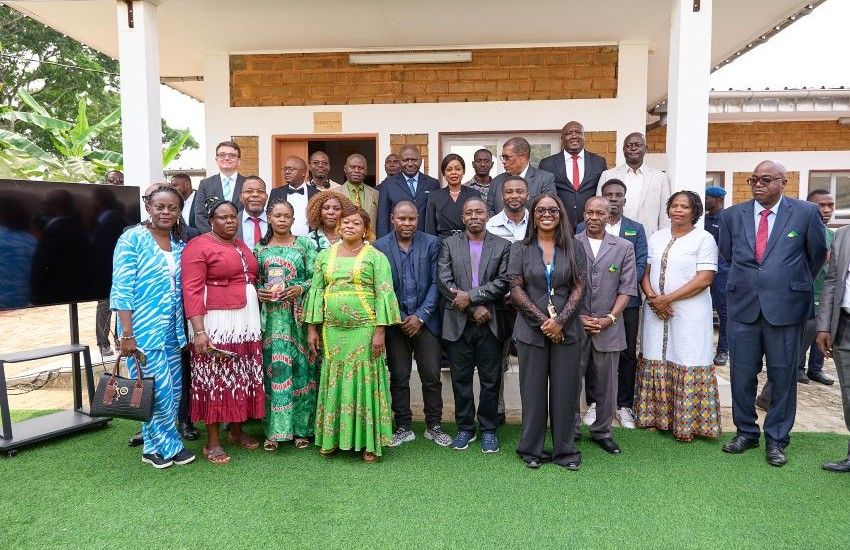
Behind the bold declarations of the Alliance of Sahel States (AES), a nuanced reality emerges where strategic partnerships transcend political rhetoric. In mid-May 2026, Burkinabè military surgeons traveled to Washington D.C. for a high-level exchange with the United States National Guard, part of the State Partnership Program (SPP). The mission, discreetly announced in early June, underscores a puzzling question: why do Sahel nations, while publicly distancing themselves from Western powers, continue to rely on traditional partners for critical military expertise?
High-stakes medical diplomacy in the shadows
On May 14 and 15, 2026, a delegation of Burkinabè military surgeons spent two intensive days in the U.S. capital. The objective was clear: deepen collaboration on battlefield trauma care, combat surgery, and emergency medical response in hostile environments. For a nation grappling with asymmetric warfare, such knowledge transfer is not just beneficial—it’s a lifeline for frontline soldiers.
The State Partnership Program, a long-standing initiative linking U.S. state national guards with partner militaries, provided the framework. This mechanism allows for direct skill-sharing in areas where Western military medicine excels: structured evacuation protocols, trauma response, and advanced surgical techniques perfected through decades of global deployments.
From rhetoric to reality: the Sahel’s pragmatic turn
The mission to Washington exposes a glaring contradiction in the AES’s approach. Since its formation with Burkina Faso, Mali, and Niger, the alliance has adopted an increasingly anti-Western stance, accusing former colonial powers of failing to curb terrorism. Yet, beneath the rhetoric of sovereignty and anti-imperialism, technical cooperation with the U.S. remains not only intact but actively pursued.
This divergence between political posturing and operational necessity highlights a harsh truth: when national security is at stake, pragmatism often overrides ideology. Burkinabè leaders, while vocal about breaking free from Western influence, are simultaneously engaging in programs that enhance their military’s capabilities—programs that Moscow, despite its growing security partnerships in the region, has yet to match in this domain.
Why Russia falls short in battlefield medicine
Since distancing itself from France, Burkina Faso has leaned heavily on Russia for arms, training, and logistical support. Yet, when it comes to advanced military medical training, the Burkinabè military has turned to Washington instead. The reasons are rooted in structural differences between Western and Russian military healthcare models.
Western military medicine, particularly in the U.S., benefits from decades of refinement in global conflict zones. Protocols for mass casualty management, rapid evacuation systems, and standardized surgical training are deeply embedded in Burkinabè military institutions due to historical ties. Russian support, while valuable for combat tactics and hardware, has yet to develop a comparable framework for high-level medical training in war zones. For a military facing daily casualties, this gap is not trivial.
A quiet alliance with tangible benefits
For the U.S., maintaining programs like the SPP is a strategic asset. Amid waning influence in the Sahel—evidenced by recent military withdrawals in neighboring Niger—the U.S. is leveraging medical diplomacy to maintain a foothold. For Burkina Faso, the collaboration offers elite military surgeons access to world-class training without the political fallout of overt Western engagement.
Colonel Ibrahim Traoré’s government, despite its public alignment with the AES’s anti-Western narrative, is quietly securing the best of both worlds. The result? A military better equipped to save lives on the battlefield, even if it means sidestepping the political contradictions that dominate regional discourse.
A sovereignty defined by necessity, not ideology
The Washington exchange serves as a reminder that Sahel geopolitics is not a binary struggle between blocs. Behind the headlines of alliance shifts and anti-Western rallies, the primary concern remains survival. By choosing U.S. medical training over political consistency, Burkina Faso prioritizes the lives of its soldiers over ideological purity.
In the end, this pragmatic approach—where health diplomacy trumps political dogma—may well be the difference between victory and defeat on the front lines.