Can Benin’s 250,000-barrel Sèmè oil export truly reshape its economy?
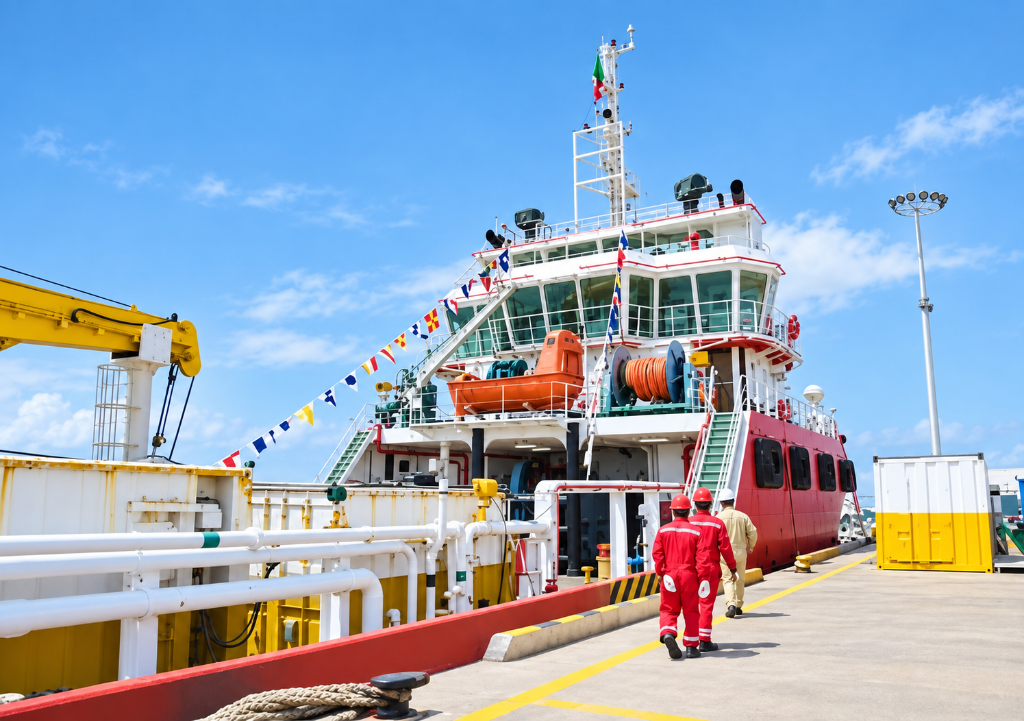
In October 2026, Benin will take a decisive step onto the international oil stage with the export of its first cargo of 250,000 barrels of crude. Drawn from the strategic revival of the Sèmè offshore field, this shipment raises a crucial question: will it merely provide a one-off windfall, or will it become the foundation of a lasting economic transformation? The stakes are high for financial sovereignty, tax revenues, and the country’s industrial momentum.
A defining moment for Benin’s economic model
Long known primarily as a logistics and trading hub and a leading agricultural producer in West Africa, Benin is now diversifying its growth engine. The country is set to reach a major milestone with the sale of its very first crude oil cargo on the global market, part of the rehabilitation project for the Sèmè offshore field.
This initial shipment, estimated at around 250,000 barrels, caps years of appraisal work, technical negotiations, and structural investments. More than just an industrial event, it signals Cotonou’s effective return to the ranks of hydrocarbon producers, opening new revenue prospects for state coffers.
Sèmè: an old field, a new strategic role
Located off Benin’s southeastern coast, near the maritime border with Nigeria, the Sèmè field is no unknown quantity. Discovered in the late 1960s and exploited intermittently during the 1980s and 1990s, it was mothballed due to technical constraints, low oil prices, and declining yields.
However, the global energy landscape, combined with advances in offshore drilling technology and reservoir restructuring, has given new life to this historic field. The decision to reactivate the Sèmè block aligns with the government’s action plan to maximize the value of national natural resources.
Geological characterization studies conducted in recent years have revealed significant recoverable reserves, prompting authorities to forge strategic partnerships to secure the investments needed to rebuild extraction infrastructure.
250,000 Barrels: a test case with high stakes
The initial cargo of 250,000 barrels is a decisive trial balloon. On the world market, a first delivery does more than generate immediate foreign currency; it establishes the “identity card” of Beninese crude for international refiners and traders. Laboratory analyses will determine its density, sulfur content, and overall quality, setting its pricing relative to benchmarks like Brent.
On the budget front, the direct fallout from this operation will provide breathing room for public finances:
- Foreign currency regularity: The inflow of foreign capital will bolster exchange reserves and stabilize the balance of payments.
- Tax revenues and royalties: The production-sharing mechanism guarantees the Beninese state a direct share of extracted volumes, plus taxes on oil activities.
- Leverage on sovereign rating: The emergence of a new predictable revenue stream strengthens Benin’s financial standing with lenders and rating agencies.
In an international economic environment marked by commodity price volatility, diversifying state revenue sources is an essential macroeconomic shield.
Capital injections and local industrial consolidation
The economic impact of the Sèmè project goes far beyond crude sales. The field’s revival phase has already mobilized substantial financial resources, generating direct benefits for the local private sector and the maritime supply chain.
Offshore operations require heavy logistics: support for offshore installations, towage services, technical maintenance, supply of cutting-edge equipment, and engineering services. Beninese companies in maritime, construction, and logistics are gradually winning subcontracts, fostering skills transfer and creating skilled jobs for the country’s youth.
Moreover, strengthening the oil hub near Cotonou and Sèmè spurs the development of adapted coastal infrastructure. Storage, transport, and primary processing of oil require upgrades to port facilities, transforming the coastline into an integrated industrial platform.
Strategic complementarity with the Niger-Benin pipeline
This resumption of national production comes at a key moment for the country’s energy sector, which also hosts the maritime terminal of the gas pipeline and export pipeline linking Niger’s Agadem fields to the port of Sèmè-Kpodji.
Although legally and operationally distinct, the synergy is clear. Benin is increasingly asserting itself as a strategic oil crossroads in the Gulf of Guinea. The expertise developed around managing Nigerien crude export infrastructure strengthens the local technical know-how needed to efficiently manage its own offshore resources.
This dual position—both producer country and hydrocarbon transit hub—gives Benin greater visibility in regional and international energy forums.
Toward rigorous management and a successful transition
The main challenge for Beninese economic authorities now lies in the sustainable and transparent management of these future oil windfalls. To avoid the pitfalls seen in other producer countries, regulatory oversight and governance of extractive revenues are absolute priorities.
Revenue from the sale of Sèmè crude is intended to feed development funds financing priority sectors: education, health, road infrastructure, and agricultural modernization. The ultimate goal remains using this exhaustible resource as an accelerator for the structural transformation of the broader economy.
The first cargo in October 2026 is therefore not an end in itself, but the opening chapter of a renewed industrial strategy. If the initial volume of 250,000 barrels remains modest by the standards of global oil giants, its symbolic value and economic spillover potential lay the groundwork for lasting prosperity in Benin.