Can Côte d’Ivoire’s $5.3 billion World Bank portfolio deliver on jobs and growth?
Can the World Bank’s $5.3 billion commitment redefine Côte d’Ivoire’s economic trajectory?
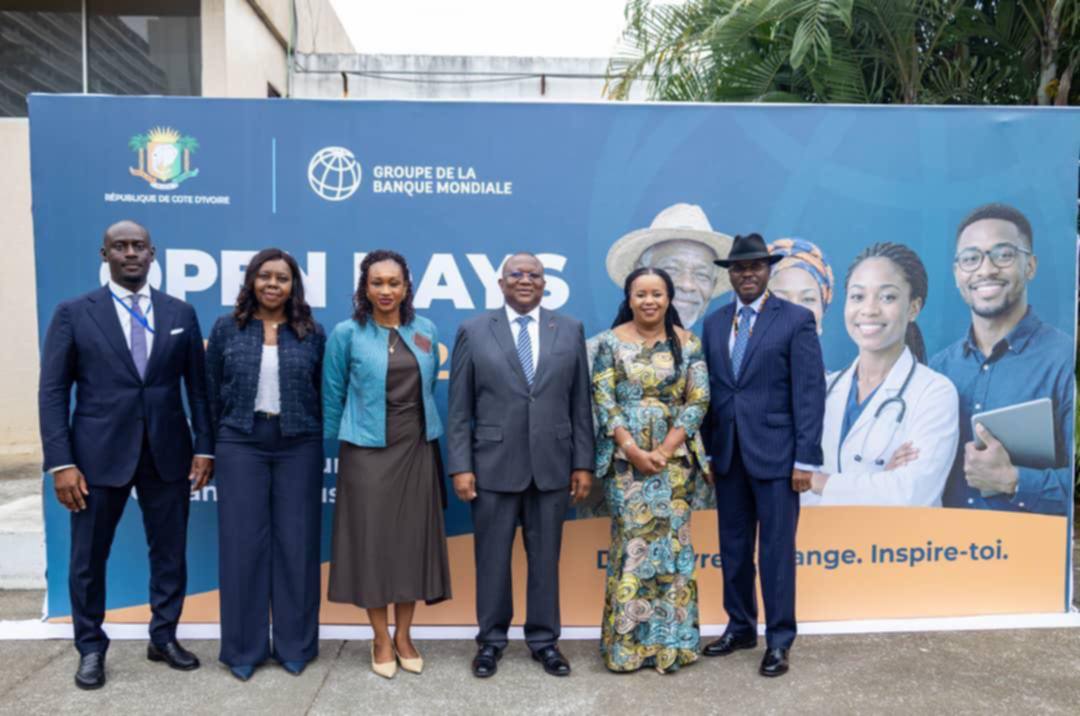
The World Bank Group’s active portfolio in Côte d’Ivoire now spans 25 projects, totaling $5.3 billion—a figure highlighted at the opening of the first-ever World Bank Open Days in Abidjan. The event, held September 21–22 under the theme “Jobs and Opportunities: Building Together for Inclusive Growth,” brought together government officials, young entrepreneurs, and students to explore how these investments are shaping the country’s future.
The two-day forum, inaugurated by Minister of Communication Amadou Coulibaly—speaking on behalf of Plan and Development Minister Dr. Souleymane Diarassouba—served as a platform for direct engagement between beneficiaries and project teams. Discussions centered on critical sectors: education, employment, entrepreneurship, and infrastructure, with a shared focus on the National Development Plan (NDP 2026–2030), which aims to create three million new jobs, prioritizing youth and women.
Where are the funds going? A breakdown of World Bank investments
The portfolio spans multiple sectors, reflecting the World Bank Group’s multidimensional approach:
- Infrastructure: Roads, energy grids, and digital connectivity to support industrial growth.
- Agriculture: Modernizing rural economies to boost food security and farmer incomes.
- Energy: Expanding renewable and grid infrastructure to meet rising demand.
- Education and healthcare: Investments in vocational training, school systems, and healthcare facilities.
- Human capital development: Programs targeting youth employment, gender equity, and skills training.
The International Finance Corporation (IFC) has already deployed nearly $2.7 billion in Côte d’Ivoire over the past five years, while the Multilateral Investment Guarantee Agency (MIGA) has bolstered investor confidence through risk mitigation tools.
Beyond $5.3 billion: What’s next for Côte d’Ivoire?
The active portfolio is just the beginning. At the July 2026 Consultative Group for the NDP 2026–2030, the World Bank Group pledged an additional $17 billion over the coming years—$10 billion from the World Bank, $5 billion from the IFC, and $2 billion from MIGA. This expanded commitment signals a long-term strategic partnership, aligning financial flows with national priorities.
In a regional first, Côte d’Ivoire executed a debt-for-development swap in December 2024, converting nearly €400 million in commercial debt into development programs—particularly in education. The initiative freed up fiscal space while strengthening social outcomes. Another milestone followed in 2025, when the country secured €433.3 million in sovereign sustainability-linked financing, the first of its kind in West Africa. This loan, backed by guarantees from the International Bank for Reconstruction and Development (IBRD) and MIGA, tied repayment terms to climate and social performance.
Partnership in action: How collaboration is shaping Côte d’Ivoire’s future
The World Bank Group’s engagement extends beyond funding. Recent high-level meetings underscore a co-created approach. On September 10, 2026, Dr. Souleymane Diarassouba met with Harold Tavares, World Bank Executive Director for Africa II, to review progress and align the upcoming Country Partnership Framework with the NDP 2026–2030. These dialogues ensure that investments translate into tangible results—jobs, resilience, and shared prosperity.
The role of young Ivorians in driving change
At the Open Days, students and graduates weren’t just observers—they were active participants. Workshops on entrepreneurship, digital skills, and financial literacy provided actionable pathways to leverage World Bank-funded programs. For a nation where 60% of the population is under 25, these initiatives are pivotal in turning demographic potential into economic momentum.
Measuring success: What will define impact?
The ultimate test of the $5.3 billion portfolio will be its ability to:
- Create **sustainable, high-quality jobs**—especially for youth and women.
- Enhance **economic infrastructure**, reducing bottlenecks in logistics and energy.
- Improve **human development outcomes**, from healthcare access to educational attainment.
- Foster **private sector growth**, with IFC and MIGA playing catalytic roles.
As Côte d’Ivoire positions itself as a regional economic hub, the World Bank’s support could be the catalyst that turns ambition into reality. The question now is whether these investments will deliver the transformative change the nation is banking on.