Chad’s cotton sector gets 22.5 million USD boost from France
Chad, Central Africa’s second-largest cotton producer, secures a 22.5 million USD French grant to revitalize its struggling cotton industry.

Chad stands as Central Africa’s second-largest cotton producer, trailing only Cameroon. Yet despite its potential, the country’s cotton output has fluctuated wildly in recent years, struggling to maintain consistency. In response, N’Djamena is rolling out a bold initiative to breathe new life into the sector.
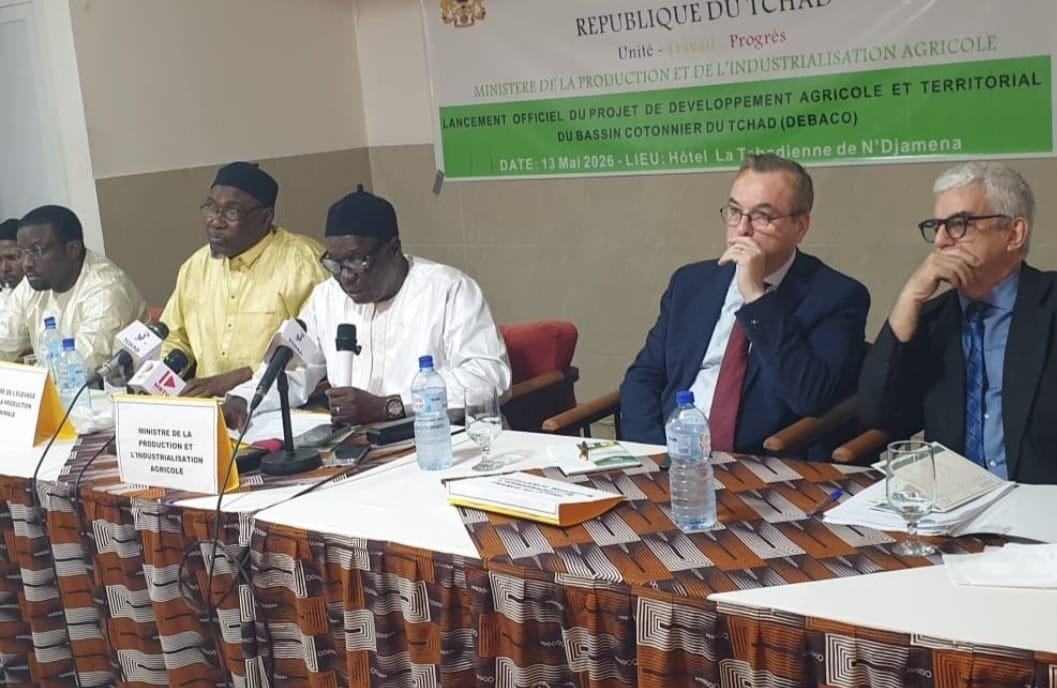
On May 13, Chad’s Ministry of Production and Agricultural Industrialization unveiled the Développement agricole et territorial du bassin cotonnier du Tchad (DEBACO) project. With a total budget of 19.35 million EUR—equivalent to 22.5 million USD—the five-year program is fully funded by France’s development agency. The project marks a strategic shift in France’s engagement with Chad’s cotton industry, embracing a more holistic approach to rural development.
Beyond cotton: A multi-crop strategy
While cotton remains the core focus, DEBACO also extends support to key food crops vital for national food security. These include sorghum, maize, cowpeas, and groundnuts. The project’s blueprint includes land-use planning, mapping and securing livestock corridors, conflict prevention, and the establishment of local dialogue frameworks to bring together farmers, herders, and other stakeholders.
The initiative targets two key cotton-growing regions: Mayo-Kebbi Ouest and Moyen-Chari. Together, these provinces account for nearly a quarter of Chad’s annual cotton harvest, based on data from the U.S. Department of Agriculture.
A sector in flux
France’s financial support arrives at a critical moment for Chad’s cotton industry, which has faced years of instability. Recent production data from the Programme régional de production intégrée du coton en Afrique (PR-PICA) highlights sharp fluctuations in output. After a 9% increase in the 2023–2024 season—reaching 111,262 metric tons—production plummeted by nearly half the following year to just 57,774 metric tons. However, PR-PICA forecasts a rebound for 2025–2026, with an expected 29.8% rise to 75,000 metric tons.
Whether the DEBACO project can sustainably reverse these trends remains to be seen. What is clear, however, is that N’Djamena is doubling down on agriculture as a cornerstone of economic recovery and food security in Central Africa.