The Pleins Feux initiative, unveiled in Abidjan in April 2026, represents a bold stride in Côte d’Ivoire’s ongoing efforts to overhaul its educational framework. Championed by President Alassane Ouattara, this project aligns with his long-term vision to enhance learning outcomes and strengthen public policy effectiveness across the nation’s schools.
With a population exceeding 30 million and a youthful demographic, Côte d’Ivoire faces mounting pressure on its education system, particularly in rural areas. Recognizing education as a cornerstone of development, the government has prioritized access and quality improvements for over a decade. These efforts are in harmony with the UN’s Sustainable Development Goal 4 (SDG 4) and the 2030 Agenda, which emphasize inclusive, equitable, and lifelong learning opportunities for all.

Scaling up Côte d’Ivoire’s education system: recruitment and infrastructure drive
Under President Alassane Ouattara’s leadership, Côte d’Ivoire has made significant strides in expanding its education workforce and building modern learning spaces. Since 2011, over 69,000 primary and 30,000 secondary school teachers have been hired, with recent efforts focusing on science and technology disciplines. Notably, 1,800 additional teachers in mathematics and physics were deployed to meet labor market demands and support the country’s economic transformation goals.
Infrastructure development has also accelerated, especially in rural zones, to reduce travel distances and curb dropout rates. New schools have been constructed nationwide, improving educational accessibility. A prime example is the Boundiali CAFOP, a teacher training college in northern Côte d’Ivoire, which has drawn nearly 68,000 applicants in 2026 for just 7,000 available spots—a clear sign of the government’s commitment to strengthening teaching quality and capacity.
Fostering inclusion and safer learning environments
Improving the quality of education in Côte d’Ivoire extends beyond infrastructure and recruitment. Since 2011, beginning salaries for teachers have risen by over 30% in primary and up to 15% in secondary schools, enhancing the profession’s appeal and stability. These wage hikes are part of a broader strategy to create a more supportive and attractive teaching environment.
Inclusion remains a key focus, with tailored learning materials now available for students with disabilities. The education sector is also tackling social challenges such as teenage pregnancy through targeted awareness campaigns, aiming to keep students in school and reduce disruptions to their education.
‘Pleins Feux’: transforming education governance
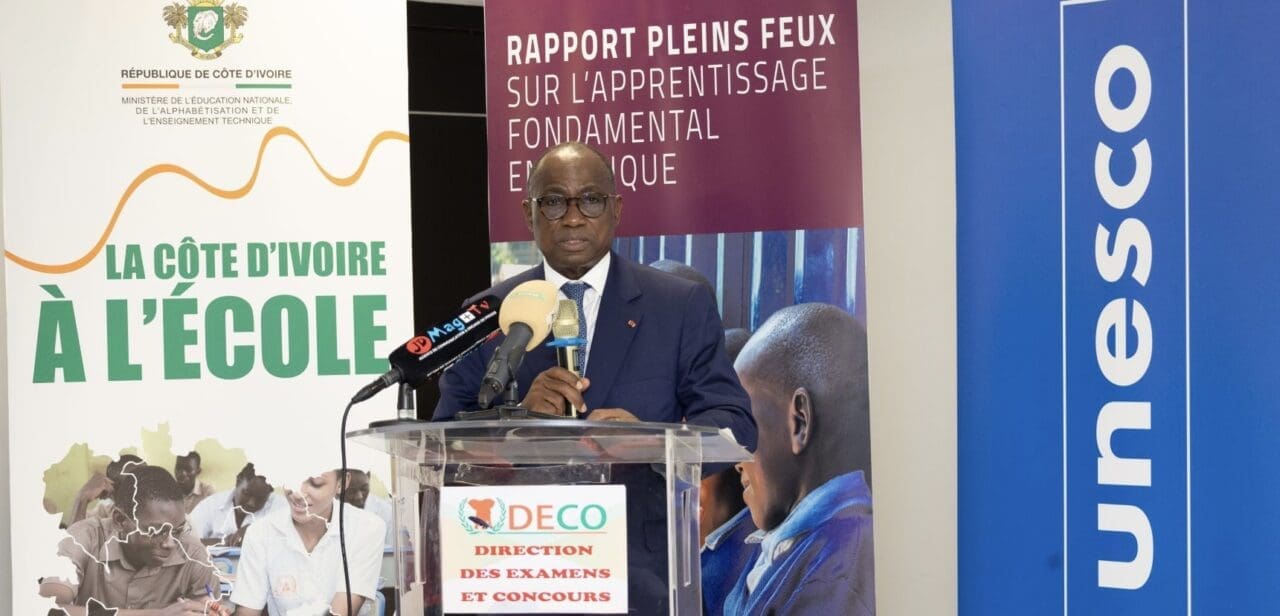
The Pleins Feux initiative, launched in Abidjan in April 2026, shifts the spotlight from physical resources to governance. Developed in collaboration with UNESCO, the African Union, and the Global Education Monitoring Report (GEM), the program builds on two years of research and pilot testing in Côte d’Ivoire, Ghana, and Ethiopia.
The project’s core mission is to empower decision-makers and school leaders with the tools and strategies needed to implement policies more effectively. This comes at a time when international partners are acknowledging Côte d’Ivoire’s progress in foundational learning. By leveraging a mix of international, regional, and private partnerships, the government is reinforcing its commitment to building a resilient, forward-looking education system that meets the needs of all learners.