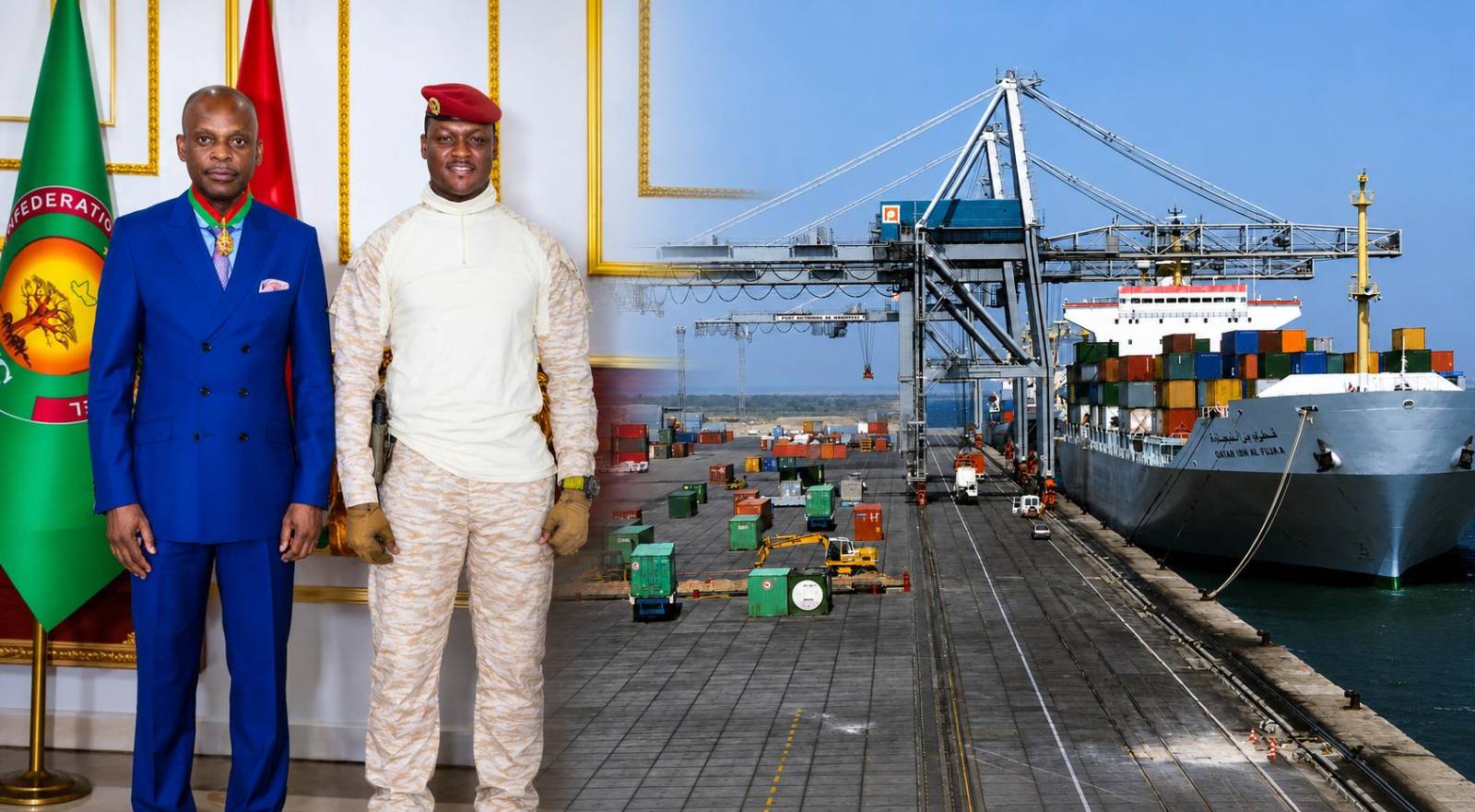
The recent elevation of Togo’s Foreign Minister to the rank of Commander of the Order of the Stallion—the highest honorific distinction in Burkina Faso—has been framed by official channels as a testament to Lomé’s commitment to regional solidarity and open diplomacy. Yet, beneath the veneer of celebration lies a far more complex narrative, one that challenges the very principles the ceremony ostensibly upholds.
When Diplomacy Serves Strategic Interests
While distinctions of this nature are often presented as markers of mutual respect, their true significance frequently transcends symbolic gestures. In this case, the honor may well reflect more than just diplomatic camaraderie; it could signal a convergence of interests between two nations navigating shared political and economic challenges. Historically, such accolades have served as tools to reinforce alliances, but they can also convey unspoken political messages to regional partners.
Close observers of the situation suggest that this diplomatic thaw follows a period marked by political betrayal. Togo’s government, under Faure Gnassingbé, had initially extended asylum to Burkina Faso’s former president, Roch Marc Christian Kaboré. However, this humanitarian gesture proved short-lived, as Lomé swiftly abandoned its commitment to Kaboré in favor of securing economic advantages with the new leadership in Ouagadougou.
A Partnership Built on Mutual Dependence
The underlying pragmatism of this diplomatic shift is undeniable. Togo’s strategic decision to prioritize economic agreements over political solidarity underscores a clear hierarchy of interests. By accommodating the new Burkinabé regime, Lomé ensured continued and expanded trade flows through the Port Autonome de Lomé (PAL), a critical transit hub for Burkina Faso’s import and export activities.
The economic interdependence between the two nations is striking. As a landlocked country, Burkina Faso relies heavily on maritime corridors for its supply chains, making the Port of Lomé an indispensable asset. For Togo, this relationship is equally vital, as regional transit fees constitute a significant revenue stream. This mutual dependence explains the rapid and dramatic improvement in relations between the two capitals, where economic incentives have overshadowed traditional diplomatic considerations.
In essence, Lomé’s willingness to sacrifice a political exile for the sake of logistical guarantees reveals a diplomacy that is less about principle and more about opportunity—a transactional approach where financial and strategic gains take precedence over ethical commitments.
Questioning the Foundations of Regional Alliances
The timing of this honor raises further questions about the evolving nature of diplomacy in West Africa. Several unresolved issues—governance, political freedoms, and human rights—continue to cast a shadow over the region’s stability. Critics argue that this distinction, rather than celebrating shared values, primarily acknowledges a strategic alignment that prioritizes economic and security interests over democratic principles.
The pattern emerging across the subregion suggests a broader trend: a shift toward transactional diplomacy, where commercial and logistical interests increasingly dictate foreign policy decisions. This evolution risks undermining the credibility of institutions that traditionally champion solidarity and ethical governance. When alliances are forged and maintained solely on the basis of economic expediency, the ideals of mutual support and shared responsibility lose their resonance in the eyes of the public.
The Contradictions of Official Narratives
Government communications portray this distinction as a milestone in Togolese-Burkinabé relations, yet the reality presents a stark contrast. The ceremonial accolade fails to address the underlying motivations behind the rapprochement, leaving unanswered questions about the true cost of this alliance. When diplomatic decisions are so closely tied to economic incentives, the rhetoric of African solidarity rings hollow for many citizens.
Ultimately, this honor serves as a reflection of a political landscape governed by realism over idealism. States are increasingly prioritizing strategic interests, commercial exchanges, and political stability, even as these choices provoke criticism regarding the alignment—or lack thereof—between their public statements and actual policies.
Behind the polished smiles and the formal presentation of medals lies a colder, more calculated pragmatism. This distinction, far from symbolizing disinterested brotherhood, appears instead as a reward for a commercial partnership secured at the expense of ethical principles and the right to asylum. It is this fundamental discrepancy that continues to fuel debates about the true nature of relations between Lomé and Ouagadougou.