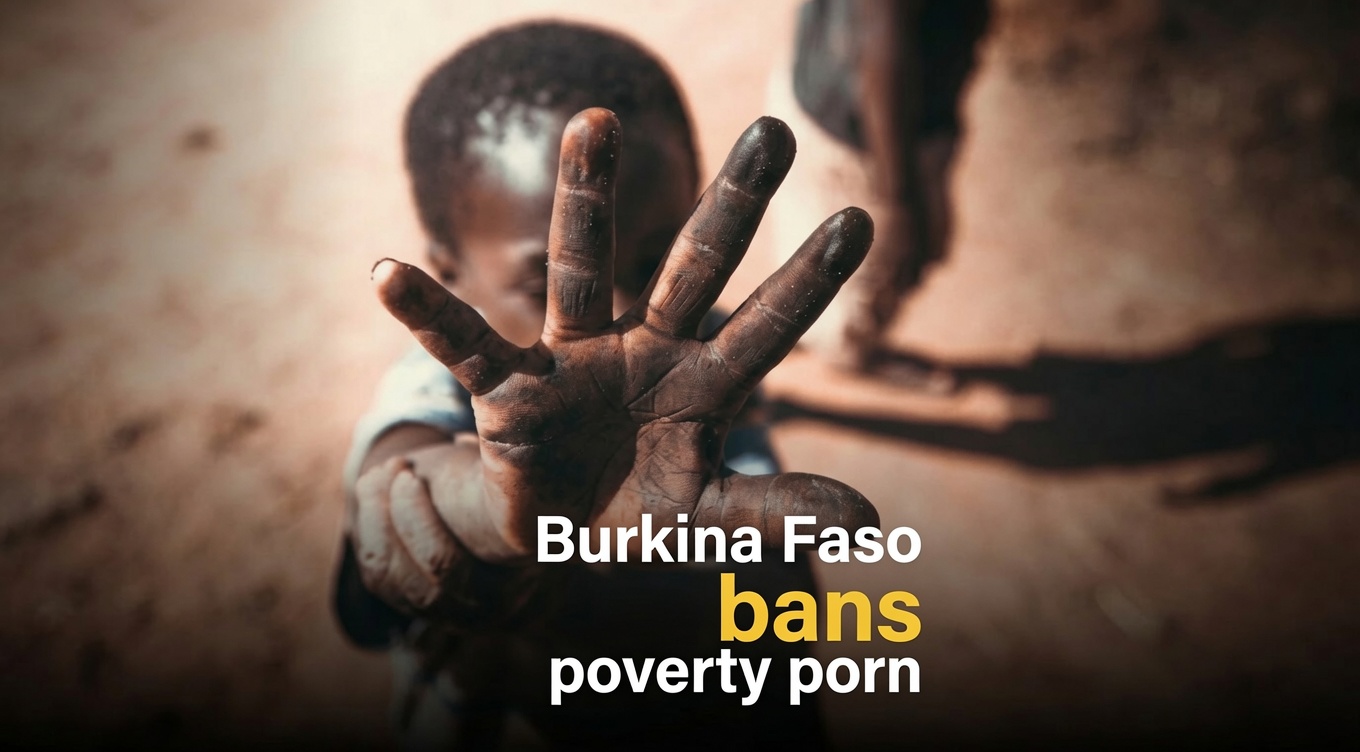
The Burkina Faso transitional government has enacted stringent legislation to prohibit the exploitation of human distress, commonly referred to as poverty porn, marking a significant shift in both ethical and political discourse within the country.
Ethical concerns and the commodification of suffering
The proliferation of digital platforms has turned human suffering into a lucrative commodity. Filmmakers and humanitarian organizations often capture distressing scenes—such as malnourished children, internally displaced families, or communities under severe duress—with the stated goal of raising awareness or funds. However, this approach raises critical ethical questions. By transforming vulnerability into visual entertainment, such content strips individuals of their dignity, reducing them to passive objects of pity rather than active participants in their own narratives.
The authorities argue that this practice not only dehumanizes those depicted but also perpetuates a one-dimensional, degrading portrayal of Burkina Faso. The government’s intervention seeks to curb this trend, emphasizing the importance of respecting human dignity in all forms of communication and documentation.
A strategic move amid national and international scrutiny
Beyond ethical considerations, the ban on poverty porn reflects broader political and security concerns. Burkina Faso is grappling with a multifaceted crisis, and the widespread dissemination of images depicting extreme hardship risks reinforcing a narrative of national weakness or failure.
Officials contend that while the country’s challenges are undeniable, the portrayal of Burkina Faso solely through the lens of suffering is both misleading and counterproductive. By regulating the dissemination of such imagery, the government aims to reclaim control over the nation’s narrative, ensuring that international perceptions are balanced and accurate. The objective is not to obscure reality but to prevent the country from being reduced to a single, harrowing stereotype.
Criticism: censorship or protection of national image?
Opponents of the measure, including civil society groups and critics of the transitional leadership, argue that the ban is not merely an ethical stance but a calculated political maneuver. They suggest that the prohibition serves as a tool to suppress the visibility of the country’s humanitarian crisis, which includes widespread displacement, food shortages, and inadequate access to healthcare.
These critics contend that the government’s attempt to control the narrative amounts to censorship, shielding the public from the harsh realities on the ground. The law, they claim, could stifle transparency and hinder efforts to mobilize international support for those in need. The debate thus centers on whether the ban is a legitimate effort to preserve human dignity or an attempt to silence dissent and downplay the severity of the crisis.
Reimagining humanitarian communication
The new legislation compels humanitarian organizations and content creators to rethink their strategies. The challenge lies in balancing the need to raise awareness with the imperative to avoid sensationalism and comply with legal restrictions.
Experts advocate for a shift toward solution-oriented narratives and respectful storytelling. By highlighting the resilience of affected communities, their efforts to overcome adversity, and the tangible actions being taken to address the crisis, communicators can convey urgency without resorting to exploitative imagery. This approach not only preserves the dignity of those portrayed but also fosters a more nuanced and empowering portrayal of Burkina Faso’s ongoing struggles.