Behind the bloodshed: a conflict reshaping Burkina Faso’s defense
Another devastating toll has been paid. Recent clashes have left at least fifty soldiers and civilian volunteers dead, victims of a surge in terrorist attacks across the country. While the immediate reaction is to tally losses and declare a crisis, the reality on the ground tells a different story—one of strategic shifts, resilience, and an enemy fighting a desperate rear-guard action.
This wave of violence is not a sign of Burkina Faso’s weakness, but rather a reflection of its determination to reclaim territory. As the national army and allied civilian forces push deeper into insurgent strongholds, the terrorists are striking back with a calculated strategy of attrition. Their new tactic? Harassment.
From territorial control to psychological warfare
In asymmetric warfare, victory is no longer measured by land seized, but by the erosion of morale. Unable to hold ground against coordinated military offensives, armed groups have abandoned large-scale assaults in favor of targeted, high-impact strikes. Their goal is twofold: to demoralize defenders and to undermine public confidence in the state’s ability to protect its people.
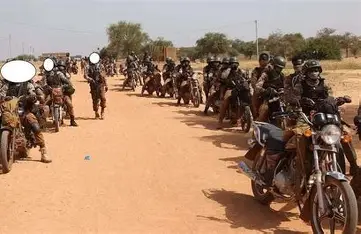
The recent attacks—often against remote outposts or supply convoys—are designed to inflict maximum damage with minimal effort. Each loss, though tragic, is a calculated risk in a broader campaign to dismantle terrorist networks. The military’s willingness to take these risks underscores a harsh truth: reclaiming territory demands sacrifice, and Burkina Faso’s forces are paying that price in full.
The civilian shield: why terrorists fear the VDP
The rise of the Volontaires pour la défense de la patrie (VDP)—civilian defense volunteers—has become a game-changer. Far from being expendable auxiliaries, as some critics suggest, these volunteers represent a fundamental shift in Burkina Faso’s security doctrine. Three key factors make them indispensable:
- Local intelligence: Unlike conventional troops, VDP members possess intimate knowledge of their communities, enabling them to detect insurgent movements long before they strike.
- Sovereign defense: Their deployment signals a break from past reliance on foreign military support, affirming Burkina Faso’s commitment to self-reliance.
- Structured resilience: Once plagued by logistical gaps, the VDP program has matured under military supervision, transforming volunteers into a frontline bulwark against extremist infiltration.
The terrorists’ repeated attacks on VDP positions reveal a critical weakness in their own strategy: they recognize these volunteers as a direct threat to their survival. A population that refuses to surrender and organizes to defend itself is the antithesis of the group’s goals.
Cutting off the lifelines of terror
Burkina Faso’s response is evolving beyond mere retaliation. Military planners are now focusing on disrupting the insurgents’ supply chains—their lifelines. The recent losses serve as a stark reminder of the urgent need to bolster convoy security and refine tactical intelligence.
Achieving full strategic autonomy will not come easily. It requires time, endurance, and the acceptance that tactical setbacks are part of a longer war. But behind the sorrow of fallen fighters lies a nation redefining its own survival. And that fight is being waged not with words, but with blood—and an unyielding will to prevail.