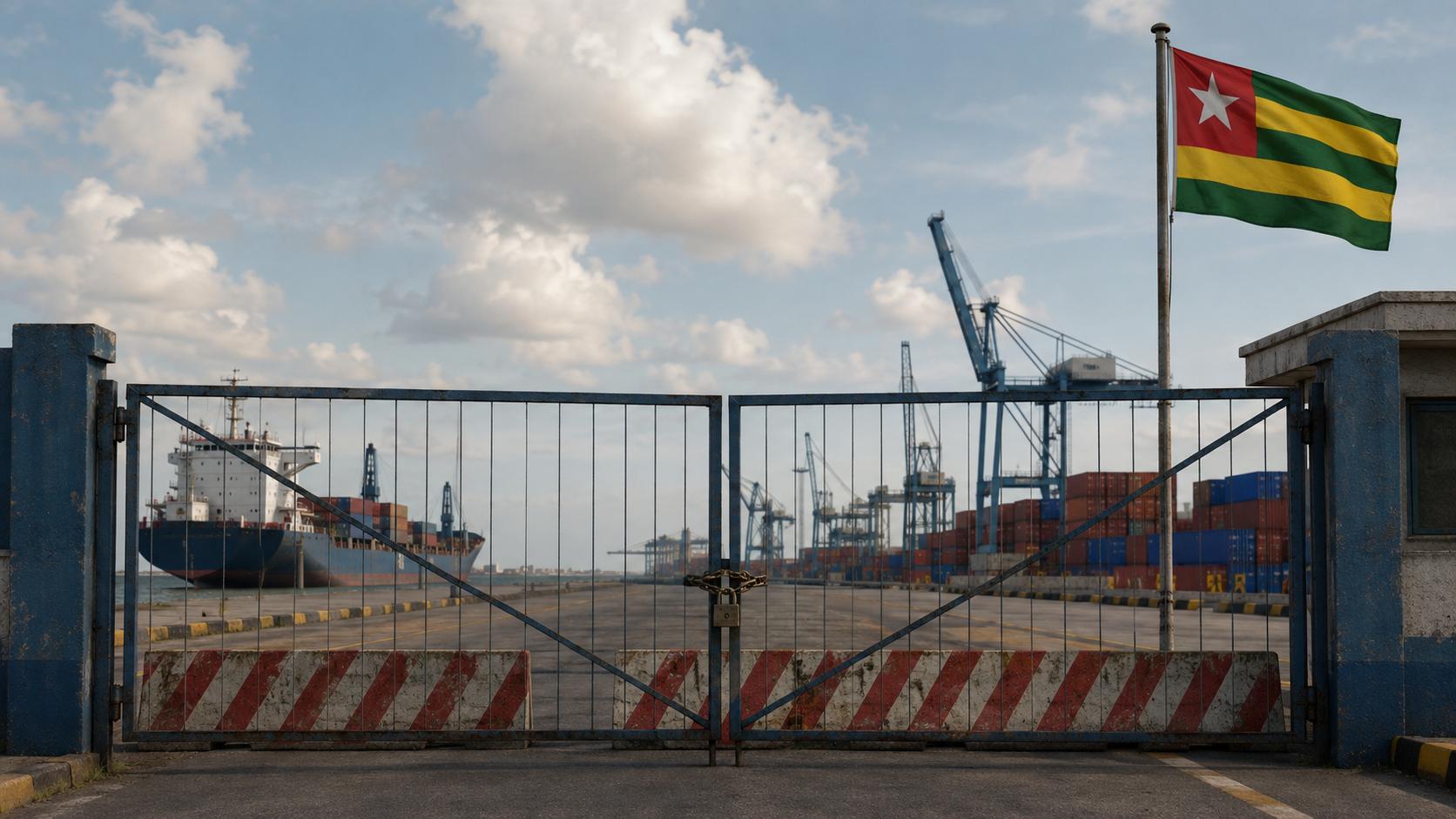
In recent weeks, diplomatic efforts have intensified across West Africa to rebuild dialogue between ECOWAS member states and the Alliance of Sahel States (AES), comprising Mali, Burkina Faso, and Niger. At the heart of these delicate initiatives lies the security imperative and the need to align policies for coordinated action, aiming eventually for pooled resources. To succeed in this urgent diplomacy, stakeholders must set aside the dispute over the AES countries’ withdrawal from ECOWAS, overlook the hostility generated by AES regimes’ communication campaigns against certain regional neighbors, and move beyond the geopolitical restructuring in the Sahel that has created a ‘cold war’ climate between the two blocs. In essence, it means burying resentments, overcoming tensions and misplaced pride, to confront the pressing shared challenges.
Côte d’Ivoire ‘ready to resume cooperation’
Among the strong signals of this shift are recent statements by Ivory Coast’s Defense Minister Tene Birahima Ouattara. On June 15, he expressed his ‘sincere readiness to resume security cooperation’ with Mali and Burkina Faso, noting that ‘terrorism, as it currently presents itself, cannot be defeated by a single state. Collaboration and pooling of forces are necessary.’ This obvious fact bears repeating, as some decision-makers warn that the consequences of the Sahel security crisis ‘could become untenable in the medium term’ for the entire region.
What responses will Mali and Burkina Faso give to Côte d’Ivoire’s call? So far, there is no sign of a collective surge of lucidity among all actors to jointly produce solutions to the urgent matters. Although the leaders of Mali and Burkina Faso admit that the break with ECOWAS ‘does not preclude bilateral cooperation,’ they find it difficult to suddenly change their stance toward the Ivorian interlocutor. Regularly accused of harboring ‘financed’ or ‘French imperialism-sponsored’ terrorist elements, Côte d’Ivoire has been a prime target in the AES’s narrative of external, even imaginary, enemies. Even though these accusations have never been backed by facts or evidence, they feed the doctrinaire narrative of these regimes born of coups that led to their withdrawal from ECOWAS. However, despite these toxic diplomatic relations, Côte d’Ivoire maintains discreet channels of exchange and cooperation with Mali and Burkina Faso, whose nationals enjoy refugee status in Ivory Coast by the thousands.
‘New era’ for Benin and Niger
Benin has also been targeted by similar accusations. Its new president, Romuald Wadagni, shortly after his inauguration on May 24, undertook gestures of rapprochement and appeasement toward AES countries. Particularly noteworthy is the case of Niger, whose common border with Benin has remained closed since the aftermath of the July 2023 coup in Niamey. When all dialogue had become impossible between the two countries, the arrival of a new leader in Benin provided an opportunity to end what had turned into a petty personal quarrel between the Nigerian military authorities and former Benin President Patrice Talon.
Thus, the change at Benin’s presidency has, in recent days, acted as an accelerator for ‘reconciliation’ between these two neighbors. In this context, a ‘meeting of experts’ from Niger and Benin was held in Cotonou on June 20-21 to develop the terms of a new cooperation, focusing mainly on defense, security, and conditions for reopening the common border—a key factor for resuming economic activities between Benin and Niger. On this point, the Nigerian delegation stressed its desire to obtain more information about the alleged presence of ‘foreign elements’ at the Benin-Niger border. This request echoes Niamey’s persistent suspicion that Benin hosts a ‘French military base’ intended to ‘destabilize Niger’ or ‘finance terrorism.’ An accusation that defies common sense: why would Benin ‘finance’ terrorism when it itself is a target and victim? Such statements have become routine in the narrative of AES regimes, which are struggling to curb the continuous deterioration of security on their territories. Their promise to unite military forces to fight terrorism has not moved beyond rhetoric. Today, large swaths of Niger, Mali, and Burkina Faso have become gray zones administered by terrorist armed groups, whose expansion and formidable plans the ruling juntas cannot contain.
The time has come for reconciliation between Niger and Benin. According to Niger’s Minister of Interior and Security, Mohamed Toumba, ‘a new era is opening’ for the two countries. He stated: ‘By choosing dialogue over confrontation, we have created value for our economies and security for our populations.’ Both Nigerian and Beninese actors are aware that behind the security challenge lies the equally crucial economic dimension, in a region where populations share intertwined destinies. As we witness a return to realism and pragmatism in diplomacy, what is happening between Benin and Niger resembles a pilot case or a model for a reassessed and intelligent management of shared vulnerabilities across the West African space.
Endogenous responses to the security crisis
Initiatives to ‘normalize’ relations between ECOWAS and AES countries are expected to become even more defined in the coming months. Beyond reactivating neighborhood dynamics that have prevailed for decades, these efforts underscore the urgent need for endogenous responses to the security equation. This echoes the recommendations made last year by UN Secretary-General António Guterres for ‘a resumption of dialogue among all West African countries.’ In December 2025, Russia, a privileged partner of AES nations, sent early signals of a diplomatic recalibration in West Africa by calling for ‘continued pragmatic and mutually beneficial dialogue between ECOWAS and AES to find common solutions to counter common challenges and threats, including the fight against regional terrorism.’ These remarks indicate a paradigm shift in international cooperation. Ultimately, it is a way of reminding Africans that they alone must craft the most efficient solutions to their current challenges.
Already, bilateral relational protocols are observed between AES and some countries such as Ghana, Guinea, Togo, and Senegal. Despite their withdrawal from ECOWAS, the Sahel military regimes have maintained their presence within the West African Economic and Monetary Union (WAEMU), and their nationals continue to benefit from free movement within the ECOWAS space. In the end, one must question the validity of the AES promoters’ withdrawal from the regional community. The only available answer points back to the initial dispute: ECOWAS’s condemnation of the coups that took place in AES countries, and especially the refusal of the AES leaders to work toward a ‘restoration of constitutional order.’ In many ways, the rupture between AES and ECOWAS resembles a divorce that is either feigned or incomplete.