Gabon faces scrutiny as government defends policies in parliament
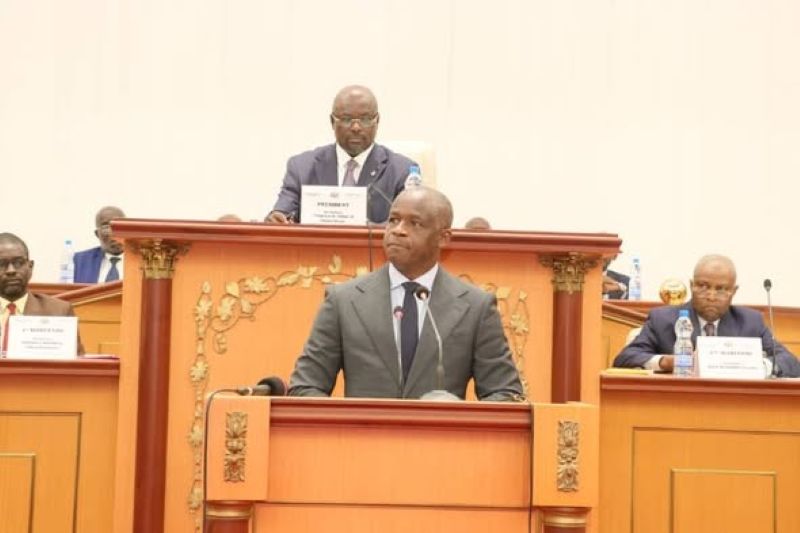
Libreville, Wednesday, June 3, 2026 — The Gabonese National Assembly has intensified its oversight role, challenging the government to address pressing national concerns during a pivotal parliamentary session.
Beyond procedural formalities, Tuesday’s oral questioning session served as a barometer of public sentiment, with legislators probing issues ranging from purchasing power and education to security, employment, and economic sovereignty. The exchange marked the first substantive test for the 14th legislature, convened at the Léon Mba Palace in strict adherence to constitutional mandates.
Nearly two dozen questions were directed at government officials, a prelude to the upcoming June 15 parliamentary congress where President Brice Clotaire Oligui Nguema is expected to deliver his State of the Nation address.
Youth and education take center stage
The surge in drug consumption within schools emerged as a critical concern. Addressed by Sixth Vice President Huguette Tsono, Vice-Premier Minister Hermann Immongault acknowledged the severity of the trend while reaffirming the state’s commitment to safeguarding educational institutions. The issue transcends school safety, reflecting broader anxieties about Gabon’s demographic future and economic resilience.
Education reform also dominated discussions. Deputy Dorland Chancely Olengué pressed Education Minister Camélia Ntoutoume-Leclercq on progress, receiving assurances that reforms remain on schedule. The response underscores a familiar challenge: families demand rapid improvements, yet systemic change requires sustained effort.
Economic sovereignty drives policy shifts
Agriculture and mining reforms highlighted the government’s push for self-reliance. The phased ban on imported poultry is designed to bolster local poultry farming, create jobs, and reduce dependence on foreign supplies, Agriculture Minister Pacôme Kossy explained. Similarly, the mineral sector faces restructuring, with a ban on manganese exports aimed at fostering domestic processing and capturing greater value-added revenue.
These measures signal a departure from Gabon’s traditional reliance on raw material exports, aligning with broader African trends toward industrialization.
Daily struggles and social priorities
Administrative bottlenecks, particularly in issuing national ID cards and passports, were flagged by Interior Minister Adrien Nguema Mba. The issue resonates strongly in rural areas, where access to public services remains inconsistent.
Social welfare also took center stage, with questions posed to Social Affairs Minister Armande Longo épouse Moulengui about pensioners, CNAMGS beneficiaries, people with disabilities, and single mothers. The queries highlight a fundamental truth: economic growth alone cannot fulfill public expectations without tangible improvements in living standards.
Parliament regains its oversight role
The session underscored the National Assembly’s renewed role as a forum for public debate. By examining food security, industrial transformation, education, health, and governance, legislators reasserted their constitutional duty to hold the executive to account.
Assembly President Michel Régis Onanga Ndiaye closed proceedings by emphasizing the significance of the upcoming congress, where the government’s reform agenda will undergo further scrutiny. This inaugural oral questioning session of the 14th legislature has set the tone: Gabon is in the midst of profound transformations, yet public expectations remain high.
The coming months will test the government’s ability to translate policy into visible results. Success in this arena will determine the credibility of Gabon’s public action in the eyes of its citizens.