
Libreville, Friday, July 17, 2026 – The battle against corruption transcends mere rhetoric, lofty declarations, or public relations stunts. Its true measure lies in the institutional capacity to forge enduring rules, methodologies, case law, and a culture of accountability robust enough to withstand political transitions.
By officially unveiling four strategic instruments designed to guide its operations until 2030, the Court of Auditors of Gabon has sent an unequivocal message to its international partners, investors, and citizens: financial governance in the nation is entering a new era of institutional maturity.
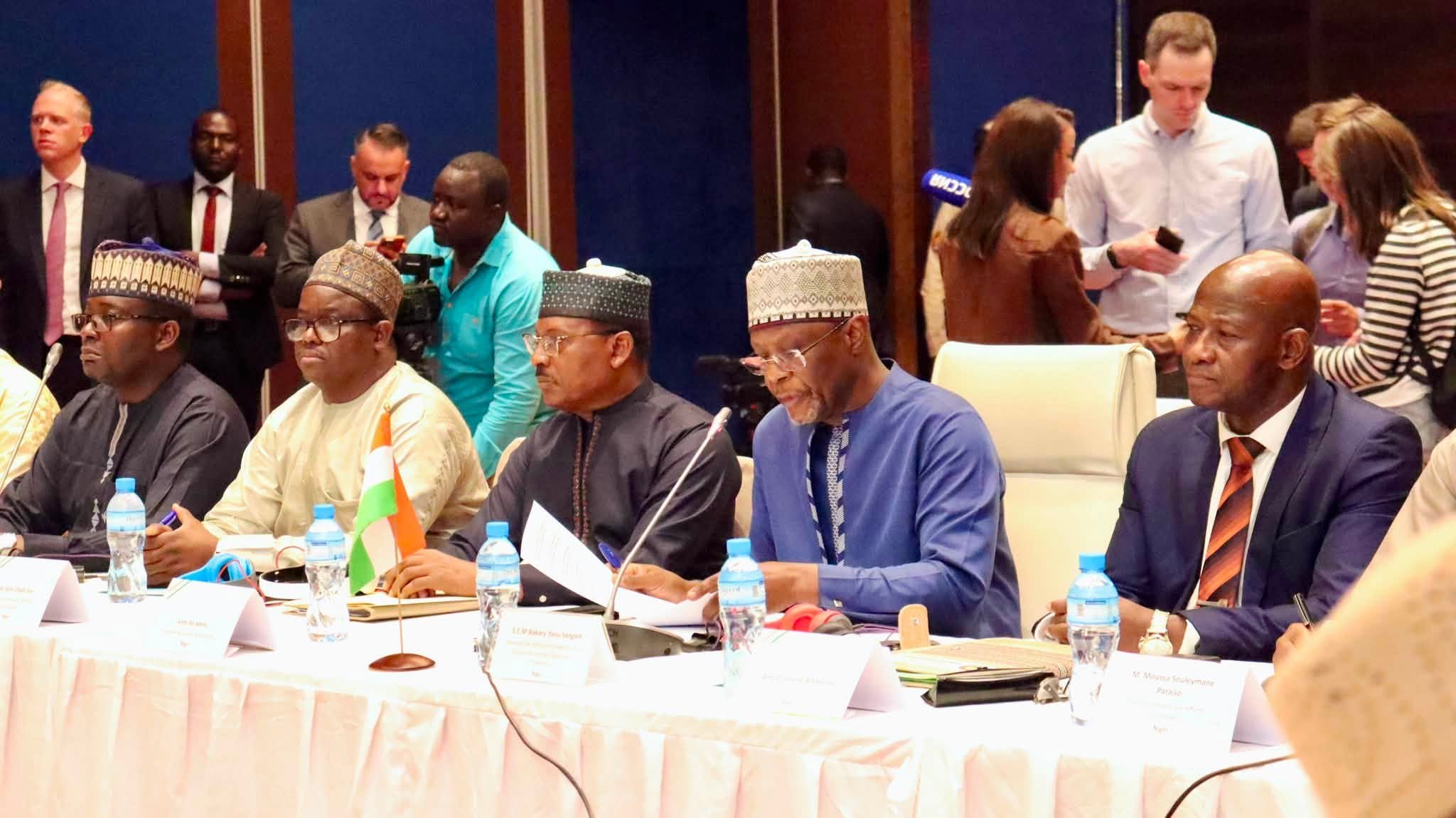
On July 16, a distinguished assembly gathered in Libreville, presided over by Alex Euv Moutsiangou, the First President of the Court of Auditors. Representatives from Gabon’s highest state institutions witnessed the formal presentation of the Code of Ethics and Professional Conduct, the 2026-2030 Strategic Plan, the Magistrates’ Training Plan, and the Collection of Financial Jurisdictions’ Case Law.
The presence of key figures, including Vice-President of the Government Hermann Immongault, Minister of Reform and Relations with Institutions Jean-François Ndong Obiang, Secretary-General of the Presidency Murielle Minkoué Mezui, President of the Constitutional Court Dieudonné Aba’a Owono, and Bar President Raymond Obame Sima, alongside former officials of the financial jurisdiction, elevated the ceremony beyond a purely administrative event, underscoring its national significance.
A revitalized framework for public oversight
Through these four foundational documents, the Court of Auditors aims not only to modernize its internal operations but also to fundamentally redefine the role of financial control within the Gabonese state’s architecture.
The Code of Ethics and Professional Conduct now establishes the guiding principles for every magistrate in the execution of their duties. Independence, impartiality, integrity, and responsibility are now the cornerstones of a jurisdiction poised to play a pivotal role in safeguarding public finances.
The Collection of Case Law compiles the most significant rulings and opinions issued by financial jurisdictions. It represents an essential institutional memory, ensuring consistency in future decisions and bolstering the legal certainty for public administrators.
The 2026-2030 Strategic Plan serves as the veritable backbone of this transformation. It delineates the priorities, objectives, and methods that will enable the Court of Auditors to align its mandate with the evolving demands of public governance.
Finally, the Training Plan embodies a straightforward conviction: no sustainable institutional reform can succeed without substantial investment in human capital and skills development.
The imperative of international credibility
The broader context imbues this initiative with particular weight. According to the Ibrahim Index of African Governance, Gabon currently ranks thirty-second out of fifty-four African nations, with an overall score of 44.6 out of 100. While this position highlights ongoing challenges, it also reflects recent advancements.
Notably, since 2023, the nation has transitioned from a candidate country to one compliant with the requirements of the Extractive Industries Transparency Initiative. This represents a significant stride for an economy heavily reliant on natural resources.
In a global environment where environmental, social, and governance (ESG) criteria are increasingly crucial for accessing international financing, the robustness of control institutions is now as vital for economic competitiveness as it is for democratic integrity.
The budgetary credibility of a state is now forged as much before rating agencies as it is before its own citizenry.
Anticipating tangible outcomes
For Alex Euv Moutsiangou, these new tools are designed to meet the expectations of citizens who demand rigorous management of public funds, administrations seeking clear legal benchmarks, and both Parliament and the government, who anticipate independent expertise and informed counsel.
The stakes, therefore, extend beyond the Court of Auditors itself. The critical question now is whether this institutional framework will yield visible results in the daily management of public finances, in the quality of public policies, and in the trust placed in state institutions.
Ultimately, the true measure of success will not be found in the mere publication of these texts but in their effective implementation. Modern governance is not declared; it is meticulously organized, rigorously controlled, and demonstrably proven.
With these four reference instruments, Gabon has laid the groundwork for a more stringent financial control regime. The remaining challenge is to transform this institutional ambition into an enduring culture of public responsibility.