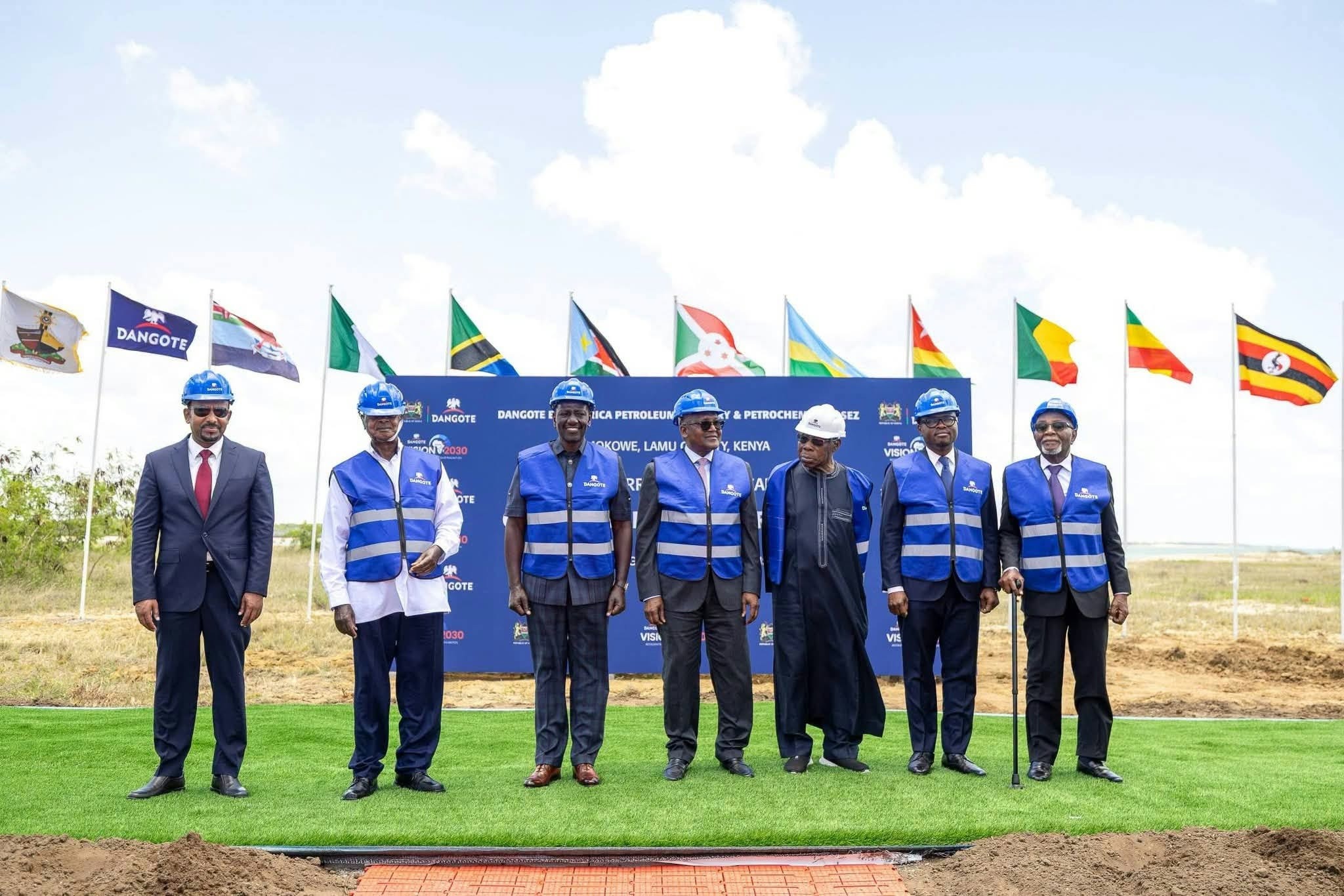
Lamu, Kenya — september 30, 2026. The future of East Africa’s energy landscape is taking shape in real time. At the edge of the Indian Ocean, where the continent’s largest industrial gamble unfolded, Benin’s president Romuald Wadagni stood alongside leaders from across Africa. This wasn’t just another diplomatic engagement—it was a strategic positioning at the launch of a 16-billion-dollar petroleum refinery destined to redefine regional energy independence.
The roots of a continental energy pivot
The $16 billion Lamu refinery, spearheaded by Nigerian billionaire Aliko Dangote, isn’t just another infrastructure project. It’s a calculated move to shift Africa’s energy narrative. With an expected processing capacity of 700,000 barrels per day, this facility will eclipse current refining capabilities in East and West Africa combined. Behind the scenes, the decision for Benin to participate reflects deeper geopolitical and economic calculations.
African leaders aren’t merely endorsing a refinery—they’re endorsing a new economic order. The presence of Romuald Wadagni, along with peers like Uganda’s Yoweri Museveni and Ethiopia’s Abiy Ahmed Ali, signals more than solidarity. It underscores a shared belief that Africa’s future hinges on its ability to control, refine, and commercialize its own resources.
From observers to architects: Benin’s evolving role in Africa’s energy sector
Benin’s involvement at Lamu must be viewed through a strategic lens. Historically, the country has relied on imported refined petroleum products. But as global oil markets face volatility and supply chain disruptions, in-house refining offers a pathway to stability. Wadagni’s presence at the launch isn’t symbolic—it’s transformational. It positions Benin as an active participant in a continental energy revolution.
This isn’t happenstance. It’s the result of months of behind-the-scenes negotiations, economic modeling, and risk assessment. Africa is no longer content with being a raw material exporter. Countries like Benin are leveraging their geopolitical influence to secure a foothold in high-impact industrial projects.
What a 700,000-barrel refinery means for East Africa
The numbers speak for themselves:
- Energy sovereignty: The refinery will reduce East Africa’s dependence on imported fuel, stabilizing prices and ensuring energy security.
- Job creation: An industrial project of this scale will generate thousands of direct and indirect jobs, transforming local economies.
- Regional integration: By linking oil-rich nations to refining hubs, the project strengthens intra-African trade networks.
- Foreign investment attraction: The refinery acts as a magnet for additional capital, positioning Kenya—and now Benin—as key players in Africa’s industrial future.
The geopolitical chessboard behind the refinery launch
The collaborative nature of the Lamu project extends beyond economics. It’s a political statement. The inclusion of leaders from West, East, and Central Africa—including Togo and Ethiopia—suggests a deliberate strategy to foster continental unity around energy independence. Wadagni’s participation is part of a broader trend: African states increasingly using resource ownership as a tool for economic empowerment.
Critics may question the financial risk. After all, $16 billion is no small sum. But proponents argue that long-term returns—through reduced fuel imports, increased exports of refined products, and geopolitical leverage—far outweigh the upfront costs. The refinery is designed not just to process oil, but to catalyze a new era of industrial growth.
As the ceremony took place under the equatorial sun, one thing was clear: Benin isn’t just watching Africa’s energy future unfold. It’s helping build it.
Looking ahead: implications for Benin and beyond
The Lamu refinery is more than a single project. It’s a turning point. For Benin, it offers a blueprint for diversifying its economy and reducing its energy trade deficit. For Africa, it signals a collective move toward industrialization, self-reliance, and global competitiveness.
As Wadagni returned to Cotonou, he carried more than photos and speeches. He carried the weight of an ambitious vision: one where Benin—and indeed, all of Africa—emerges not as a passive supplier of raw materials, but as a leader in value-added energy production.
The question now is not whether the refinery will succeed—but how quickly Africa can replicate this model across the continent.