Netanyahu’s lead falls short of the 61-seat majority threshold
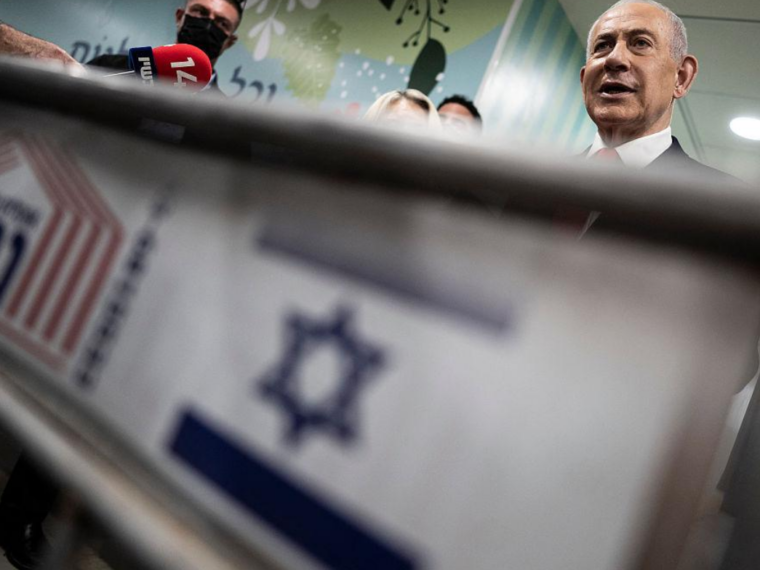
The October 27, 2026 legislative elections in Israel delivered a fragmented parliament, with Prime Minister Benjamin Netanyahu’s bloc securing only 53 seats—significantly below the 61-seat absolute majority required to form a government. His Likud party remained the largest faction with 27 seats, yet this performance marks a steep decline from the previous Knesset, where his coalition held 68 seats.
The opposition bloc, led by former military chief Gadi Eisenkot, secured 48 seats, while Arab-majority parties—including the Joint List and Ra’am—garnered 19 seats, a historic high. This political stalemate leaves Netanyahu’s future in limbo, with no clear path to governing without unprecedented alliances.
Fragmented parliament triggers multiple political scenarios
The election results reflect deep divisions within Israeli society, exacerbated by years of internal strife, conflict, and public discontent over government policies. With neither Netanyahu’s bloc nor the opposition reaching the majority threshold, the following outcomes are now possible:
- A fragile coalition cobbled together with nationalist or religious parties;
- A broad national unity government including opposition factions;
- A minority coalition relying on external support from Arab parties, though this remains politically contentious;
- A return to the polls if negotiations collapse.
The uncertainty extends beyond domestic politics, as the composition of the next government will directly influence Israel’s stance on critical regional issues—including Gaza, Iran, and relations with neighboring Arab states.
Gaza remains the immediate flashpoint for the incoming government
The future of Gaza looms large as a defining challenge for Israel’s next administration. Reconstruction efforts, security concerns, and the governance of the territory will test the new government’s ability to balance military imperatives with diplomatic engagement.
If Netanyahu retains power through traditional allies, continuity in security policy is likely. His bloc has historically advocated for a hardline approach toward Palestinian territories and Hamas. However, any government formed with opposition participation could signal shifts in negotiation strategies or international alignment—though major policy reversals remain unlikely.
For Palestinians, the election outcome offers no immediate guarantees of change. The trajectory of Gaza and the West Bank will hinge on the alliances forged in the Knesset, not on electoral outcomes alone.
Tehran and Hezbollah remain top security priorities
Israel’s strategic concerns extend well beyond its borders, with Iran and Lebanon representing critical flashpoints. The Islamic Republic’s nuclear program, ballistic capabilities, and support for regional militant groups continue to pose existential threats to Israeli security.
A weakened government, hamstrung by parliamentary divisions, may struggle to articulate a coherent policy on these fronts. Yet, national security issues typically enjoy broad consensus across Israel’s political spectrum, ensuring that defense and deterrence strategies remain a unifying priority.
In Lebanon, managing tensions with Hezbollah will be paramount. Any military escalation risks destabilizing the region further, with potential humanitarian and economic fallout. The next Israeli government must navigate these volatile dynamics with caution.
Regional actors await Israel’s next move
The United States and key Arab states, including Saudi Arabia, Egypt, Jordan, and the United Arab Emirates, are closely monitoring Israel’s political transition. Washington’s alliance with Israel remains robust, but differences over Gaza operations and regional de-escalation efforts could strain the partnership.
For Arab capitals, normalization with Israel remains a strategic objective—but one inextricably linked to the Palestinian question. A government unable to establish a clear policy direction may slow diplomatic progress, particularly in Riyadh, where regional stability is a prerequisite for further integration with Israel.
Conversely, a coalition open to negotiations could unlock new avenues for dialogue, though a breakthrough toward a comprehensive regional agreement is not guaranteed.
Electoral results expose Israel’s deep societal rifts
The October 2026 elections underscore more than political arithmetic; they reveal a deeply divided society grappling with questions of security, governance, religion, and national identity. The rise of Arab-majority parties and the erosion of Netanyahu’s traditional support base reflect shifting voter priorities and growing disillusionment with decades of entrenched leadership.
With no clear mandate, Israel now faces a period of prolonged uncertainty. The coming weeks will determine whether Netanyahu can assemble a workable coalition, whether opposition forces can unify behind an alternative government, or whether another election becomes inevitable.
For the broader Middle East, the stakes could not be higher. The decisions made in Jerusalem will ripple across Gaza, the West Bank, Iran, Lebanon, and the Arab world—reshaping regional power dynamics in ways that remain impossible to predict.
Netanyahu may have won the election, but the voters did not give him the tools to govern alone. In a region where every decision reverberates internationally, this victory without a majority could mark the beginning of a new era of geopolitical instability.