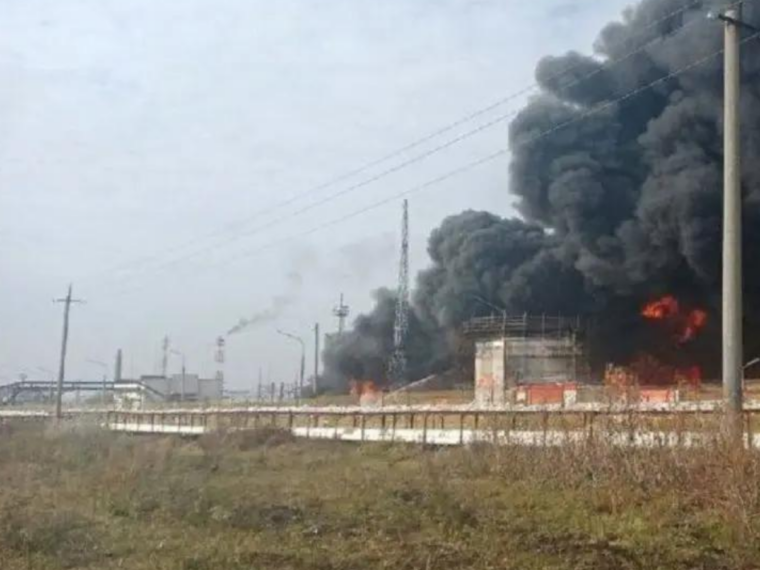
In a significant escalation, Ukrainian drone strikes have set ablaze a major oil refinery in Novokouïbychevsk, Samara region, marking another critical blow to Russia’s energy infrastructure amid ongoing hostilities.
Drone strikes ignite massive fire at Samara refinery
A large-scale fire erupted at the Novokouïbychevsk oil refinery in Russia’s Samara region following an overnight drone attack between October 29 and 30. Local reports indicate that explosions accompanied the blaze, with thick black smoke billowing over the industrial complex. Footage shared on social media captured the dramatic scene, confirming significant damage to the facility.
The refinery, operated by Russian energy giant Rosneft, processes millions of tons of crude oil annually and plays a vital role in producing aviation fuel and other petroleum products. While Russian regional authorities confirmed the drone attack, no official assessment of the damage has been released yet.
Ukraine mourns civilian victims in latest railway attack
Hours before the refinery strike, a Russian drone struck a bustling railway station in Dnipro, Ukraine, killing at least 14 civilians and injuring several others. The attack hit two passenger trains, including a commuter rail and a long-distance service, leaving a trail of devastation with shattered windows and structural damage.
Among the victims was an 11-year-old child, highlighting the indiscriminate nature of the assault on civilian targets. Ukrainian President Volodymyr Zelensky condemned the attack as a deliberate strike against unarmed citizens, urging international allies to maintain pressure on Moscow.
Dual strikes underscore war’s shift toward infrastructure targets
These simultaneous attacks reflect a growing pattern in the Russo-Ukrainian conflict, where critical infrastructure has become a primary battleground. Ukraine’s recent strategy has increasingly focused on striking Russian oil facilities, crippling energy output and revenue streams that fund the war effort. The Novokouïbychevsk refinery, already targeted multiple times, represents a strategic asset for Russia’s energy sector.
On Ukraine’s side, railways remain a lifeline, transporting military supplies, humanitarian aid, and civilians despite persistent Russian assaults that disrupt daily life for millions. These rail networks, once symbols of national connectivity, have now become recurrent targets in a conflict defined by reciprocal strikes.
Energy crisis deepens as retaliatory strikes intensify
International calls for de-escalation have done little to curb the cycle of retaliation. Reports suggest that pressure from allied nations has reportedly urged Kyiv to limit strikes on Russian oil refineries, yet the attack on Novokouïbychevsk demonstrates the resilience of Ukraine’s long-range strike capabilities. With advancing drone technology, even distant industrial sites are no longer beyond reach, expanding the conflict’s geographic scope.
As flames engulf refineries in Russia and trains smolder in Ukraine, the war continues to devastate essential infrastructure on both sides. The human toll—seen in shattered families and scorched industrial zones—remains the most enduring legacy of a conflict now in its fifth year, with no clear path to peace in sight.