How the JNIM’s evolving tactics are redefining Mali’s ongoing crisis
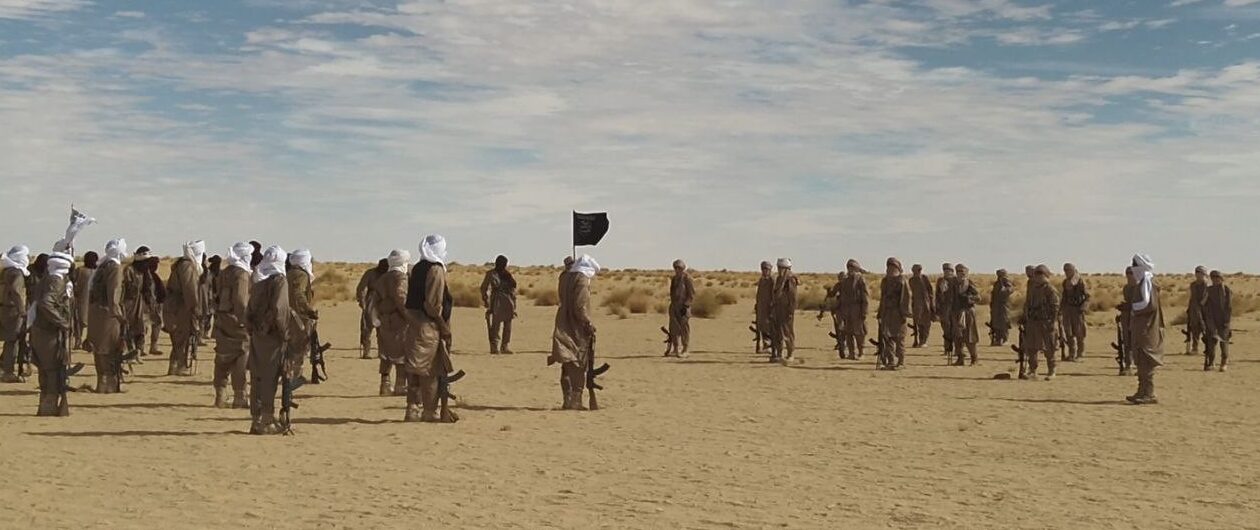
Northern and central Mali no longer face sporadic armed assaults. Instead, they endure years of relentless warfare and systemic exhaustion. Recent offensives by the Group for the Support of Islam and Muslims (JNIM) and the Azawad Liberation Front (FLA) against military outposts, supply convoys, and critical road networks reveal a deliberate shift in strategy.
The goal is no longer limited to capturing towns or staging high-profile attacks. These groups now aim to render vast territories ungovernable, pushing the military junta into an increasingly precarious position around Bamako.
This transformation is significant because it redefines the nature of the conflict. The question has evolved beyond mere territorial control to a more fundamental challenge: Who can still move freely—people, goods, fuel, officials, or public services?
Disrupting mobility as a weapon of war
Over the past months, attacks on vital roadways and military transports have surged. In some regions, even administrative travel now requires armed escorts, crippling the state’s ability to function outside major urban centers. The JNIM has mastered a crucial insight: in a nation weakened by institutional, economic, and security crises, attrition can outpace direct confrontation.
This strategy is cost-effective compared to large-scale territorial conquest. It disperses opposing forces, inflates security budgets, and sustains an atmosphere of perpetual insecurity. Its most damaging effect? Collective fatigue—military strain, economic stagnation, and social erosion.
In rural areas, the crisis has escalated beyond armed group presence. The real issue is the growing absence of stable governance. Schools close, healthcare vanishes, justice falters, and infrastructure crumbles. The state’s reach is fading, replaced by parallel systems of survival and protection.
The limitations of a purely military approach
Mali’s military leadership has staked its legitimacy on restoring security since successive coups. The withdrawal of French forces and the rise of Russian military cooperation were framed as acts of regained sovereignty. Yet sovereignty extends beyond military operations—it requires territorial, economic, and administrative continuity.
The paradox is stark: intensified military action does not guarantee lasting stability. In many regions, it coexists with worsening fragmentation of rural spaces. The prevailing security logic relies on offensives, strikes, and deployments—but struggles to rebuild durable administrative presence: education, healthcare, local justice, and economic circulation.
Where public services collapse, local populations turn to informal networks for protection, dispute resolution, and survival. The void left by the state fosters its own dangerous dynamics.
Regional spillover: the widening reach of armed groups
The Malian crisis is no longer contained within Mali’s borders. Across the Sahel, armed actors, local alliances, and clandestine economies are rapidly recomposing. The porous frontiers between Mali, Burkina Faso, and Niger allow militant groups to move freely—but state responses remain stubbornly national.
The JNIM and FLA offensive exposed the fragility of the Liberté, Fraternité, Justice (LFJ) alliance. Despite shared political and military goals, these nations have proven unable to support one another effectively. The Malian junta, now reliant on the Africa Corps mercenaries, finds itself increasingly isolated.
This asymmetry favors groups that adapt quickly. The JNIM thrives on territorial flexibility, local anchoring in certain zones, and integration into informal economic networks. It doesn’t need to hold territory permanently—only to make state control prohibitively expensive.
The conflict is becoming one of political endurance. Armed groups aim not to govern comprehensively, but to prevent the state from functioning normally—and to do so indefinitely.
Beyond counterterrorism: the deeper roots of the crisis
A strictly military lens on the Sahel obscures the conflict’s social, economic, and territorial dimensions. Rural frustrations—state neglect, land disputes, communal rivalries, systemic poverty—create enduring vulnerabilities. Armed groups don’t always create these fractures, but they exploit them masterfully.
The central challenge is political: How can the state rebuild legitimacy in areas where it appears intermittently—primarily through military patrols?
The future of Mali may hinge not on a single decisive battle, but on the capacity to restore a stable public presence beyond security operations. A war of attrition doesn’t just destroy military positions—it erodes roads, economies, administrations, social bonds, and ultimately the very idea of a governed territory.
Mourad Ighil
