
Lansana Gagny Sakho clarifies stance on Ousmane Sonko and state institutions
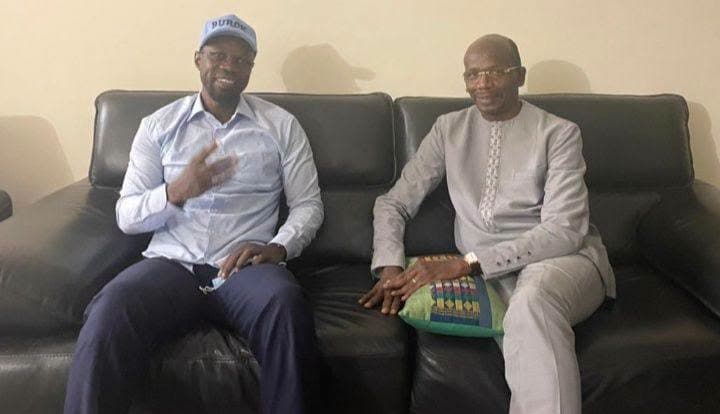
In a recent appearance on a national morning show, Lansana Gagny Sakho, Chairman of the Board of Directors of the Agence de Promotion des Investissements et Grands Travaux (APIX), addressed his evolving relationship with political figures and his commitment to Senegal’s republican institutions. His remarks shed light on a strategic decision he made early in President Bassirou Diomaye Faye‘s administration to prioritize institutional integrity over political appointments.
During the broadcast, Sakho recounted turning down a high-profile government position in the water and sanitation sector, despite being offered the role shortly after the transition. « I refused to compromise my principles for a position, » he stated. « That decision allowed me to leave gracefully. From the start, I chose the Republic over personal gain. » His comments underscore a belief that true leadership lies in strengthening state institutions rather than advancing individual agendas.
Contrasting visions: institutional loyalty vs. political disruption
The APIX chairman did not mince words when critiquing Ousmane Sonko, leader of the Parti africain de l’indépendance et du travail (PASTEF). He accused Sonko of undermining national cohesion by publicly questioning the government’s authority during a critical moment—specifically, when the president was on official visits abroad. « Sonko never aligned with the Republic, » Sakho asserted. « His statements during the president’s absence in the United States and China exposed deep divisions within the state, placing unnecessary strain on leadership. »
Sakho emphasized that leadership requires respect for democratic processes and the rule of law, not inflammatory rhetoric. He acknowledged challenges faced by both the government and opposition but highlighted significant strides in judicial reform as evidence of progress under Faye’s leadership.
Justice reforms: resistance to political interference
Speaking on the controversial removal of the former Minister of Justice, Ousmane Diagne, Sakho dismissed claims that the change was an attempt to exert control over the judiciary. « Diagne once declared that no one could manipulate him, » he recalled. « His replacement was framed as an effort to install a more compliant figure—one who would bend to political pressure. But the magistrates proved otherwise. They are not puppets. » His remarks reflect a broader skepticism toward efforts to politicize Senegal’s judicial system, reinforcing the need for an independent judiciary.
In recent weeks, Sakho has emerged as a vocal advocate for President Faye’s policies, emphasizing the importance of institutional continuity and stability. His public statements arrive amid a wave of defections from PASTEF, with several party members crossing to the presidential camp ahead of the launch of the Kiiraay movement. These shifts signal a growing realignment within Senegal’s political landscape, as figures reassess their alliances in light of evolving national priorities.