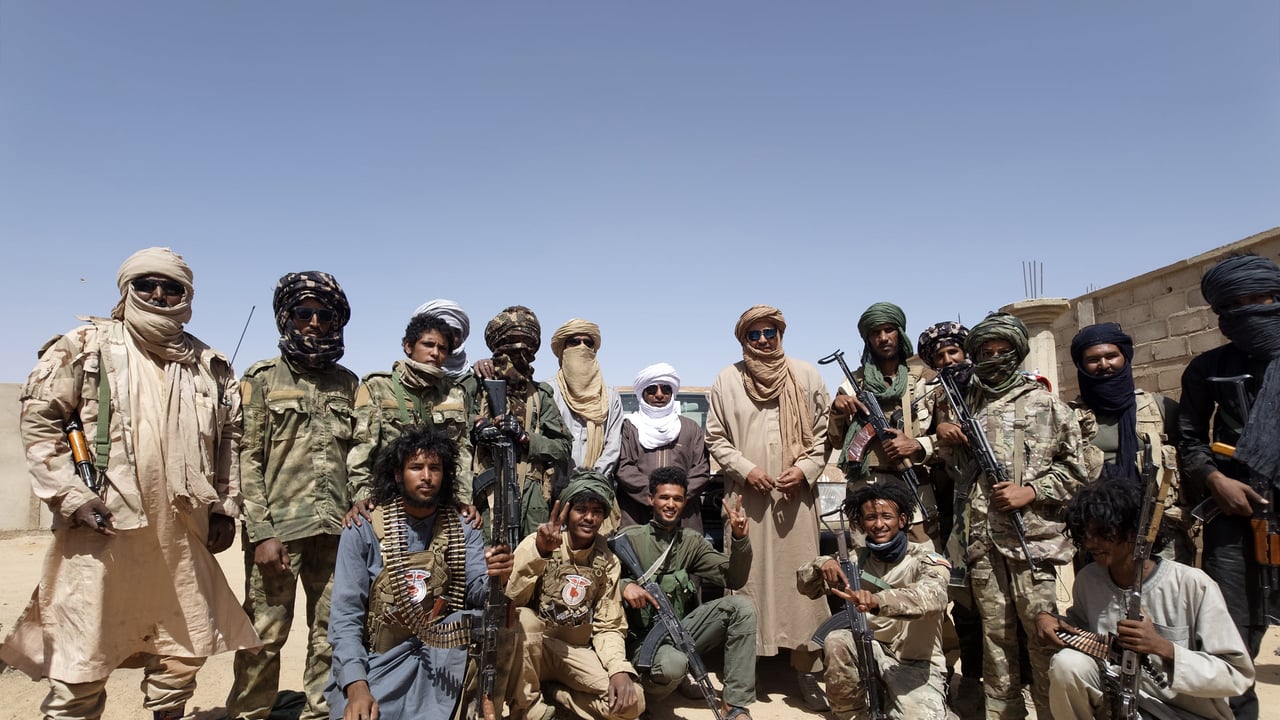

In the heart of Mali’s northern reaches, Kidal remains a city caught in the grip of relentless conflict. Despite peace agreements and international mediation efforts, the streets here echo with the persistent reality of war. The Front de libération de l’Azawad (FLA) continues to assert control, while tensions with the transitional government in Bamako simmer unabated. The presence of armed factions, including the Groupe de soutien à l’islam et aux musulmans (Jnim), underscores the fragile state of security in the region.
the pulse of a besieged city
The atmosphere in Kidal is one of cautious resilience. Residents navigate daily life under the watchful eyes of armed groups, their movements restricted by checkpoints and patrols. Marketplaces buzz with activity, yet the shadow of violence looms large. Vendors whisper about the latest clashes, while children play in streets where the threat of sudden gunfire is never far away.
International observers and local leaders alike describe Kidal as a powder keg. The city’s strategic importance makes it a focal point for both rebel factions and government forces. Alghabass Ag Intalla, leader of the FLA, has become a central figure in the ongoing standoff. His statements—often defiant—highlight the deep divisions that persist between Bamako and the northern territories.
the human cost of prolonged conflict
The war in northern Mali has exacted a heavy toll on its people. Displacement is widespread, with families fleeing their homes to escape the fighting. Humanitarian organizations report severe shortages of food, medicine, and clean water, exacerbating the suffering of civilians. Schools and hospitals, already underfunded, struggle to function amid the chaos.
Local officials paint a grim picture. “Every day brings new challenges,” says one community leader. “The lack of security forces us to adapt, but survival is becoming increasingly difficult.” Healthcare workers describe overwhelmed facilities, where patients with treatable conditions succumb due to shortages of supplies and personnel.
armed groups and shifting alliances
The Jnim remains one of the most formidable forces in the region, its influence extending across vast swathes of northern Mali. Its leader, Iyad Ag Ghaly, has long been a polarizing figure, his rhetoric resonating with disaffected communities. Meanwhile, the Malian transitional government, led by Assimi Goïta, faces mounting pressure to restore stability. Yet, military operations have done little to quell the insurgency.
Analysts note that the conflict is no longer confined to a single faction. Instead, it has evolved into a complex web of alliances and rivalries, with local militias and foreign fighters playing increasingly prominent roles. This fragmentation makes negotiations even more difficult, as trust between parties erodes with every skirmish.
a city on the brink
As the conflict drags on, Kidal’s future hangs in the balance. The international community has repeatedly called for dialogue, but the path to peace remains elusive. For now, the city remains a battleground—both physically and politically. Residents cling to hope, yet the reality of war is an ever-present reminder of the challenges ahead.
In a region where stability is a distant dream, Kidal stands as a stark example of the human cost of conflict. The resilience of its people is undeniable, but without urgent action, the cycle of violence threatens to consume another generation.