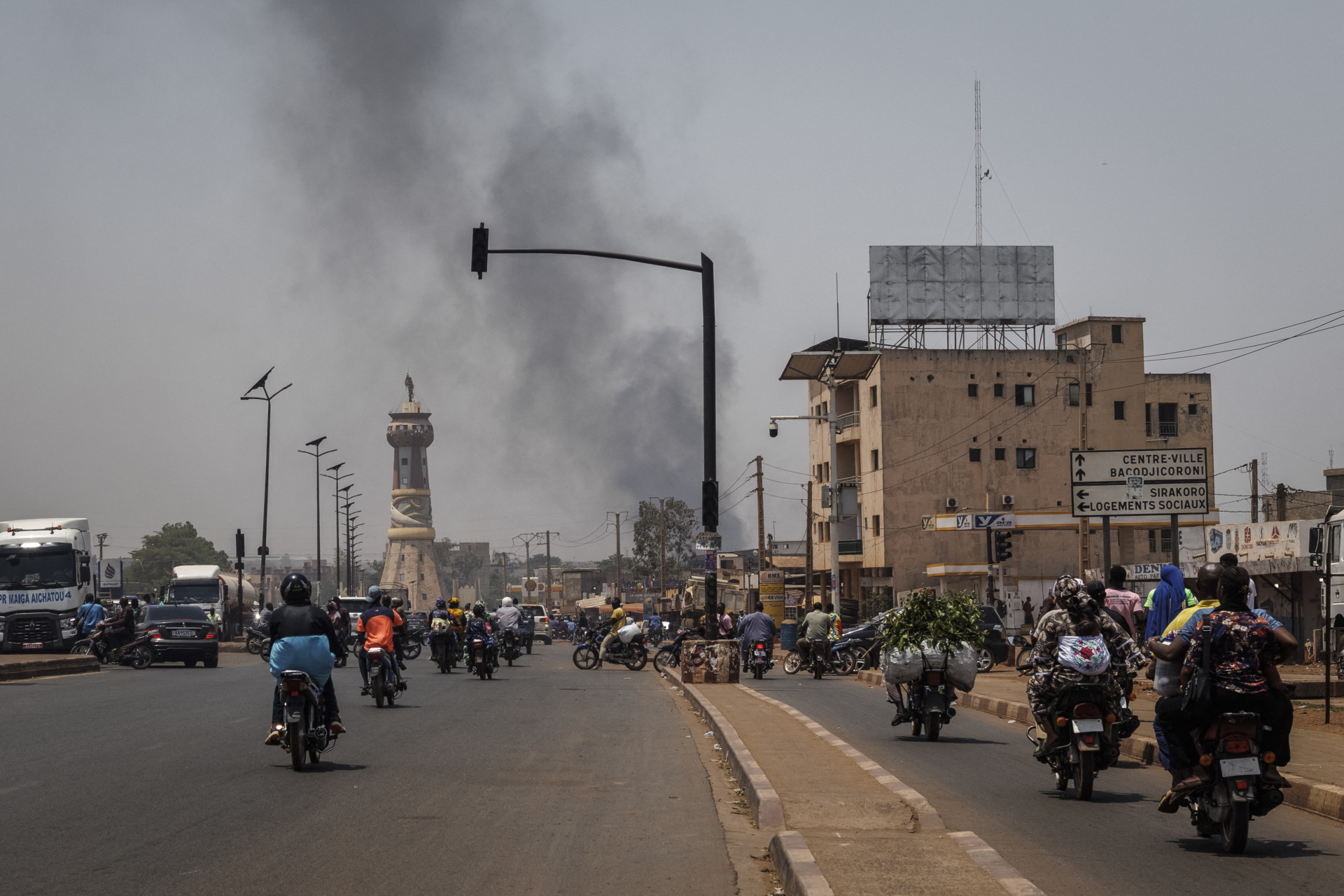
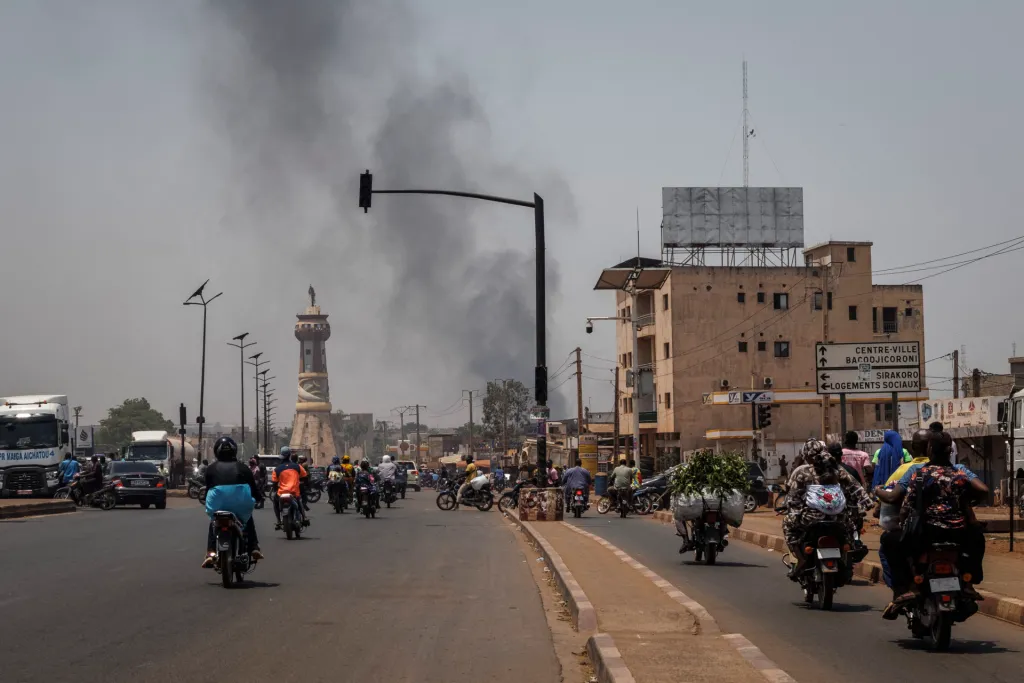
In the early hours of April 25, the silence of Kati—a military stronghold located just 15 kilometers from Mali’s capital, Bamako—was shattered by heavy gunfire and explosions. This marked the beginning of a coordinated nationwide assault launched by the jihadist coalition JNIM (Jama’at Nusrat al-Islam wal-Muslimin) and the Tuareg separatist group FLA (Front de Libération de l’Azawad). By the following day, the ruling military government confirmed that Defense Minister Sadio Camara had died from wounds sustained during a raid on his home. Reports also suggest that intelligence head Modibo Koné may have been killed or severely injured in the same wave of violence. Despite the junta’s public insistence that they had regained control, the scale of the fighting highlighted a massive disconnect between government propaganda and the volatile situation on the ground.
This surge in violence represents the most significant threat to Assimi Goïta since he took power in a 2020 coup. It comes at a time when the regime is already struggling. A months-long blockade by JNIM has severely restricted the movement of goods into landlocked Mali, targeting over 130 fuel tankers and cutting off vital supply lines from Sénégal and Côte d’Ivoire. This economic strangulation has forced widespread school closures and created a fuel crisis. Although the military denied trading 100 prisoners for a temporary truce to allow fuel convoys to pass, the reality of the blockade demonstrates that the insurgents’ influence extends far beyond traditional combat, effectively paralyzing the state.
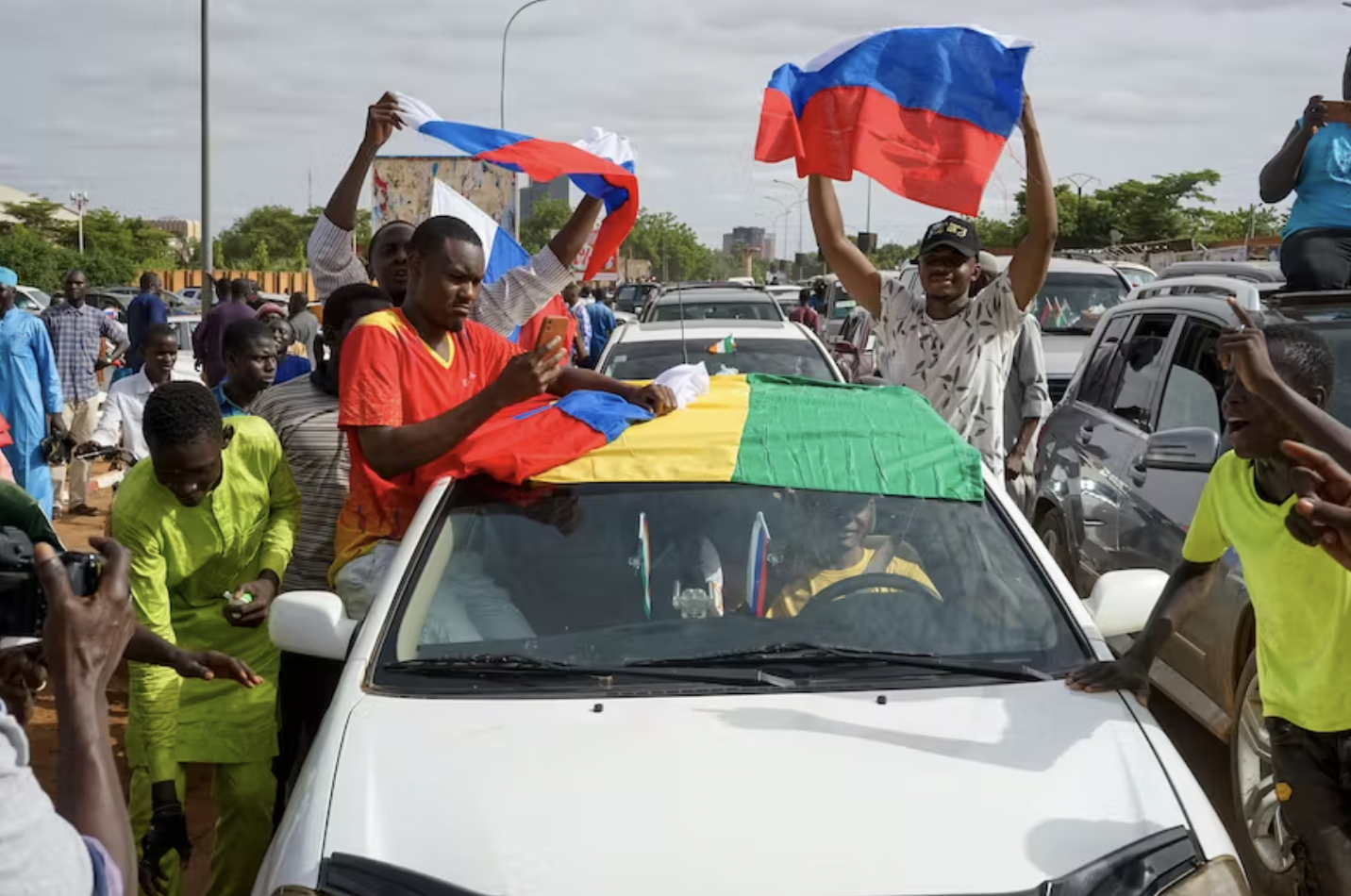
The recent instability serves as a critical evaluation of the junta’s core promise: that swapping Western alliances for Russian military support and restricted civil liberties would ensure peace. The failure to contain these attacks is likely to send shockwaves through neighboring Burkina Faso and Niger, where similar military regimes have also prioritized Russian partnerships over traditional democratic governance.
A Resurgence of the Jihadist-Separatist Coalition
The current situation mirrors events from 2012, when a similar alliance of jihadists and separatists overwhelmed the Malian military in the north. At that time, Tuareg fighters returning from Libya following the fall of Muamar Qaddafi brought heavy weaponry and experience, joining forces with groups like al-Qaeda in the Islamic Maghreb (AQIM) and Ansar Dine. While that previous coalition eventually collapsed due to internal ideological conflicts, the current cooperation between JNIM and the FLA shows a renewed tactical partnership. Although their long-term goals remain different, both groups currently benefit from exposing the Malian state’s inability to protect its own territory and leaders. For JNIM, this is part of a broader strategy to exhaust the junta’s resources until the government eventually implodes.
The late General Camara was the primary architect of Mali’s pivot toward Russia, facilitating the arrival of the Wagner Group in late 2021. This shift led to the departure of French forces in 2022 and the end of the United Nations peacekeeping mission in 2023. Following the death of Yevgeny Prigozhin, the Russian presence was reorganized as Africa Corps under the direct supervision of the Russian Ministry of Defense. However, this transition has diminished combat effectiveness. While Wagner functioned as a direct fighting force, Africa Corps acts primarily in a training and advisory capacity. Data suggests that Russian involvement in active battles has dropped significantly, partly due to the resource demands of the war in Ukraine.
The Symbolic Loss of Kidal
The changing role of Russian forces is most evident in Kidal. In late 2023, Malian and Wagner troops successfully took the city, a victory that was used to justify the junta’s pro-Russia stance. However, following the April 25 attacks, Africa Corps forces withdrew from the city under escort, effectively surrendering a key strategic gain without resistance. This retreat calls into question the long-term viability of the Alliance of Sahel States (AES) model. Mali, Burkina Faso, and Niger all justified their coups by claiming Western partners had failed to provide security, yet the security environment has only deteriorated since they formed their own defense pact and left the Economic Community of West African States (ECOWAS).
Historically, insecurity has been the primary excuse for military takeovers in the Sahel. Since 2012, five such power grabs have occurred, including the ousting of Amadou Toumani Touré and Ibrahim Boubacar Keïta in Mali, and Roch Marc Christian Kaboré in Burkina Faso. Most telling is the 2022 removal of Paul-Henri Sandaogo Damiba in Burkina Faso, who was deposed by his own military for failing to improve security. Assimi Goïta now faces a similar crisis of legitimacy. With the death of Camara, a leadership vacuum has opened within the junta’s inner circle. This follows the 2025 dissolution of political parties and the controversial extension of Goïta’s presidency until 2030.
Internal friction is also growing. A failed coup attempt in August led to the arrest of several high-ranking officers, indicating that the military’s loyalty is far from absolute. The recent intelligence failures and the ongoing fuel blockade have only increased the likelihood of a palace coup or a mutiny by junior officers. The junta must now decide if its reliance on Russia is actually providing the regime protection it was promised.
Shifting U.S. Counterterrorism Strategy
For years, Mali was a central focus for United States counterterrorism efforts in the region. However, legal restrictions following the 2012 and 2020 coups halted most direct aid. Recently, there are signs that Washington may be changing its approach. The Treasury Department recently removed sanctions on several Malian officials, and high-level discussions in Bamako have explored a new bilateral relationship. This “new course” reportedly involves talks about intelligence-sharing, drone surveillance, and access to critical resources like gold and lithium.
The current crisis may actually give the United States more diplomatic leverage. With the junta’s Russian partners suffering public setbacks, Washington could offer a “minerals-for-security” arrangement, similar to the deal recently signed with the Democratic Republic of the Congo (DRC). That agreement involves both government cooperation and private security firms, providing a potential blueprint for re-engaging with Sahelian juntas.
The recent offensive proves that the current security strategy is failing. JNIM has demonstrated it can strike the capital at will, utilizing new tools like drones and economic sabotage. Meanwhile, the Malian state is more isolated than ever, having severed ties with regional bodies like ECOWAS. The reputation of Russia as a reliable security guarantor is also at stake, not just in Mali, but in other nations like the Central African Republic and Madagascar that have sought Moscow’s protection. As the situation in the Sahel continues to unravel, the limits of Russian influence are becoming increasingly clear to observers across the continent.