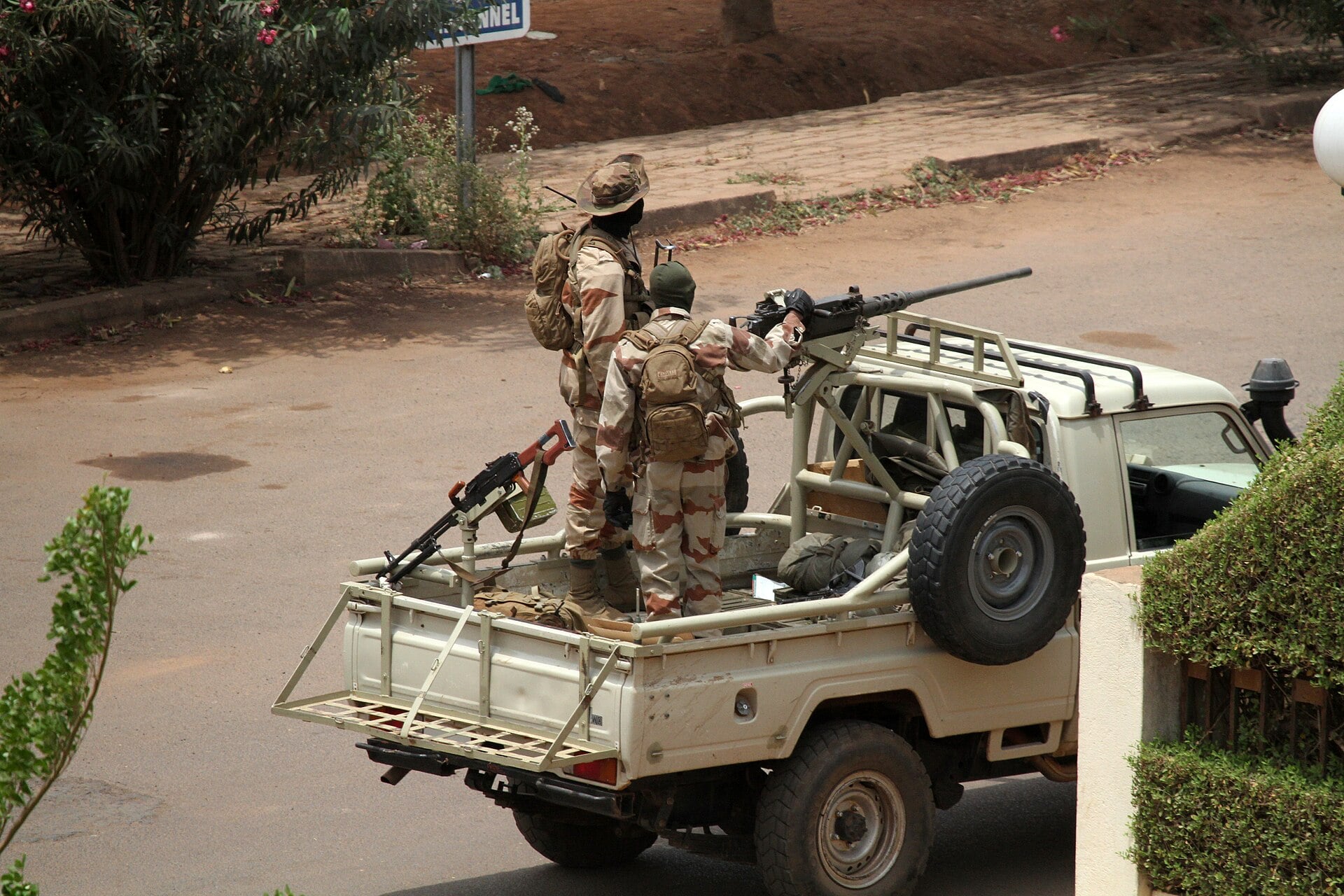
On April 25, a synchronized assault unfolded across Mali, marking more than just another chapter in the nation’s prolonged crisis. This coordinated strike by Islamist militants and Tuareg separatists targeted military outposts and critical population hubs, culminating in the seizure of Kidal—a northern stronghold with deep strategic value. The offensive’s success underscores a troubling new reality: the conflict’s reach now extends dangerously close to Bamako, raising urgent questions about the Sahel’s future stability and Algeria’s role in halting its unraveling.
The junta’s risky security shift backfires
To grasp how Mali reached this precipice, we must examine the post-coup decisions that reshaped its security landscape. Following the 2021 takeover, Colonel Assimi Goita’s military leadership severed ties with France, expelled the MINUSMA UN peacekeeping force, and turned to the Wagner Group (now under Russian state control) as its primary defense partner. Critics in the West cautioned that this pivot would leave Mali vulnerable, but the junta dismissed such concerns as foreign interference. The April offensive has since exposed the fragility of this gamble.
The Wagner Group’s forces, touted as a robust counter-insurgency solution, have now been expelled from Kidal—a town steeped in Tuareg history and resistance. Far from being crushed, the militants demonstrated resilience, adaptability, and coordination, advancing despite Russian firepower. The junta’s gamble appears to have backfired, leaving them with diminished French logistical support and no reliable alternative to counter a growing, more sophisticated threat.
The current offensive is uniquely dangerous because it unites Islamist factions and Tuareg separatists—groups that have long competed for control over Mali’s ungoverned north. Their alliance signals a shared assessment: the junta’s position is weakening, and the time to strike is now.
Algeria’s border crisis and lost influence
No nation monitors Mali’s decline with greater apprehension than Algeria. The two countries share a vast, poorly guarded southern frontier, a crossing point for arms, narcotics, migrants, and militant recruitment networks. Algerian leaders recognize, from hard-earned experience, that regional instability rarely stays confined. It spreads. It escalates. And it eventually threatens national security.
The irony of Algeria’s current predicament is striking. For years, Algiers positioned itself as the indispensable mediator in Sahel conflicts, brokering the 2015 Algiers Peace Agreement between Bamako and Tuareg leaders. That accord collapsed in early 2024 when Goita formally withdrew, a move perceived in Algiers as a deliberate snub. Tensions escalated further in March 2025, when Algerian forces intercepted a Malian drone near their shared border, sparking a diplomatic rupture with Bamako and its allies in Burkina Faso and Niger—all members of the Russia-aligned Alliance of Sahel States.
Algeria now faces the grim reality of being sidelined from a crisis it cannot afford to ignore. It lacks the leverage to dictate solutions to Bamako, cannot coordinate with a junta that views it with hostility, and faces existential risks if armed groups consolidate control along its southern border. While Algerian Foreign Minister Ahmed Attaf has publicly reaffirmed support for Mali’s territorial integrity and condemned terrorism, such declarations offer little solace when diplomatic channels have effectively collapsed.
The fallout of US disengagement in the Sahel
The Sahel’s collapse is also a story of American withdrawal. Under pressure from regional governments aligned with Moscow, the United States significantly reduced its counter-terrorism presence across West Africa, leaving a void that Russia has partially filled through military contractors. Meanwhile, Islamist networks have expanded their influence by providing governance, taxation, and recruitment in areas abandoned by the state.
The unfolding events in Mali serve as a stark warning. Military partnerships, intelligence cooperation, and sustained counter-terrorism efforts are not optional luxuries for regional stability—they are essential foundations. When the U.S. steps back, the vacuum doesn’t remain empty. It gets filled by forces that prioritize neither democracy nor stability.
Three possible outcomes for Mali—and one looming threat for Algeria
Three potential scenarios now loom over Mali’s future. First, the junta could pursue a negotiated settlement with Tuareg factions, halting military losses at the cost of ceding significant territory. Second, it could escalate its military campaign, leaning on Russian air and ground support to reclaim the north, though success is far from guaranteed. Third, it could continue its pattern of strategic retreats while insisting on its legitimacy, risking a scenario where Bamako itself becomes a battleground.
Algeria is watching all three paths with mounting dread. The Sahel’s collapse is no longer a distant concern—it is knocking on Algeria’s door.