The Malian junta’s decision to invite Russian mercenaries in 2021 has backfired spectacularly, analysts warn. By shifting focus to crushing Tuareg rebels in the North, the government inadvertently paved the way for extremist groups like the Support Group for Islam and Muslims (GSIM) and the Islamic State in the Greater Sahara to expand their influence across the country. These groups have since imposed brutal blockades, strangling Mali’s economy and cutting off critical supply routes from Senegal and Côte d’Ivoire.
Brutal tactics backfire, fueling recruitment for extremist groups
Under the guise of counterterrorism, the junta and its Russian allies—first Wagner Group, now the Africa Corps—have conducted relentless operations targeting suspected rebels and civilians alike. Thousands have perished in what many describe as summary executions, often based solely on ethnicity. Rather than weakening extremist factions, these massacres have become a recruiting tool, swelling the ranks of the GSIM, Islamic State affiliates, and the Azauad Liberation Front (FLA).
Analysts note that while Bamako’s leaders fixated on reclaiming the North, extremist groups quietly consolidated power closer to the capital. As one expert put it: “They prioritized retaking Kidal in late 2023, believing it would break Tuareg resistance. Instead, it emboldened extremists to tighten their grip on central Mali, encircling Bamako and choking trade arteries.”
The collapse of diplomacy and rise of unchecked violence
The junta’s abandonment of the Algiers Accords in January 2024 marked a decisive break from peace efforts. The pact, once a cornerstone of stability brokered with the democratic government, had curbed Tuareg rebellions and laid groundwork for regional security. Its collapse coincided with the junta’s expulsion of the United Nations Multidimensional Integrated Stabilization Mission in Mali (MINUSMA) in late 2023—a move that cleared the way for even more aggressive military campaigns.
Moura massacre and the turning tide of public opinion
The most infamous of these operations unfolded in Moura, where joint Malian-Russian forces launched a three-day assault, allegedly targeting Islamist fighters. Instead, hundreds of unarmed civilians—predominantly from the Fulani ethnic group—were executed. The massacre sparked widespread outrage, further alienating the population from the junta and its mercenary allies. Recruitment for extremist groups surged, while the government’s credibility plummeted.
Critics argue the junta’s strategy has been dangerously myopic: “Their only projects are slogans—‘We hate France. We hate the West.’—while schools crumble and roads decay. They’ve built nothing but resentment.”
Wagner’s retreat and the Africa Corps’ faltering grip
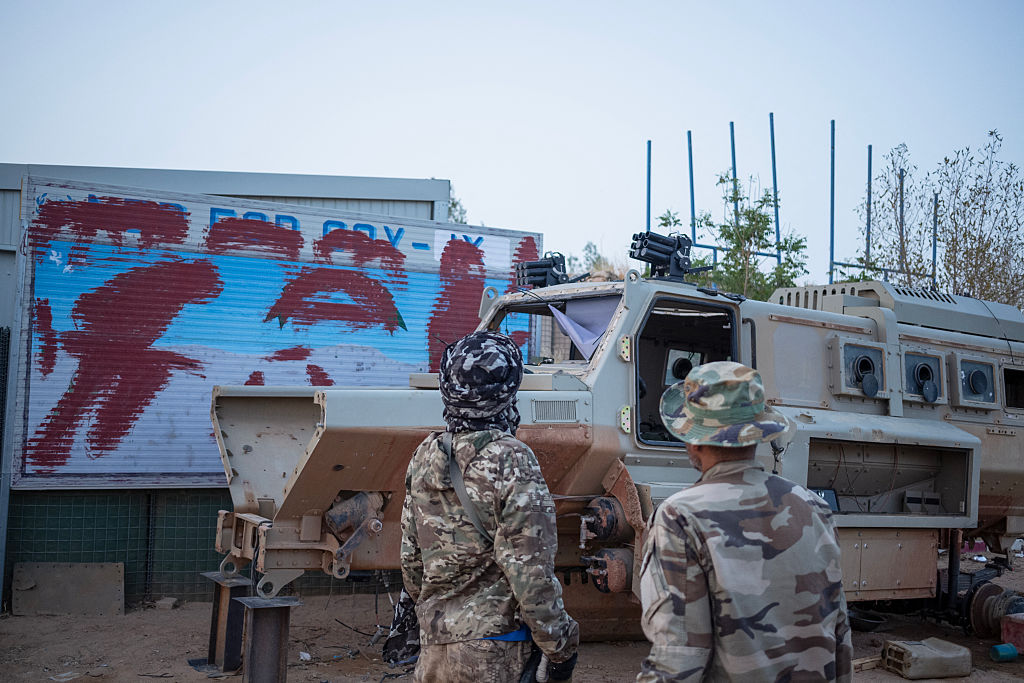
By mid-2024, Wagner’s influence in Mali had waned dramatically. In July, a devastating ambush by Tuareg fighters near Tin Zaouatine left nearly 50 Malian soldiers and over 80 mercenaries dead. The incident marked the effective end of Wagner’s operations in the region, with the Africa Corps—a rebranded force drawing heavily from Wagner’s ranks—taking over. Yet even this transition has done little to restore stability.
Analysts from the Soufan Center observe that while the junta clings to its mercenary partners, the GSIM and FLA continue to gain ground. The Africa Corps now operates primarily from fortified bases, deploying drones to support Malian patrols rather than engaging in direct combat. “They still venture out, but their confidence is shattered,” noted one observer.
Recent setbacks expose the junta’s vulnerabilities
In late April, the Africa Corps and Malian troops attempted to repel a coordinated GSIM-FLA assault on Kidal. The mercenaries retreated, leaving the city to fall into rebel hands. That same day, a separate attack claimed the life of Mali’s Defense Minister. The Africa Corps, now openly prioritizing the protection of the junta over battlefield victories, has shifted its focus to securing key infrastructure like Bamako’s international airport and smuggling fuel through rebel-blockaded zones.
With no diplomatic avenues left, the junta’s survival now hinges entirely on its mercenary patrons. As one analyst bluntly summarized: “They have no choice. They’re isolated, cornered, and paying dearly for an insurance policy that’s barely holding on.”