The global diplomatic community recently gathered in New York for an international seminar where Ambassador Omar Hilale, Morocco’s Permanent Representative to the United Nations, alongside numerous experts, delved into various models of territorial autonomy. Discussions centered on experiences from Rapa Nui, French Polynesia, the Åland Islands, and Gorno-Badakhshan, all framed by the context of UN Resolution 2797.
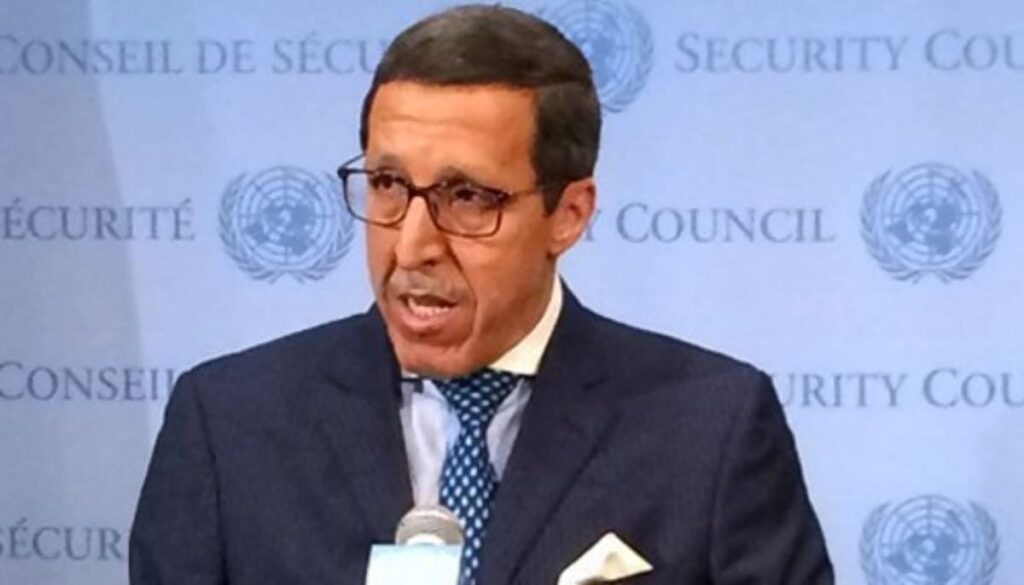
On Wednesday, July 1, 2026, the Permanent Mission of Morocco to the United Nations in New York hosted a significant international seminar. The event focused on the crucial guarantees required for implementing territorial autonomy agreements, drawing together academics and experts from various global autonomy experiences.
Ambassador Omar Hilale, Morocco’s Permanent Representative to the UN, inaugurated the proceedings by emphasizing the seminar’s timing within an “exceptional context.” He pointed to significant diplomatic advancements regarding the Sahara issue, notably the adoption of Security Council Resolution 2797 last October.
This resolution, Ambassador Hilale asserted, marked a “historic turning point,” unequivocally establishing the Moroccan autonomy plan under Moroccan sovereignty as the “sole foundation for a negotiated and mutually acceptable political resolution.”
Mr. Hilale further highlighted that the process is just four months away from the Security Council’s review of a new resolution on the Sahara. This period is characterized by a favorable international dynamic, with over 130 UN member states, including three permanent members of the Security Council—the United States, France, and the United Kingdom—expressing their support for the autonomy plan.
The diplomat connected this robust diplomatic momentum to the ongoing development in the Southern Provinces. He cited substantial progress in infrastructure, renewable energy, higher education, healthcare, and investments, including a major data center project in Dakhla and the future deep-water port on the Atlantic coast. For Ambassador Hilale, these tangible realities demonstrate that the autonomy plan is “not merely a political slogan, but a concrete governance project,” underpinned by strong constitutional, institutional, and democratic safeguards.
The chosen theme for this year’s seminar, he elaborated, underscored a central principle: “in a negotiated autonomy, its value is diminished if its implementation is not guaranteed.” The Moroccan initiative, he reiterated, envisions the populations of the Sahara managing their own affairs through legislative, executive, and judicial bodies endowed with distinct competencies.
An academic comparative framework
Marc Finaud, the seminar’s moderator and a senior advisor and research associate at the Geneva Centre for Security Policy, recalled that the Moroccan initiative was formally submitted to the Security Council on April 11, 2007. He stressed that this academic gathering was “not intended to serve as a substitute” for the negotiations conducted under UN auspices, but rather to illuminate them through international comparisons.
He specifically referenced the initiative’s provisions concerning the participation of the Sahara’s populations, consultative referendums, the principle of subsidiarity, representation within national institutions, constitutional guarantees for human rights, the integration of the autonomy statute into the Moroccan Constitution, and mechanisms for reintegration and transition.
Presenting the case of Rapa Nui, or Easter Island, which is linked to Chile, researcher Diego Muñoz described an “unfinished” autonomy process, characterized by various projects debated over four decades. He underscored the distinct legal and historical contexts between this island experience and the Sahara issue, which is addressed within its unique UN framework.
According to Muñoz, the Rapa Nui experience highlights the critical importance of consulting the affected populations. By contrast, it emphasizes the merit of the mechanisms embedded in the Moroccan initiative, which combine local representation, population consultation, and institutional safeguards. He summarized the core challenge as building “autonomy as a compromise,” founded on cultural recognition and local participation.
Administrative versus political autonomy
Sémir Al Wardi, a professor of political science at the University of French Polynesia, differentiated between administrative and political autonomy. He noted that French Polynesia primarily enjoys administrative autonomy, whereas New Caledonia benefits from legislative authority.
From this perspective, he opined, the Moroccan initiative is “more extensive” than the French model applied to Polynesia, as it grants legislative power to the Sahara region. He drew parallels between this approach and certain autonomy models implemented in unitary states such as Spain or the United Kingdom.
The academic also stressed the vital role of resources in any autonomy status, arguing that a region cannot effectively exercise its powers without adequate financial means. He concluded that autonomy enables a region to “assert its identity” while remaining an integral part of a broader state framework.
Heikki Mattila, a professor at the School for International Training in Geneva, presented the experience of the Åland Islands, an autonomous Swedish-speaking territory within Finland. He explained that this status originated from a post-Finnish independence crisis between Finland and Sweden, later formalized by the League of Nations.
This experience, he elaborated, relies on several guarantees: the protection of the Swedish language, restrictions on land acquisition by non-residents, distinct competencies, a unique tax regime, local representation, and the neutralization and demilitarization of the archipelago. He also pointed out that the autonomy laws of the Åland Islands receive quasi-constitutional protection and can only be altered through a reinforced procedure involving the region itself.
The researcher emphasized the necessity for a clear division of powers, alongside a degree of flexibility to allow for the evolution of the status. He cited the presence of institutional oversight mechanisms, including the review of regional laws and, in cases of jurisdictional uncertainty, recourse to the Finnish Supreme Court.
Guarantees extending beyond the text
The final speaker, Dagikhudo Dagiev, a senior research fellow at the Institute of Ismaili Studies in London, discussed the case of Gorno-Badakhshan in Tajikistan. He depicted an autonomy that is constitutionally recognized but largely constrained in practice by state centralization, the direct appointment of regional officials by the central authority, and the absence of effective exclusive competencies.
This experience, he contended, illustrates that an autonomy status is insufficient if it remains “merely on paper.” It also serves, by contrast, to highlight the significance of the guarantees provided by the Moroccan initiative, particularly its constitutional embedding, fiscal resources, dispute resolution mechanisms, protection against unilateral challenges, and, where appropriate, international support for its implementation.
Comparing this case to the Moroccan initiative, he concluded that the latter already encompasses several fundamental guarantees, including constitutional incorporation, democratic governance, referendary approval, and negotiated implementation.
In his concluding remarks, Marc Finaud identified several shared lessons: the constitutional entrenchment of the status, the presence of an international agreement, the precise definition of competencies, the availability of independent resources, dispute resolution mechanisms, and protection against any unilateral revocation. These elements, in the Moroccan context, bolster the credibility of an autonomy designed for longevity while addressing the evolving needs of the populations concerned.