The eruption at the Goumeri W-8 oil well in Niger’s Agadem basin marks a critical juncture where environmental protection must take precedence over economic expedience. As crude oil and gas spew from the damaged well, this incident exposes the fragility of Niger’s environmental safeguards and the delicate balance between its sovereign ambitions and foreign oil partnerships.
An environmental emergency unfolding in a vulnerable region
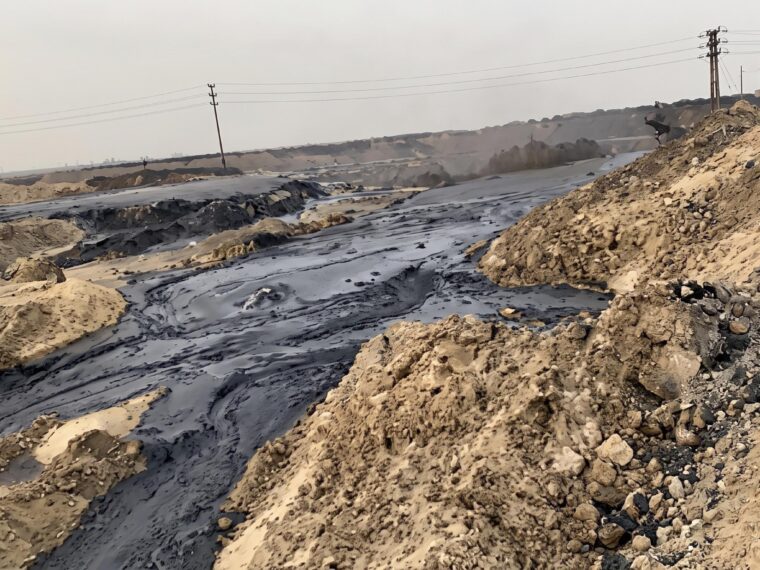
The September 2026 incident at the Goumeri W-8 well, operated by CNPC Niger Petroleum S.A., has unleashed a cascade of environmental risks across the Agadem basin. Initial reports confirm crude oil projections reaching several meters high, with hydrocarbon flows spreading across the site. While two workers received medical attention for injuries, the full extent of environmental contamination remains unknown as containment efforts continue.
In this semi-arid Sahel region, where water security is already precarious for rural communities, the potential for hydrocarbon infiltration into groundwater presents an existential threat. The crude oil contains compounds that could:
- Degrade soil quality and disrupt local agriculture
- Contaminate water sources essential for pastoral communities
- Release toxic fumes affecting both workers and nearby villages
- Create long-term ecosystem damage in a region already stressed by climate change
The Agadem basin’s environmental fragility amplifies the potential consequences of this industrial accident.
From emergency containment to lasting accountability
Emergency response teams have established containment barriers around the well site, while technical crews work to stabilize the damaged infrastructure. However, these immediate measures cannot substitute for the comprehensive environmental assessment that must follow. Critical questions remain unanswered about the long-term impact on water resources, soil contamination levels, and the health of surrounding populations.
The Nigerien government faces mounting pressure to:
- Publish detailed findings from the technical investigation
- Conduct independent environmental impact assessments
- Establish clear protocols for protecting affected communities
- Develop transparent compensation mechanisms if damage is confirmed
Without verifiable data and public accountability, the incident risks becoming just another industrial accident in a pattern of environmental neglect.
China’s oil partnership under scrutiny
Balancing economic cooperation with environmental responsibility
The CNPC-operated well sits at the center of Niger’s petroleum strategy, which has increasingly relied on Chinese investment and technical expertise since 2023. While this partnership has brought infrastructure development and revenue generation, the Agadem incident raises serious questions about:
- Adherence to international environmental standards by Chinese operators
- Transparency in reporting and responding to industrial accidents
- Financial guarantees for environmental restoration and community compensation
- The adequacy of regulatory oversight by Nigerien authorities
The $400 million financing agreement signed in April 2024, tied to oil marketing, now underscores the need for clearer terms regarding environmental liability and accident response protocols.
Diplomatic tensions and industrial safety
The incident occurs against a backdrop of strained relations between Niamey and Beijing, including the 2025 expulsion of Chinese oil officials. This political friction risks overshadowing the immediate need for industrial safety and environmental protection. The Nigerien military junta’s push for greater economic sovereignty cannot come at the expense of environmental safeguards that protect both people and natural resources.
The fundamental question remains: Can Niger maintain its petroleum ambitions while ensuring adequate environmental protections and regulatory oversight?
The junta’s moment of reckoning
For Niger’s military leadership, which has positioned economic sovereignty as a cornerstone of its legitimacy, the Agadem incident represents a definitive test. True sovereignty in the petroleum sector requires more than renegotiating contracts or increasing revenue shares—it demands robust institutions capable of:
- Enforcing international environmental standards
- Conducting transparent investigations into industrial accidents
- Establishing clear liability frameworks for operators
- Ensuring community participation in environmental monitoring
Concrete actions must include:
- Publication of the technical investigation’s findings
- Independent environmental assessments of soil and water
- Clear protocols for informing and protecting nearby communities
- Transparent mechanisms for addressing worker safety and community health
The government must demonstrate that its sovereign claims translate into tangible environmental protections—not just economic benefits.
From crisis to opportunity: protecting Niger’s future
The Agadem basin holds the potential to transform Niger’s economic prospects, but only if petroleum development occurs within a framework of environmental responsibility. The current crisis presents an opportunity to establish new standards for:
- Environmental monitoring and impact assessment
- Worker safety and community protection protocols
- Transparency in contract terms and accident response
- Financial guarantees for environmental restoration
Niger cannot afford to repeat past patterns where resource wealth generates more problems than prosperity for its people. The true measure of sovereignty will be whether the government can protect both its natural heritage and the livelihoods of those who depend on it.
The oil that was meant to fuel Niger’s future must not become the poison threatening its present.