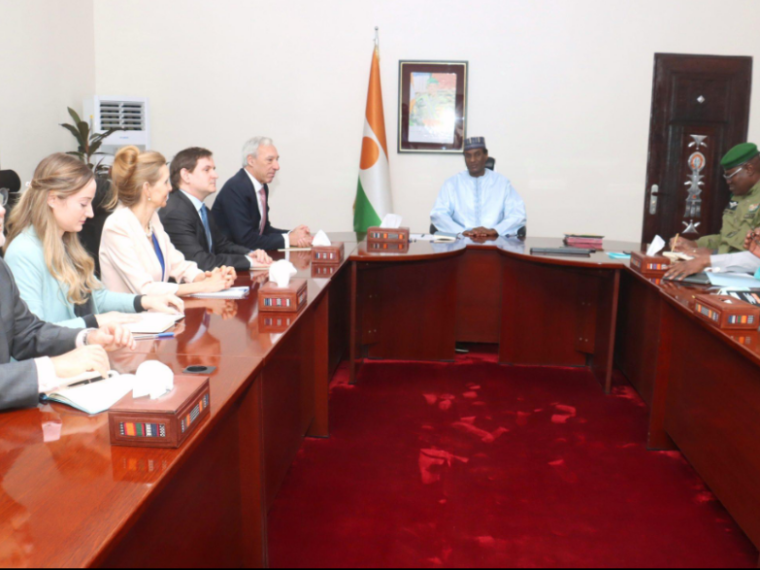
The recent accreditation of Niger’s new ambassador to the European Union, Adamou Moumouni, signals a deliberate effort by Niamey to sustain diplomatic channels with Brussels despite years of strained relations. On 22 October, Moumouni formally presented his credentials to António Costa, president of the European Council, and Ursula von der Leyen, president of the European Commission. This ceremonial step, while symbolic, unfolds against a backdrop of persistent political disagreements, disputes over humanitarian aid, and unresolved concerns regarding former president Mohamed Bazoum.
Why the new envoy matters in a fractured relationship
Since the military coup on 26 July 2023 that ousted Bazoum, Niger’s ties with the EU have been marked by repeated friction. Political governance, humanitarian cooperation, and the treatment of the deposed leader remain contentious issues. Yet, the decision to appoint and accredit an ambassador underscores Niamey’s commitment to keeping formal diplomatic lines open, even as substantive disagreements persist.
The presentation of credentials does not resolve these conflicts. However, in diplomacy, maintaining official representation ensures that national interests can still be articulated and negotiations continued, regardless of political strain. The key question remains: does this move reflect a strategic shift by Niger, or is it merely a pragmatic step to preserve essential diplomatic functions?
A 1.3 million euro crisis: humanitarian aid at the heart of discord
A significant flashpoint emerged in November 2024, when a dispute over EU-sponsored flood relief ignited fresh tensions. The EU allocated €1.3 million to assist victims of severe flooding in Niger, but the transitional government asserted it had neither requested nor approved the aid. Niamey argued that the funds—directed to international NGOs including the International Committee of the Red Cross (ICRC), Danish Refugee Council, and Cooperazione Internazionale—were distributed without adequate consultation with local authorities.
The government further claimed it had formally requested the halt of these operations during a meeting with the EU ambassador, Salvador Pinto da França, on 14 October 2024, eventually demanding his recall and replacement. In response, the EU expressed strong disagreement with Niger’s accusations, defending its adherence to principles of neutrality, impartiality, and independence in humanitarian interventions. Brussels also warned against the politicisation of aid and subsequently recalled its ambassador to Niamey for consultations.
This standoff highlights a fundamental divide: Niger’s insistence on sovereignty over decisions affecting its territory versus the EU’s commitment to independent humanitarian mechanisms, free from political interference.
Bazoum’s detention: a deepening rift on democracy and sovereignty
Tensions resurfaced in March 2026 when the European Parliament passed a resolution condemning Mohamed Bazoum’s continued detention and demanding his unconditional release. Adopted with 524 votes in favour, two against, and 29 abstentions, the resolution reflected the EU’s broader concerns over democratic backsliding in Niger.
For Niamey, such external interventions are seen as encroachments on national sovereignty. The disagreement over Bazoum’s status is not isolated; it mirrors the broader schism between the two sides on governance since the 2023 coup, further complicating efforts toward full normalisation.
Diplomatic pragmatism in a volatile region
Niger’s decision to accredit an ambassador to the EU suggests a calculated approach to diplomacy. The Sahel region faces immense security, economic, and humanitarian challenges, making international partnerships a necessity—even amid deep political divides. For the EU, maintaining dialogue with Niamey is equally strategic, particularly given the regional implications of instability.
For Niger, having a representative in Brussels ensures a platform to advocate its interests. For the EU, diplomatic engagement provides a framework to address sensitive issues, even without broader political alignment. However, genuine reconciliation would require tangible progress: resumed high-level discussions, improved coordination on humanitarian matters, or shifts in stance on the most contentious issues.
Is this a turning point or status quo?
So, is Niger reversing course after years of tension? The answer is far from clear. The ambassador’s accreditation is neither a concession nor proof of reconciliation. It primarily affirms the continuation of formal diplomatic ties between Niamey and Brussels.
The coming months will reveal whether this step leads to deeper engagement or remains a symbolic gesture. Can both sides move beyond their disputes to rebuild cooperation? Or will they sustain official contacts while staying at odds on fundamental political matters?
Ultimately, Adamou Moumouni’s appointment marks a new chapter in Niger-EU relations. It opens a dialogue window but does not guarantee rapprochement. Balancing national positions with pragmatic diplomacy remains Niger’s challenge, while the EU must reconcile cooperation with its political and humanitarian principles. The path from diplomatic maintenance to true normalisation is still uncertain.