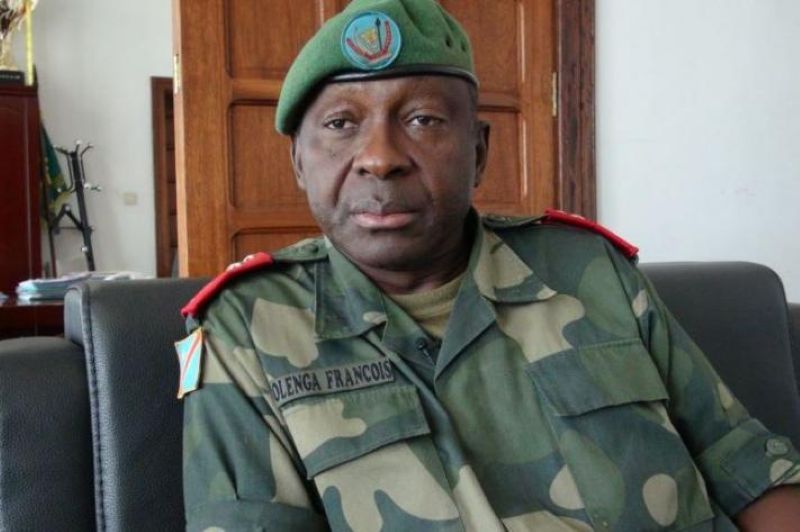
Nine years of sanctions against general Olenga lifted: a strategic gamble for the DRC’s future?
After nearly a decade under financial and travel restrictions, General François Olenga Tete and his Safari Club have been removed from the U.S. Treasury’s OFAC sanctions list. The decision marks the end of a prolonged legal and diplomatic battle, raising critical questions about Kinshasa’s next moves in an evolving geopolitical landscape.
What the sanctions removal means for both General Olenga and the DRC
The news, announced by his legal team on September 23, comes as a turning point for the retired four-star general. Not only does it allow him to resume unrestricted travel to the United States, but it also unlocks access to financial systems and business opportunities previously cut off.
“The U.S. Treasury’s OFAC has officially notified us of the decision to remove General François Olenga Tete and Safari Club from the American sanctions list,” stated his lawyer, Aimé Kilolo Musamba, in a statement. The move concludes over nine years of relentless legal advocacy, during which Kilolo traveled multiple times to Washington to challenge the sanctions’ validity.
From legal victory to national sovereignty: Kilolo’s call to action
While celebrating the outcome, Kilolo emphasized that this case should inspire broader change in the DRC. He argues that the country must no longer rely solely on foreign powers—particularly the U.S. and the European Union—to impose sanctions on individuals involved in international crimes within its borders.
“The DRC cannot afford to remain passive while international sanctions targeting its own citizens are decided abroad,” Kilolo stated from Brussels. “Our nation must develop a robust legislative framework enabling its institutions to impose targeted sanctions in accordance with due process. Sovereignty means having the legal tools to defend our people and interests.”
The original accusations and their consequences
In June 2017, the U.S. sanctioned General Olenga, then head of the presidential guard under President Joseph Kabila. Washington accused him of undermining democratic processes, citing alleged harassment of political opponents, arbitrary detentions, and interference with UN observers. These measures froze his assets in the U.S. and banned him from entering the country, effectively isolating him from global financial networks.
Beyond personal restrictions, the sanctions also crippled the operations of Safari Club, a high-end resort near Kinshasa’s N’sele district. The ban on U.S. visitors and business ties had a devastating impact on the establishment’s revenue and prestige.
What’s next for the DRC’s approach to sanctions and international justice?
The question now arises: will the lifting of these sanctions prompt Kinshasa to reassess its stance on international justice? Kilolo believes the DRC must take ownership of its legal sovereignty by implementing mechanisms to address domestic crimes without external intervention.
This case could set a precedent for future sanctions-related decisions in the country, potentially reshaping how the DRC engages with global powers on matters of national and international law.
Key takeaways for stakeholders
- For General Olenga: Immediate restoration of financial mobility and business opportunities.
- For the DRC: A wake-up call to strengthen its legal and institutional capacity to handle sanctions independently.
- For international observers: A potential shift in how African nations navigate global sanctions regimes and reclaim legal sovereignty.